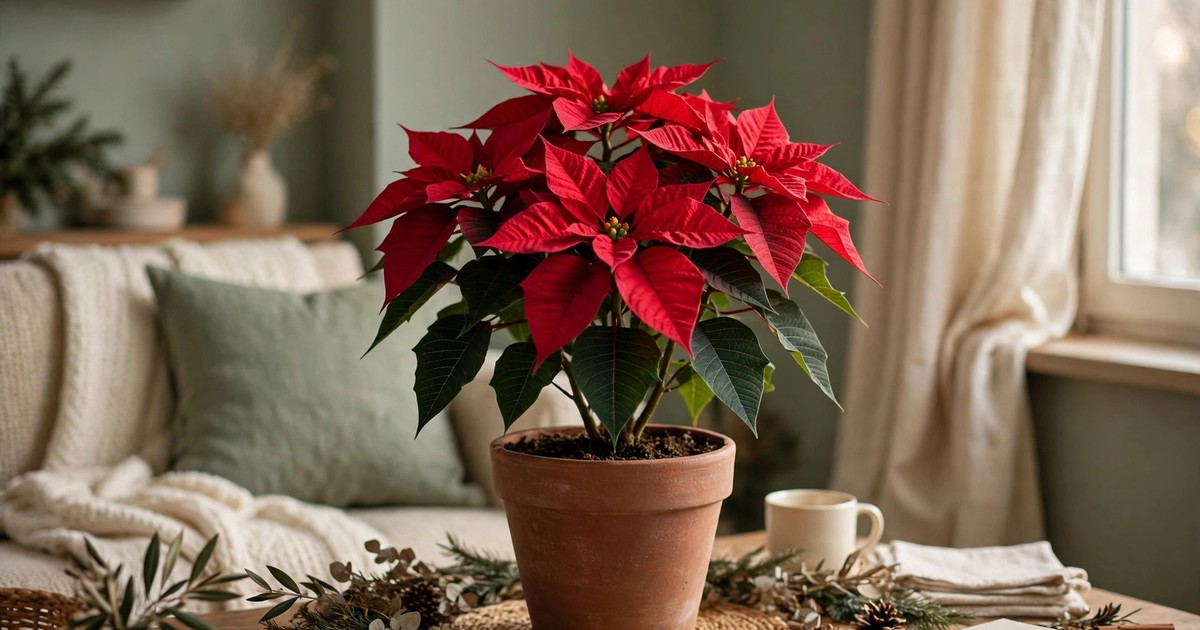
Every December, millions of poinsettias are bought, admired for a week, and quietly killed by the most common houseplant mistakes: drowning, freezing, or baking above a radiator. The tragedy is that poinsettias are not delicate. They are tropical shrubs that, given three basic things — bright light, careful watering, and protection from cold and heat blasts — will stay glorious through Christmas and can even rebloom next year.
This guide covers the six steps that keep a poinsettia alive, written for small apartments and drafty rentals where the plant's enemies (cold windows, hot radiators, dry air) are all present at once. If you are buying your poinsettia as part of your holiday decorating, our Christmas plants guide will help you pick a healthy one in the shop — this post keeps it alive once it's home.
Step 1: Get it home without freezing it
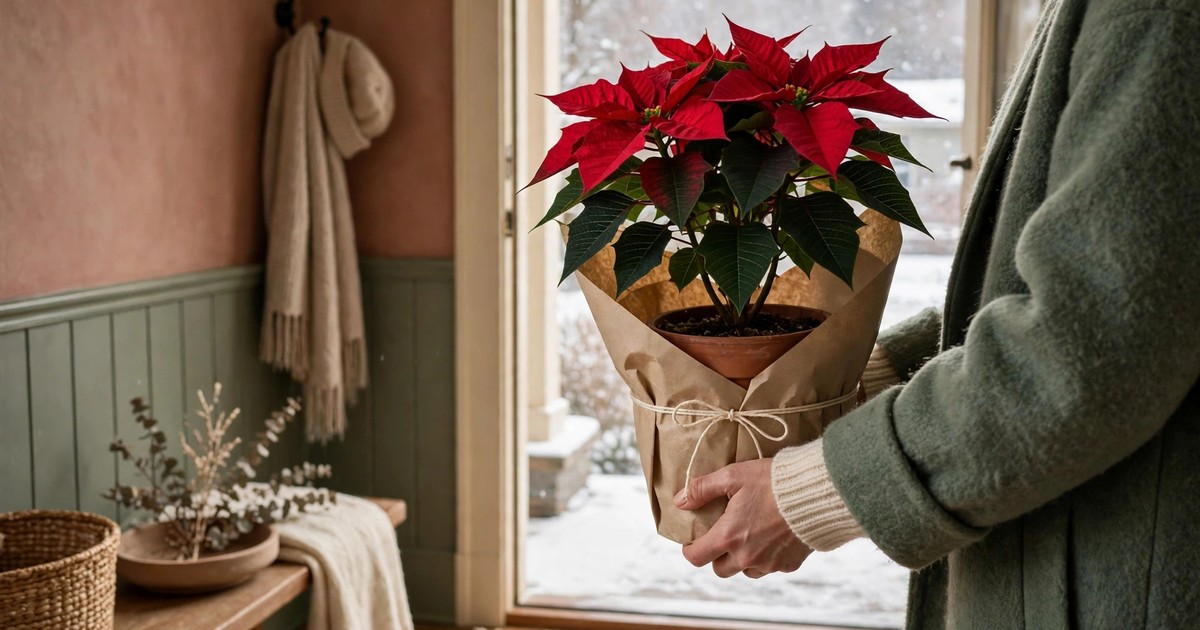
Most poinsettias die before they reach your living room. They are tropical plants, and a ten-minute walk home in freezing air — or a ride in a cold car boot — damages leaves permanently. The damage doesn't show immediately; a few days later the leaves yellow, wilt and drop, and people blame their watering when the real culprit was the journey.
Insist on a sleeve. Any decent seller will wrap the plant in paper or plastic for the trip home — if they don't offer, ask. Keep the sleeve on until the plant is indoors and at room temperature, and never leave a poinsettia in a cold car while you run other errands. If you are ordering online in a cold snap, choose a delivery day when you will be home to bring the plant straight inside.
The rule: poinsettias start suffering below about 10°C. Treat the journey home like carrying a tropical fish — quick, sheltered, and straight indoors.
Step 2: Give it the brightest spot you have
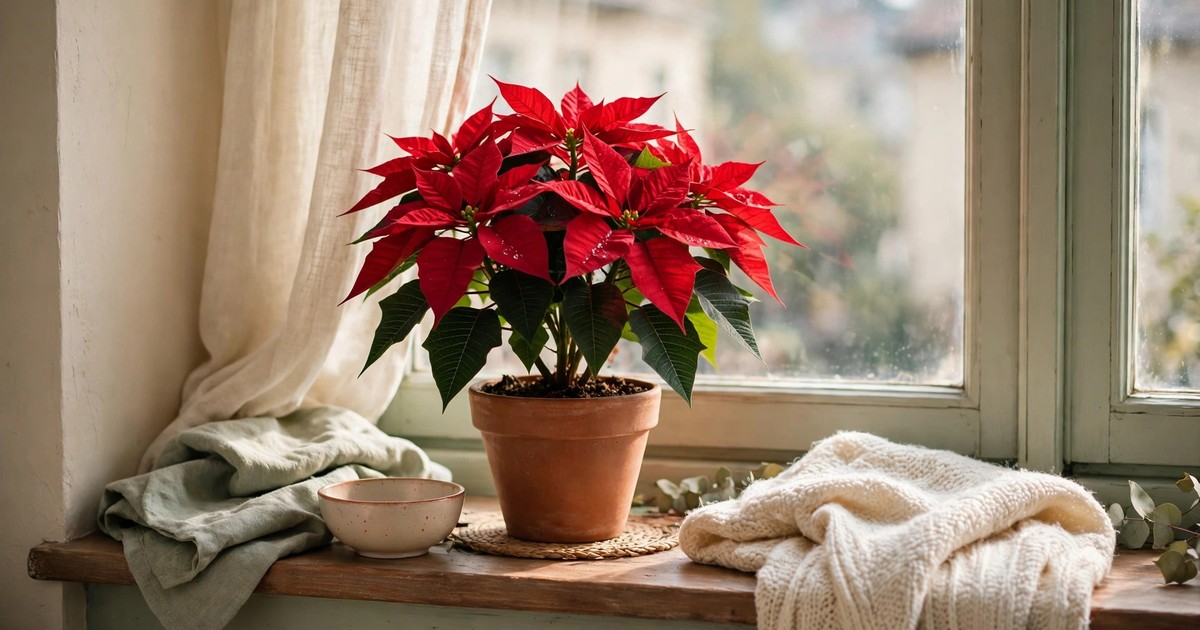
Poinsettias need far more light than people give them. The dark corner by the television, however festive it looks, will make the plant drop leaves within a fortnight. The right spot is your brightest windowsill — ideally south- or west-facing — where the plant gets several hours of bright, indirect light a day. A little direct morning sun is fine and even welcome; harsh midday sun through glass can scorch the coloured bracts, so sheer curtains are a good filter if your window is very sunny.
In a small apartment, the windowsill is prime real estate, but a poinsettia earns its place for December — it is the decoration and the plant in one. Rotate the pot a quarter-turn every few days so all sides get light and the plant grows evenly instead of leaning toward the window. If your only bright window is drafty, see Step 3 before you commit to it.
Light test: if you can comfortably read a book in the spot without a lamp during the day, the light is probably enough. If you can't, the poinsettia can't thrive there either.
Step 3: Keep it away from drafts and radiators
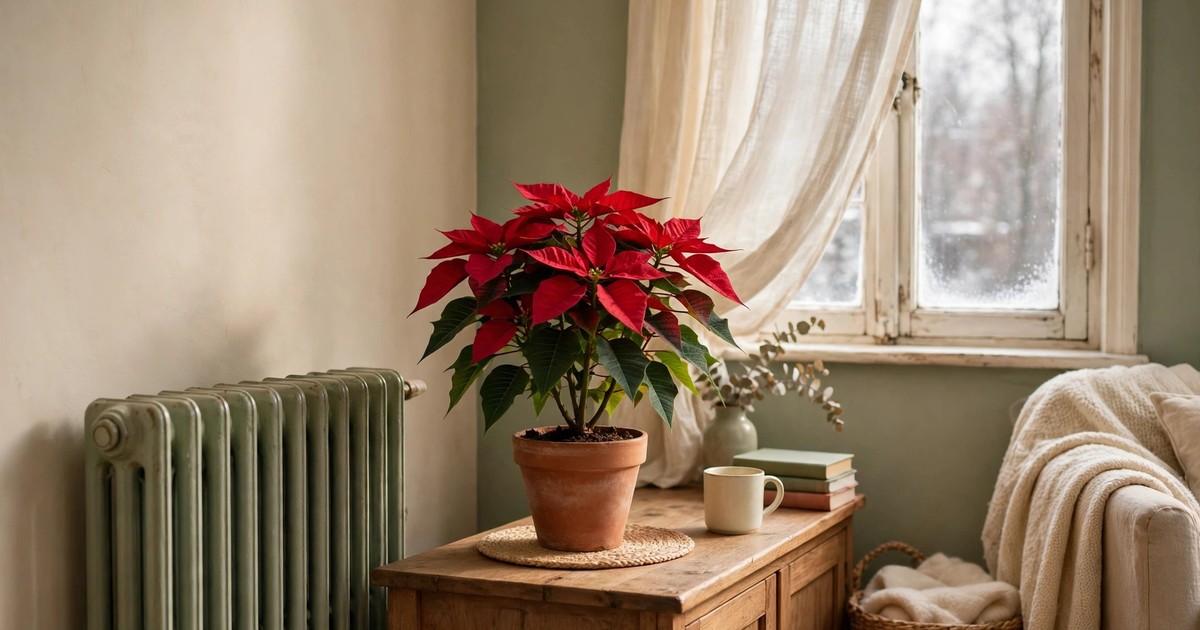
Poinsettias hate temperature swings, and rentals specialise in them: a cold draft from a single-glazed window on one side, a blasting radiator on the other. Either extreme makes leaves drop. The plant wants a steady 15–22°C, away from cold window glass, exterior doors that open onto cold hallways, and radiators or heat vents that blast hot, dry air.
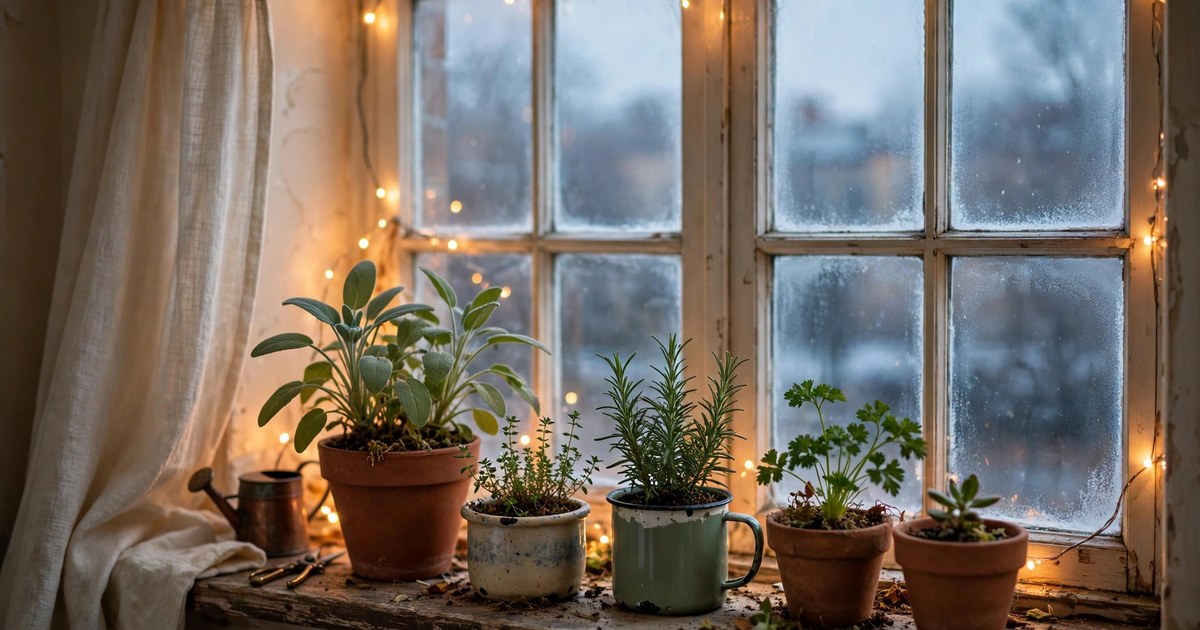
The classic killer spot is the windowsill directly above a radiator — the plant gets cold glass at night and hot dry air by day, the worst of both worlds. If that is your only bright spot, move the plant back from the window by 30 cm and put a shelf or stand between it and the radiator, or keep it on a table near the window instead of on the sill. A few degrees of steady warmth beat a bright but brutal position every time. Our drafty rental guide has more fixes for the cold spots that hurt plants and people alike.
Draft check: hold your hand where the plant will sit on a cold evening. If you feel a draft or the air is noticeably cold, the plant feels it too — move it.
Step 4: Water by weight, not by calendar
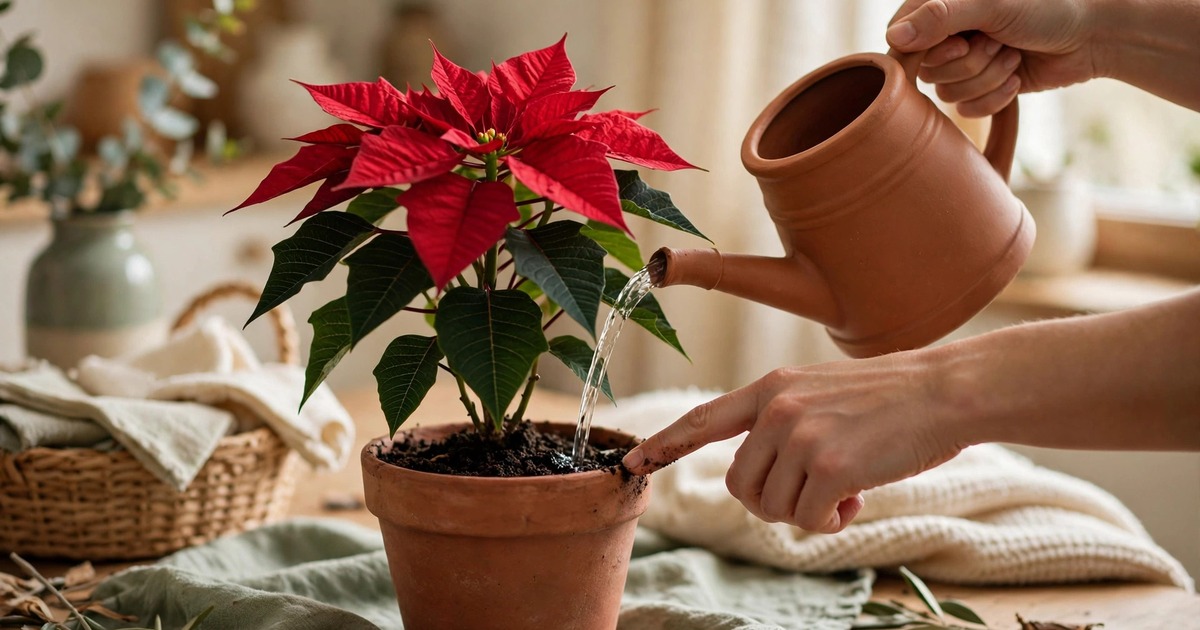
Overwatering kills more poinsettias than everything else combined. The plant arrives in a foil wrapper that traps water, the soil stays soggy, the roots rot, and the leaves drop — all while the owner, watering "every day to be safe," makes it worse. The fix is simple: water only when the soil needs it.
Lift the pot. A dry poinsettia is noticeably light; a wet one is heavy. When the pot feels light and the top 2–3 cm of soil is dry to the touch, water thoroughly until it drains from the bottom, then empty the saucer and the foil wrapper after ten minutes — never let the plant sit in standing water. In most homes this means watering every few days, not daily, and less often in a cool room. Room-temperature water is kinder than cold water straight from the tap.
Foil wrapper warning: poke drainage holes in the foil, or better, remove the foil entirely and set the pot in a proper saucer. The foil is packaging, not a planter, and it is the number one cause of poinsettia drowning.
Step 5: Feed the humidity, skip the fertilizer
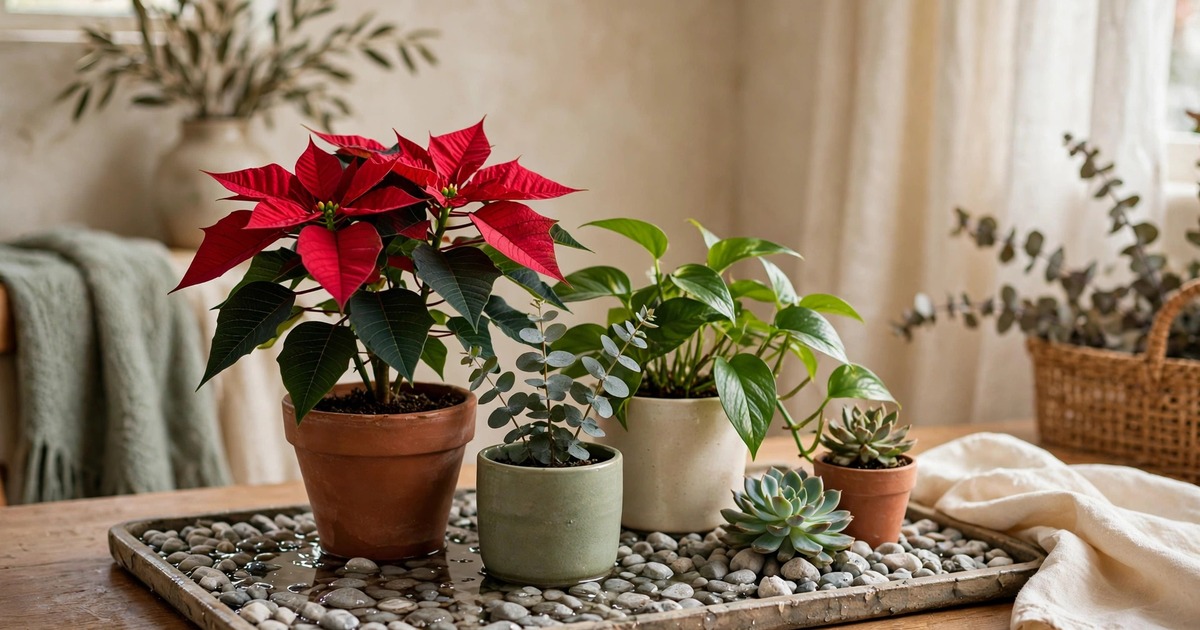
Central heating drops indoor humidity to 20–30%, while poinsettias prefer 40–60%. The symptoms — crispy bract edges, dropping leaves — look like underwatering, so people water more and make the real problem worse. The fix is humidity, not water: group the poinsettia with other houseplants so they share moisture, set the pot on a pebble tray with water just below the pebble tops, and keep it away from direct heat sources.
Skip the fertilizer entirely until spring. A poinsettia in December is not growing — it is displaying — and feeding a plant that isn't growing just builds up salts in the soil and burns roots. If you bought a plant that looks a little pale, light and steady conditions will restore its colour far better than any feed. Save the fertilizer for March, when the plant starts pushing new growth and actually wants it. For the full winter plant routine, our winterizing guide covers the same principles across your whole collection.
Misting note: misting gives a humidity boost that lasts about ten minutes. A pebble tray works all day. Choose the tray.
Step 6: After Christmas — prune, rest, and rebloom
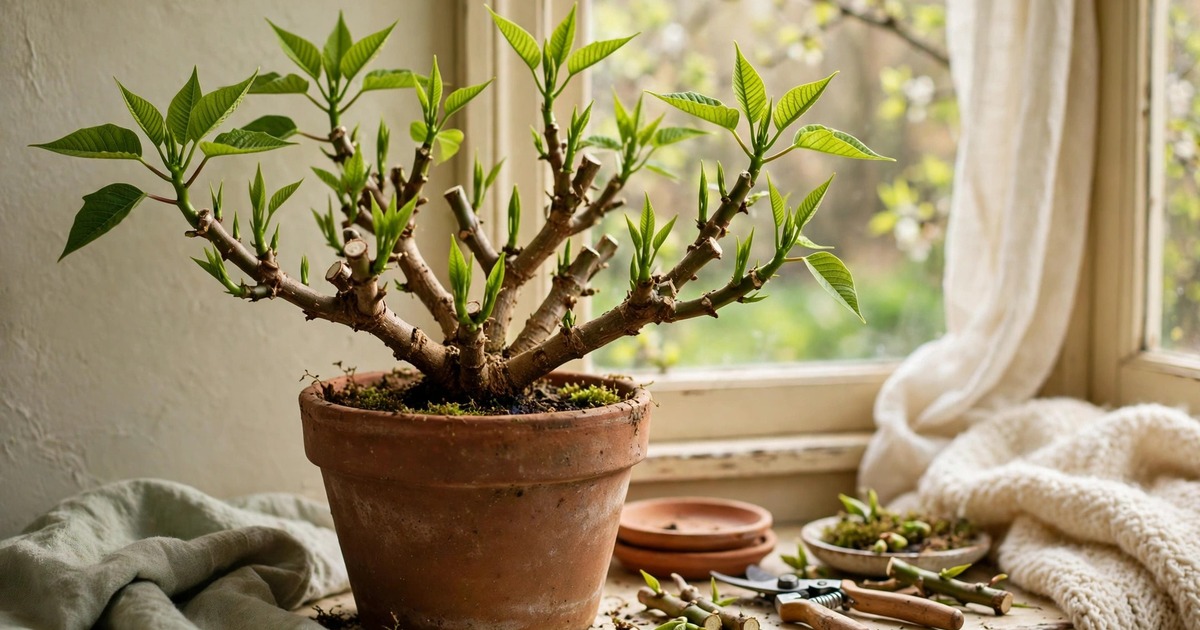
Here is the part most people never try: keeping the poinsettia after Christmas. When the coloured bracts fade in late winter, cut the stems back to about 15 cm, keep watering sparingly, and let the plant rest in a bright spot. In spring it will push fresh green growth — it looks unremarkable all summer, like any green houseplant, and that is fine. It is resting.
Reblooming takes one trick: from late September, the plant needs 14 hours of uninterrupted darkness a day for about eight weeks — a dark cupboard from 5 pm to 7 am works, and even a streetlight through the window can break the cycle, so be strict. By November the bracts colour up again, and you have a second Christmas from a plant most people threw away in January. It won't be as perfect as a shop-grown plant, but it will be yours, and that is the better story.
Even if reblooming sounds like too much: keeping the plant alive as a green houseplant through the year is a win on its own. The green form is an attractive foliage plant, and it costs you nothing but a windowsill.