
There's a special kind of cold that only renters know: the one that sneaks under the front door, slides through single-pane windows, and settles into the floorboards no matter how high you crank the heat. You pay the heating bill, the landlord owns the walls, and somewhere in between your money floats straight outside.
The good news: the biggest heat leaks in a rental are also the cheapest to fix — and every fix below is removable, drill-free, and deposit-safe. Work through these six steps in order on a Saturday afternoon, spend well under $100 total, and your flat will hold heat like a place you actually own.
Step 1: Find every draft before you fix anything
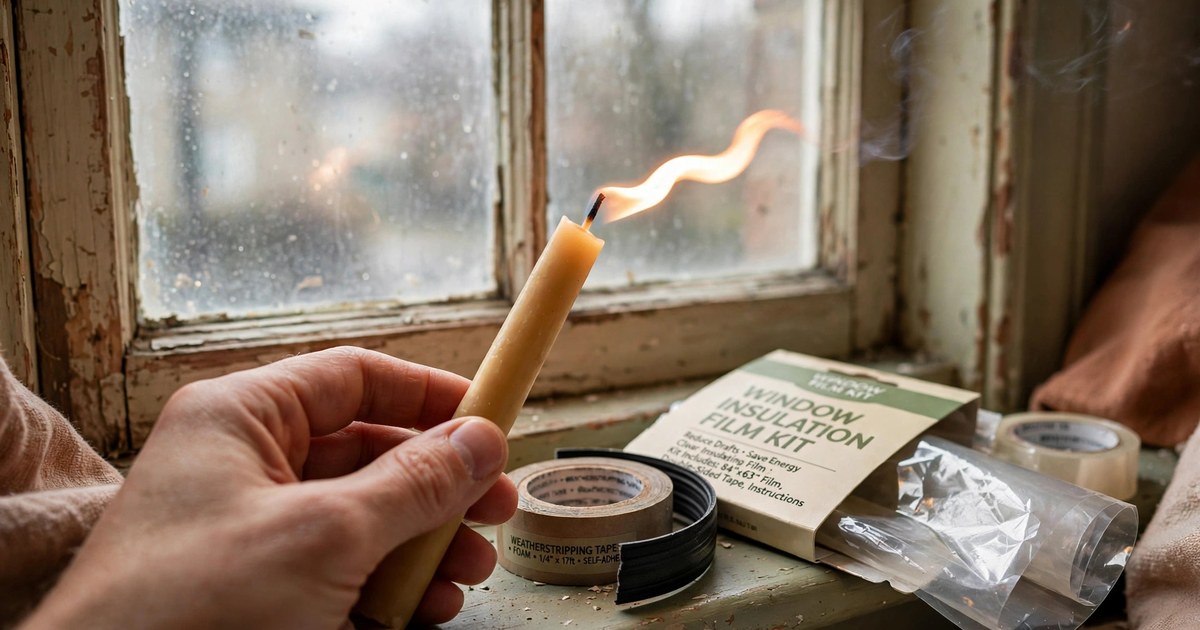
Don't guess where the cold comes from — hunt it. On a windy day, turn off the heating, light a candle or a stick of incense, and slowly move it along every window frame, exterior door, and outlet on an outside wall. Where the flame flickers or the smoke bends sideways, you've found a leak. Mark each spot with a small piece of painter's tape.
Most renters find the same culprits: old sash windows that never quite close, the gap under the front door, letterboxes, and the frames around patio doors. A typical rental has five to ten meaningful leaks, and sealing just the worst three can make a room feel several degrees warmer. (If your windows rattle in their frames, our no-drill wall decor guide has the same removable-hardware philosophy — nothing here touches the landlord's property.)
Write your leak list down before you shop. It keeps the hardware-store trip to one visit and stops you buying fixes for drafts you don't have.
Step 2: Seal windows with removable film and weatherstripping
Windows are the number one heat thief in rentals. The renter's one-two punch: self-adhesive foam weatherstripping on the moving parts, plus shrink-film insulation over the whole window. The film goes on with double-sided tape, shrinks drum-tight with a hairdryer, and peels off clean in spring — landlords never know it was there, and it adds an insulating air layer that single-pane glass desperately needs.
For the weatherstripping, press foam tape into the gaps where the sash meets the frame — the spots your candle test flagged. It compresses when the window closes and springs back when it opens, so windows still work normally. One roll (about $5–8) seals two to three windows. Shop window insulation film kits
A note on what NOT to do: don't caulk anything. Caulk is permanent, it's the landlord's job, and removing it in spring will take paint with it. If a window is genuinely broken — cracked pane, missing seal — photograph it and email your landlord. That's a repair request, not a DIY project.
Step 3: Block the gap under every exterior door

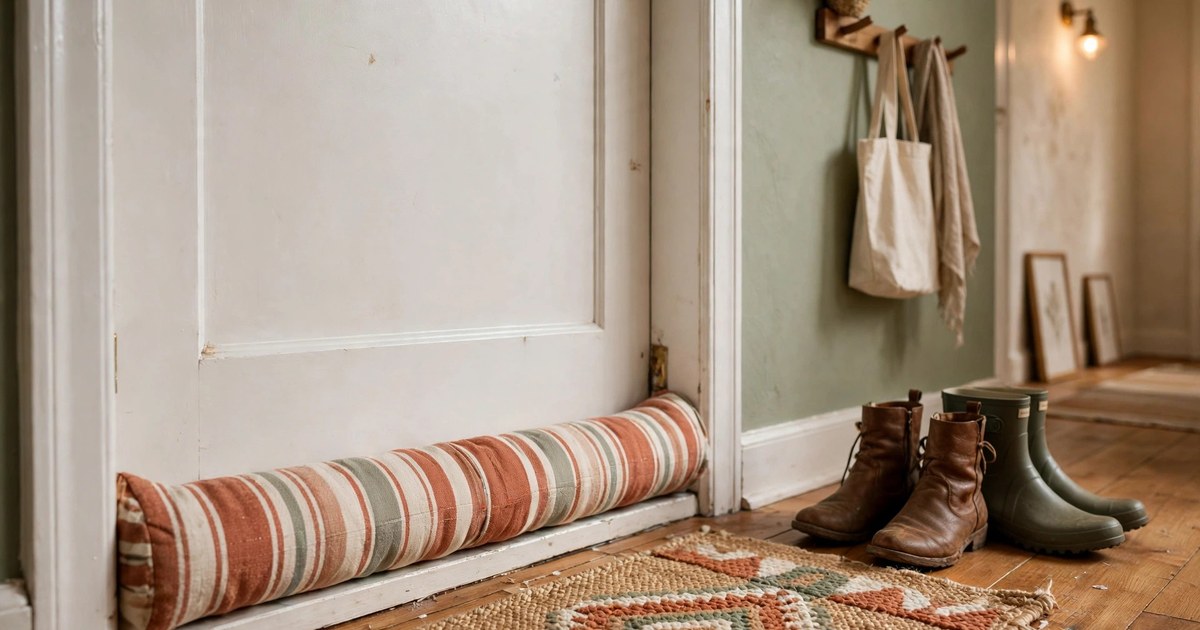
The draught under the front door is the coldest air in your flat — it comes straight from the hallway or outside, and it pools at ankle height exactly where you sit. A fabric draft snake (about $10–15) fixes it in one second flat: tuck it against the door and the cold stops. Get the double-sided kind with two tubes joined by fabric — it slides with the door, so you never have to reposition it.
For interior doors to unused rooms, close the door and roll up a towel — free, and it keeps the heat where you actually live. If your letterbox whistles, a brush-strip letterbox cover ($8–12) sticks on with adhesive and cuts the draught without blocking the post.
This is the highest-impact-per-dollar step in the whole guide. Doors leak constantly because they're opened all day, and a $12 draft snake pays for itself in the first week of heating bills. Shop door draft stoppers
Step 4: Hang thermal curtains on tension rods

Curtains are insulation you can see. A pair of thermal-lined curtains ($20–35 per window) hung as close to the wall as possible traps a pocket of still air between the fabric and the glass — and still air is what insulation actually is. Floor-length beats sill-length, and the wider the curtain extends past the window frame, the better it seals the edges.
Renters: you don't need a drill. A heavy-duty tension rod ($10–15) wedges inside the window recess and holds thermal curtains fine on any window under about 1.5 metres wide. For wider windows, adhesive curtain-rod brackets hold surprising weight and peel off without marks. Hang the curtains, close them at dusk, open them on sunny mornings — the routine alone is worth a degree or two. (More drill-free hanging tricks live in our temporary wallpaper guide — same no-damage rules apply.)
Bonus: thermal curtains also black out street light and muffle noise, so the bedroom gets the full treatment first.
Step 5: Warm the floors with layered rugs
Cold floors make a room feel five degrees colder than the thermostat says — especially over unheated spaces like garages or crawl spaces, which describes half of all ground-floor rentals. The fix is mass: a thick rug pad ($15–25) under a large rug, or two rugs layered for the price of one pad.
Layering is the budget move: a big flat-weave jute or cotton rug as the base (often $30–50 secondhand) with a smaller, plusher wool or shag rug on top where your feet actually land. The air trapped between the layers is doing the insulating work. Focus on the zones where you sit still longest — beside the bed, in front of the sofa, under the desk. Bedrooms first, always: cold feet at 7am ruin the whole day. Shop thick rug pads
If you have hard floors throughout, interlocking foam tiles ($1–2 each) under a rug in the bedroom add serious warmth for almost nothing — and they stack flat in a cupboard come spring.
Step 6: Tame radiators, outlets, and the thermostat
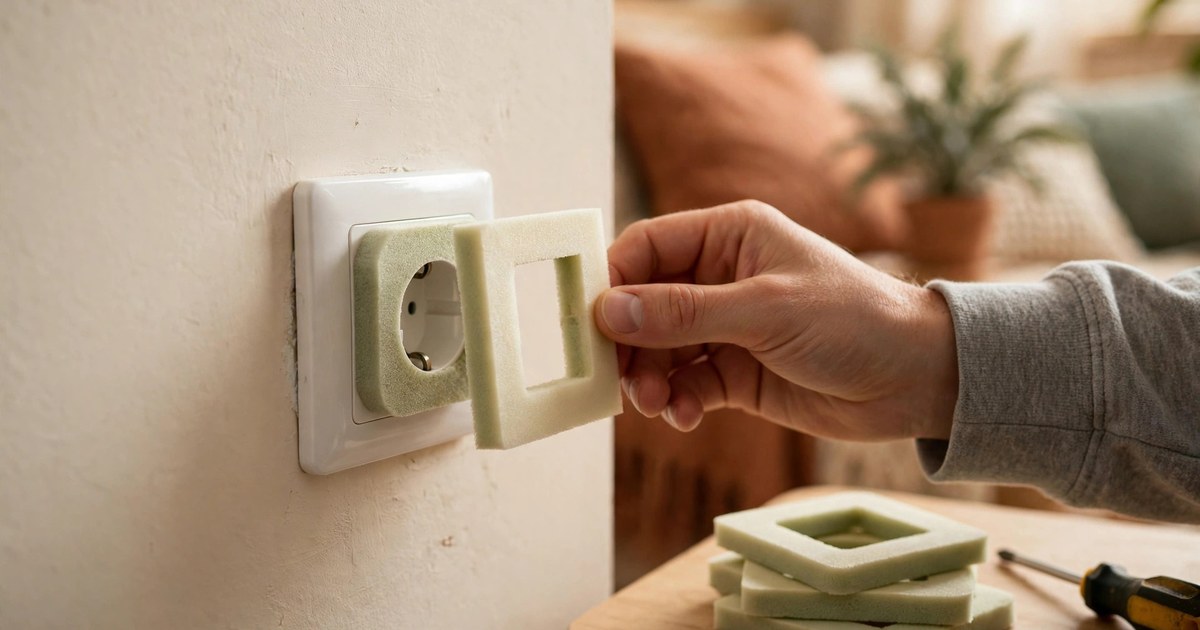
The last leaks are the invisible ones. Start with outlets and switches on exterior walls: remove the cover plate (one screw), press in a foam outlet gasket ($0.50 each), replace the plate. Cold air pours through unsealed electrical boxes — you'll feel the difference immediately on a windy night.
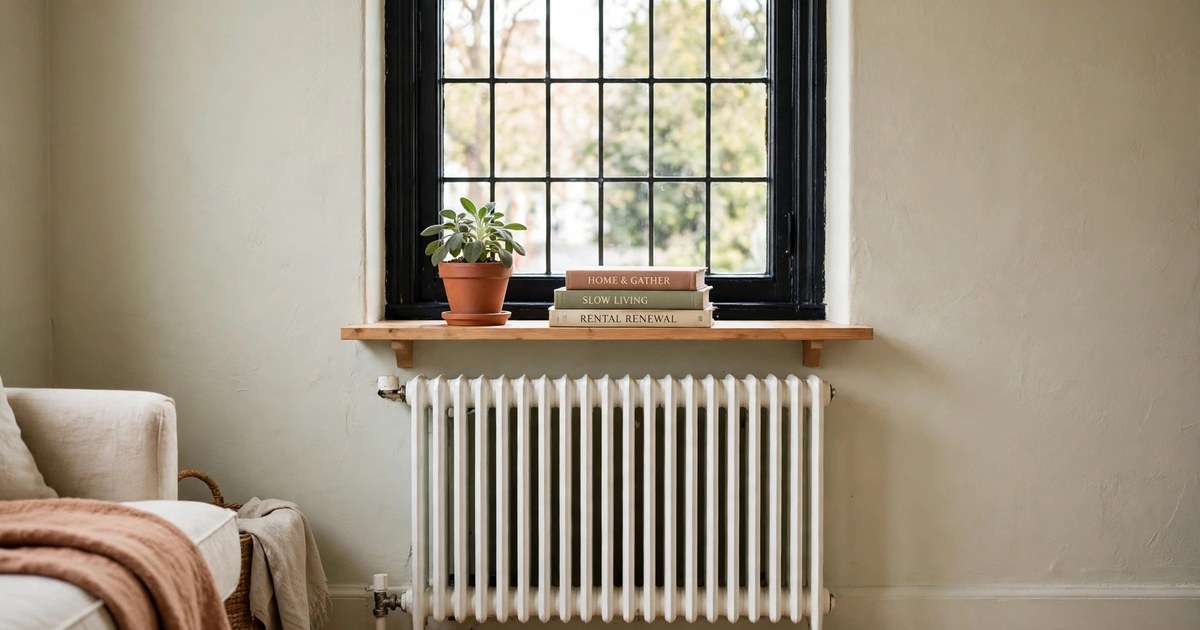
Next, radiators: if yours sits under a window (classic rental layout), half its heat rises straight into the cold glass. A simple shelf fitted just above the radiator deflects warm air out into the room instead of up the window — use a board on adhesive brackets, no drilling. Reflective radiator foil tucked behind the unit bounces heat back into the room rather than into the wall; it slides in without fixings and slides out in spring.
Finally, the thermostat habit that actually matters: steady and low beats blasts of high. Heating a sealed rental to a constant 19°C costs less than cycling between freezing and 23°C, because every reheat fights the cold soaked into the walls. A $15 plug-in thermometer tells you the truth about which rooms are warm — trust it over how the hallway feels. Shop foam outlet gaskets
Frequently Asked Questions
Will any of this damage the flat or cost me my deposit?
No — every step here is removable by design. Shrink film peels off, foam weatherstripping pulls away, tension rods leave no marks, draft snakes and rugs just lift away. The one rule: never caulk, glue, or screw into the landlord's windows, doors, or walls. If a fix needs to be permanent, that's the landlord's job — email them with photos instead.
How much does it cost to winter-proof a rental?
Under $100 for a typical one- or two-bedroom flat if you shop smart: window film kit ($10–15), foam weatherstripping ($5–8), two draft snakes ($20–30), thermal curtains for the bedroom ($20–35), outlet gaskets ($5). Rug layering is the variable — go secondhand and it stays cheap. Most renters earn it back in one to two months of lower heating bills.
My landlord won't fix the old windows. What are my rights?
In most places, landlords must keep the property wind- and weather-tight, but "old and draughty" rarely meets the legal bar for repair. Document everything: photos of gaps, the candle-test results, your heating bills. Send one polite written request citing the specific problem. If they refuse, the removable fixes in this guide are your best recourse — and keep the receipts, because documented heating costs strengthen any future negotiation.
Does window insulation film really work?
Yes — measurably. The film creates a sealed air pocket between itself and the glass, and still air is an excellent insulator. On single-pane windows it can cut heat loss through the glass by up to half. It won't fix a broken seal or a warped frame, but for intact-but-thin old windows it's the single most effective removable upgrade you can make.
Should I close off rooms I don't use?
Yes, with one caution: close the doors and shut the vents (if you have forced air) in genuinely unused rooms, but don't let any room drop near freezing — pipes in exterior walls can freeze. Keep unused rooms at around 15°C, not zero. And never block a room that contains the boiler or water heater.