Winter is the season that quietly murders houseplants in rental flats. The days shrink to a grey smudge, the windows turn icy, and radiators blast desert-dry air at anything brave enough to sit on the sill. If you've watched a thriving summer pothos go limp by December, you know the feeling — and you might assume a windowsill garden in winter is a renter's pipe dream.
It's not. A windowsill is the cheapest square footage a renter owns: free, sun-facing (sort of), and already built into every room. This guide turns it into a thriving winter garden with six budget-first steps, none of which touch the landlord's property. Everything here is removable — no drilling, no caulking a window you don't own, no deposit-destroying "improvements". You'll audit your light, draft-proof the sill, style thrifted pots in layers, add one cheap grow light, carve out a mini herb garden, and set a winter care routine that runs on autopilot. Total outlay? Less than one sad supermarket orchid.
Step 1: Audit your light and pick the right plants
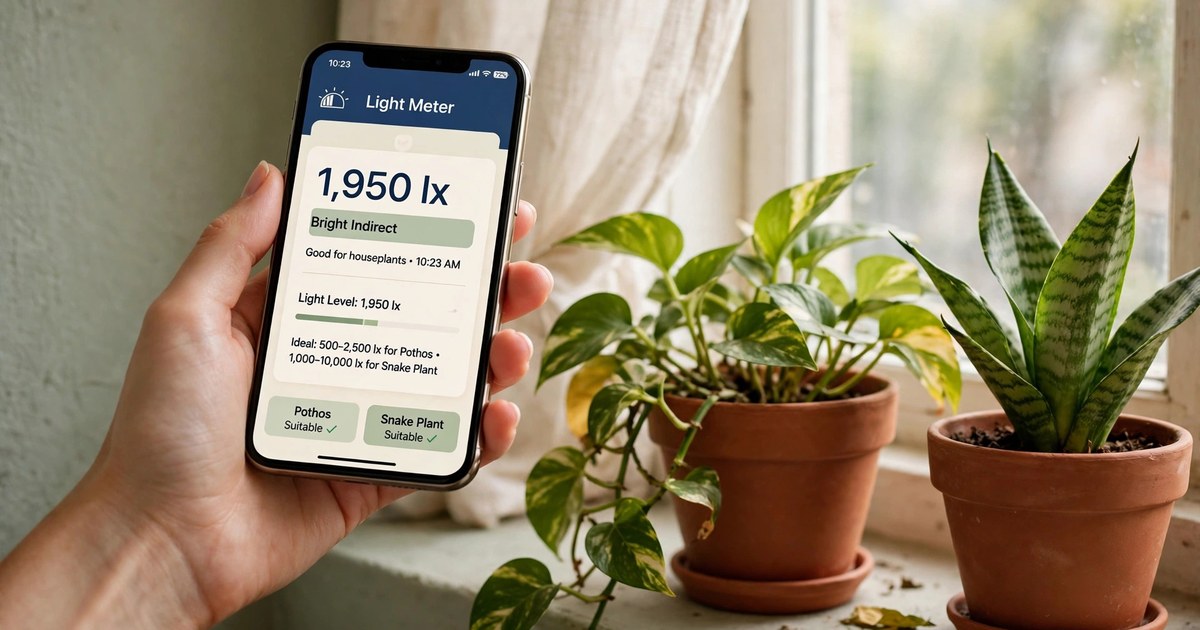
Winter windowsill gardening starts with honesty about light, because winter daylight in a flat can be a third of what the same sill gets in June. Before you buy a single plant, download a free light-meter app (there are several good ones — search "light meter" in your app store) and check the sill at midday on an overcast day. You're looking for at least 200–400 foot-candles of sustained light; below that, even tough plants will sulk.
Then choose plants that forgive dim days. Pothos, snake plants and ZZ plants are the holy trinity of low-light survivors — they tolerate the gloom, the dry heated air, and the occasional forgotten watering. For edible ambition, hardy herbs like mint, chives and parsley cope with less light than most greenery; keep basil closer to the glass where it's brightest. This is the same plant-picking logic behind our low-light indoor plants for dark apartments — if a plant thrives there, it will thrive on a winter sill.
Budget move: start with cuttings. A friend's pothos trim, snipped and rooted in water over a fortnight, gives you three or four free plants. Winter windowsill gardens built from cuttings cost nearly nothing and feel like a small magic trick.
Step 2: Draft-proof the sill first — never caulk the landlord's window
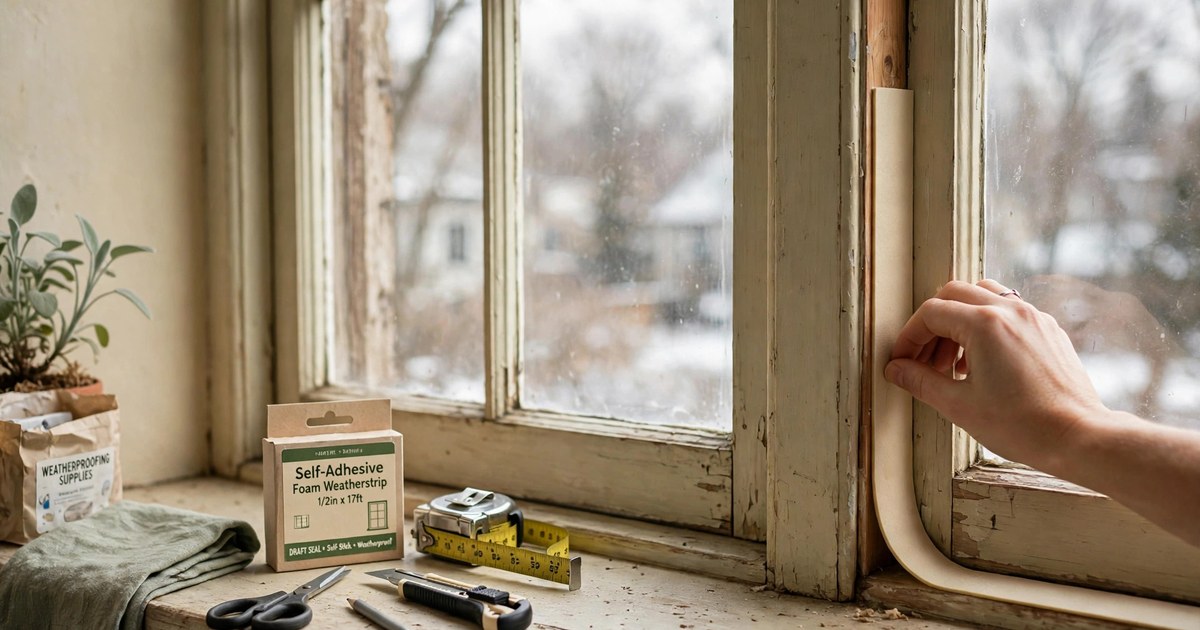
Cold glass and sneaky drafts kill more winter plants than low light ever will. Tropical foliage touching an ice-cold pane can develop black, papery patches overnight — the leaf tissue literally freezes. So before any plant moves in, draft-proof the sill with things that come off cleanly in spring.
Run your hand along the window frame on a windy evening. If you feel cold air sneaking in, press self-adhesive foam weatherstrip into the gaps — a roll costs a few pounds or dollars, peels off without residue, and your heating bill will thank you too. Add a row of cheap saucer trays or a boot tray under your pots; they catch condensation and watering run-off so the painted sill underneath never stains. And set the golden rule: no leaf ever touches the glass. Keep foliage 5–8 cm back from the pane — the light difference is negligible, the temperature difference is enormous.
The rule that protects your deposit: never caulk, silicone, or permanently seal a landlord's window. Everything you add should peel, lift or roll away in April. (Our full winterize indoor plants renter guide covers draft checks room by room.)
Step 3: Layer pots on thrifted risers for a lush, deep look
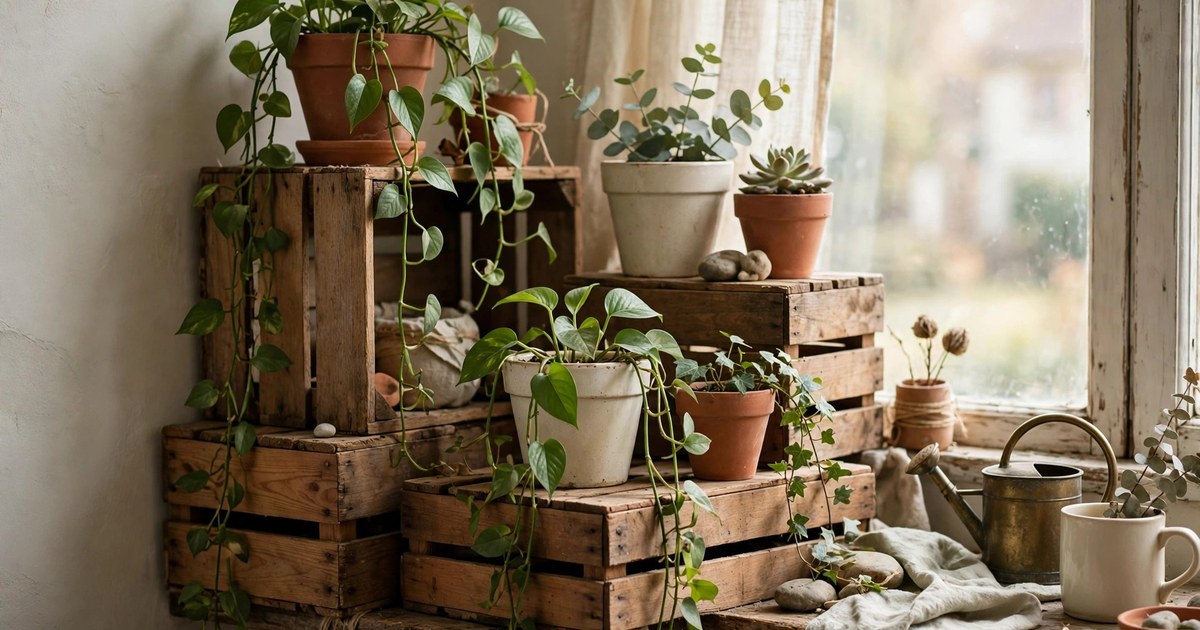
A row of same-height pots on a sill looks like a waiting room. A windowsill garden that looks lush and intentional needs layers — tall at the back, tumbling trailers at the front, and something in the middle to bridge them. The renter-budget way to build that depth is thrifted risers.
Charity shops and flea markets are full of the raw materials: small wooden crates, sturdy boxes, old cake stands, even a stack of hardback books wrapped in kraft paper. Flip a crate on its side and the back row of plants sits 15–20 cm higher, instantly giving the arrangement depth and letting light reach every leaf. For pots themselves, terracotta is the thrifter's jackpot — charity shops sell them for pennies, they wick excess water away from winter-soft roots, and their warm rust colour looks made for the season. Pair them with cream or white ceramic pots (also charity-shop staples) for a palette that feels calm rather than cluttered.
Styling tip: keep it to two pot colours maximum. Five mismatched pots look chaotic; three terracotta + two cream look like a designer planned it. Odd numbers of pots (3, 5, 7) always read more natural than even rows.
Step 4: Add one cheap grow light on a timer
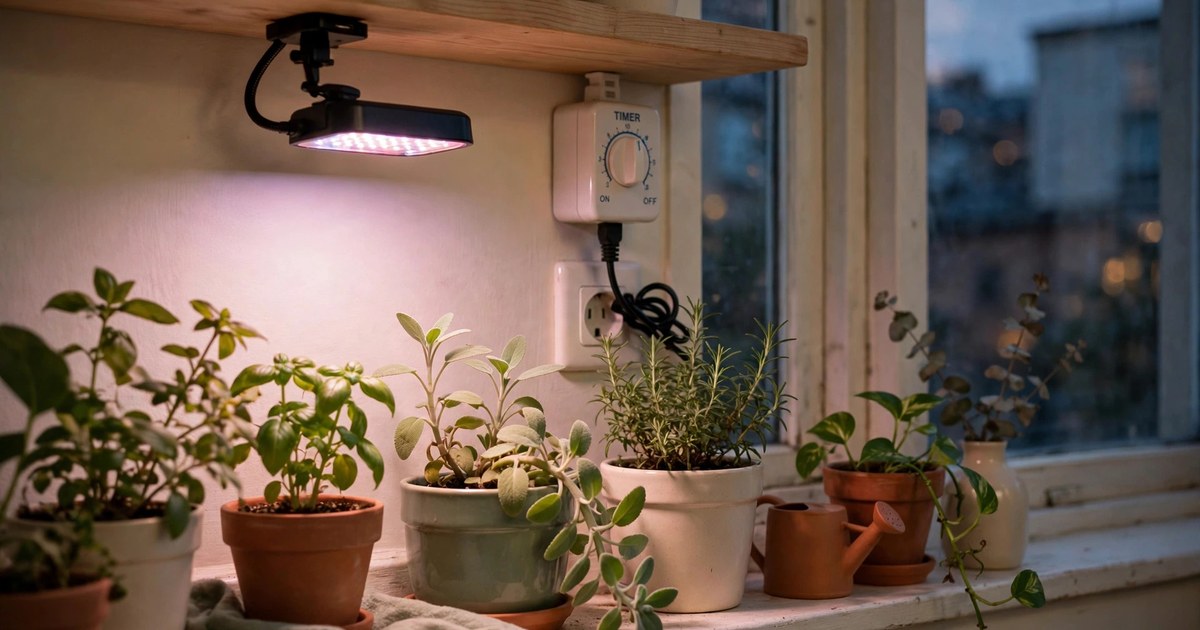
Here's the honest truth: for most renters, a north- or east-facing sill in December simply doesn't deliver enough light — and this is the one purchase that changes everything. A clip-on full-spectrum LED grow light costs roughly $15–20, clamps onto the sill, a shelf, or a stack of books, and comes off without a mark. Put it on a plug-in timer set for 12–14 hours a day and your plants get a guaranteed "summer afternoon" every single day, regardless of the weather outside.
Position the light 15–30 cm above the tallest foliage — close enough to matter, far enough not to scorch. One light comfortably covers a sill 60–90 cm wide; a wider bay window might want two, but start with one and see. Run it during daylight hours (say 8am to 8pm) so the plants still get a natural dark period, which they need to rest.
Browse options here: clip-on LED grow lights with timer on Amazon — look for full-spectrum (white/pinkish light, not the blurple disco kind), a built-in or included timer, and a sturdy clamp.
Landlord note: a clip-on light is furniture, not a fixture. Nothing is screwed, wired or stuck to the property, so there's nothing to explain at inspection time.
Step 5: Carve out a mini kitchen herb garden
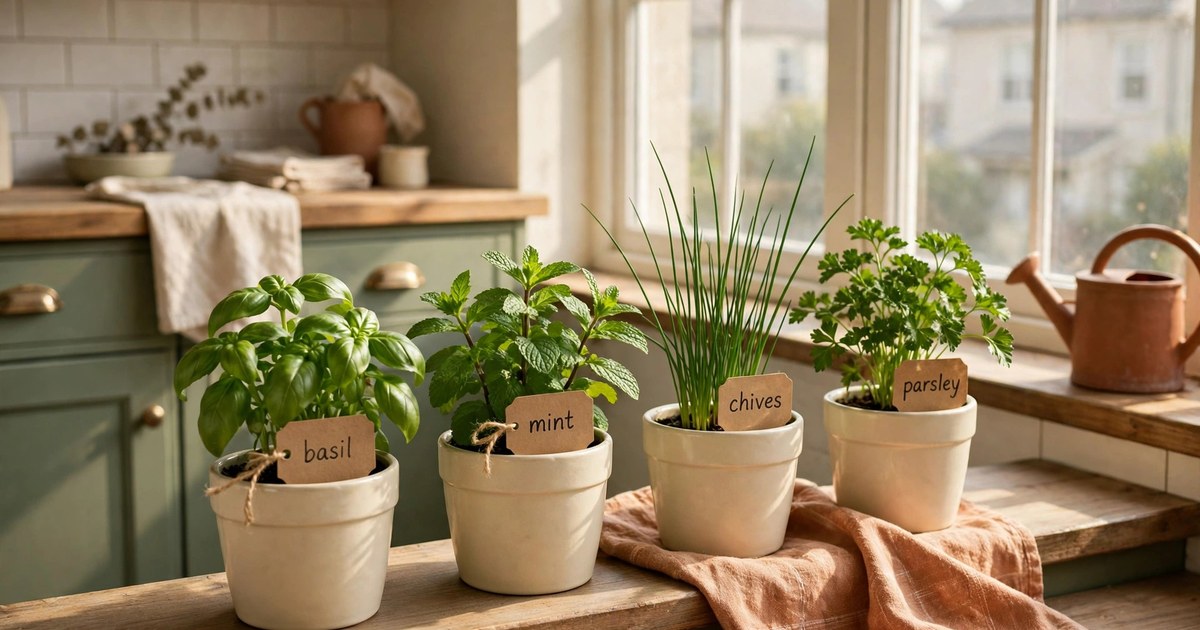
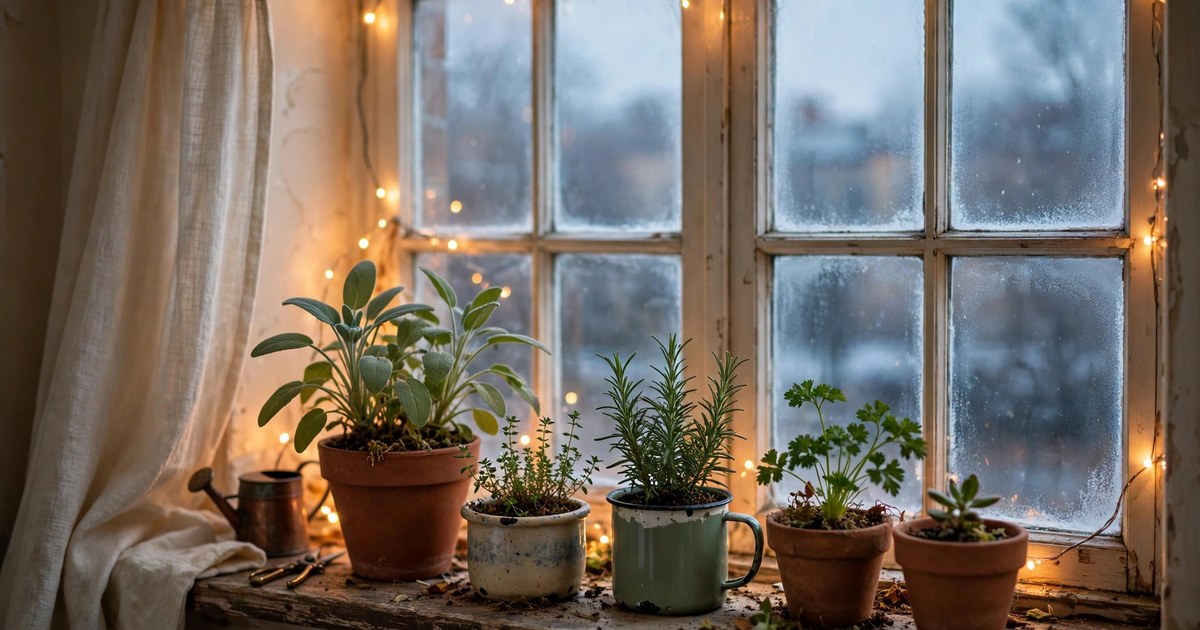
The most satisfying corner of a winter windowsill garden is the one you can eat. A mini herb garden turns the sill from decoration into something genuinely useful — fresh mint for tea, chives snipped over eggs, parsley for everything in January. And herbs are honest about winter: they won't pretend a dark sill is a Mediterranean summer, but the forgiving ones will keep producing with modest light and a little care.
Give herbs the brightest third of your sill — ideally under or nearest the grow light from Step 4. Start with mint, chives and parsley: all three tolerate lower light and cooler sills, and all three regrow after snipping, which means a steady supply rather than a one-off harvest. Basil is the diva of the group — keep it closest to the light and the warmth, and expect it to grow slower than summer. Plant each herb in its own small pot (they have different thirst levels), and harvest by snipping the outer stems first, never more than a third of the plant at once.
Winter herb hack: rotate each pot a quarter-turn every Sunday so all sides get light, and snip little and often — regular harvesting is what keeps herbs bushy instead of leggy in low light. Your winter plant care routine (winterize indoor plants renter guide) covers the watering rhythm that keeps herbs happy without drowning them.
Step 6: Set the winter care routine and let it run
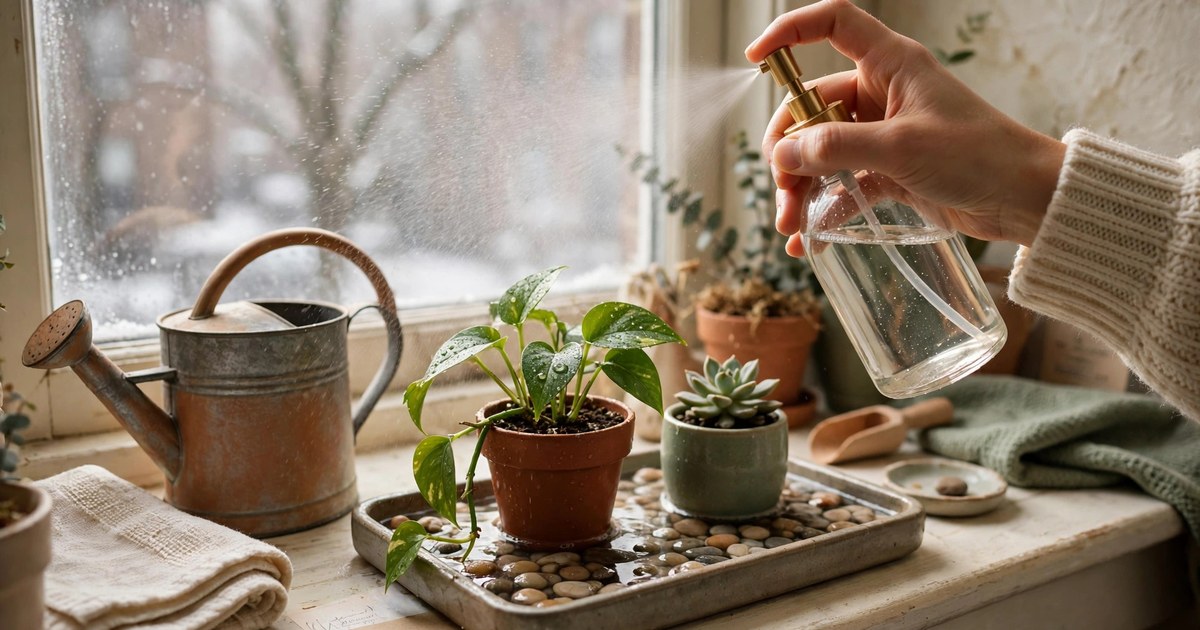
A winter windowsill garden doesn't need fussing — it needs a short, consistent routine. Tape this to the inside of a kitchen cupboard and you're done until spring.
Water less, check more. Short days mean slow growth, and slow growth means plants drink far less. Check the top 3–5 cm of soil with your finger; water only when dry. In December that might mean fortnightly for a snake plant. Always use room-temperature water — cold water shocks warm roots.
Humidify the cheap way. Heating drops indoor air to desert dryness, and crispy brown leaf tips are the classic symptom. Set pots on trays of pebbles with water just below the pebble tops; as it evaporates, it humidifies the air around the leaves. Grouping plants close together helps too — they share each other's transpiration.
Rotate weekly, wipe monthly. A quarter-turn every Sunday keeps growth even. Once a month, wipe leaves with a damp cloth — winter dust blocks the already-scarce light, and clean leaves photosynthesise noticeably better.
Mind the glass. On the coldest nights, nudge pots a few centimetres back from the pane, or drop a sheer curtain between plants and window. Foliage pressed against freezing glass is how leaves die overnight.
That's it — five minutes a week, and your sill stays green until the days lengthen again. Come March, you'll have the healthiest plants in the building, and a windowsill worth showing off in your bedroom plant styling photos.
Frequently Asked Questions
Will plants survive a north-facing window in winter?
Honest answer: the toughest ones will, but they'll look tired by February without help. A north-facing sill in midwinter gets almost no direct sun, so lean on the survivors — pothos, snake plant, ZZ — and add the clip-on grow light from Step 4. With 12–14 hours of supplemental light, even a north-facing sill becomes a perfectly good winter garden. Without it, stick to the holy trinity and skip the herbs.
What does the whole setup cost?
Less than you'd think. Weatherstrip and saucer trays: a few pounds. Thrifted terracotta pots and a crate riser: pocket change at a charity shop. Cuttings from friends: free. The one real purchase is the clip-on grow light at roughly $15–20, plus a couple of pounds for a plug-in timer if the light doesn't include one. A full windowsill garden for under $30 is entirely realistic — and most of it is reusable for years.
Will the grow light annoy my landlord or neighbours?
Almost certainly not. A small clip-on LED is quiet, clamps on without marks, and uses less electricity than a bedside lamp — there's nothing to plug into the building's wiring and nothing fixed to the property. From outside, a white full-spectrum light looks like an ordinary lamp through the window. (Avoid the purple "blurple" grow lights if you're overlooked — they're the ones that make neighbours curious.) It draws so little power that no landlord has ever reasonably objected to one.
What if I go away for the holidays?
This is where the winter routine pays off. A week or two away in December is fine: water everything thoroughly the day you leave, move pots slightly back from the coldest glass, and leave the grow light on its timer. Self-watering spikes or a simple wick setup (a water reservoir with cotton wicks into each pot) cover thirstier herbs for up to two weeks. Skip the well-meaning neighbour who overwaters — winter plants die from kindness far more often than from thirst.