There is a particular kind of holiday guilt that only plant people know. The bags are packed, the taxi is booked, and then you look at the monstera by the window and think: will it still be alive when I get back? Most houseplants are far hardier than we give them credit for, and a week or two away does not have to mean coming home to a jungle of crispy leaves. With a little preparation the day before you leave, your plants can mostly look after themselves.
The good news for renters is that none of this requires drilling, rewiring or anything your landlord would frown at. Every trick below costs little or nothing, uses things you probably already own, and works in a flat as well as a house. Think of it as setting your plants up with everything they need, then stepping back and letting them get on with it while you enjoy your holiday.
1. Water deeply the day before you leave
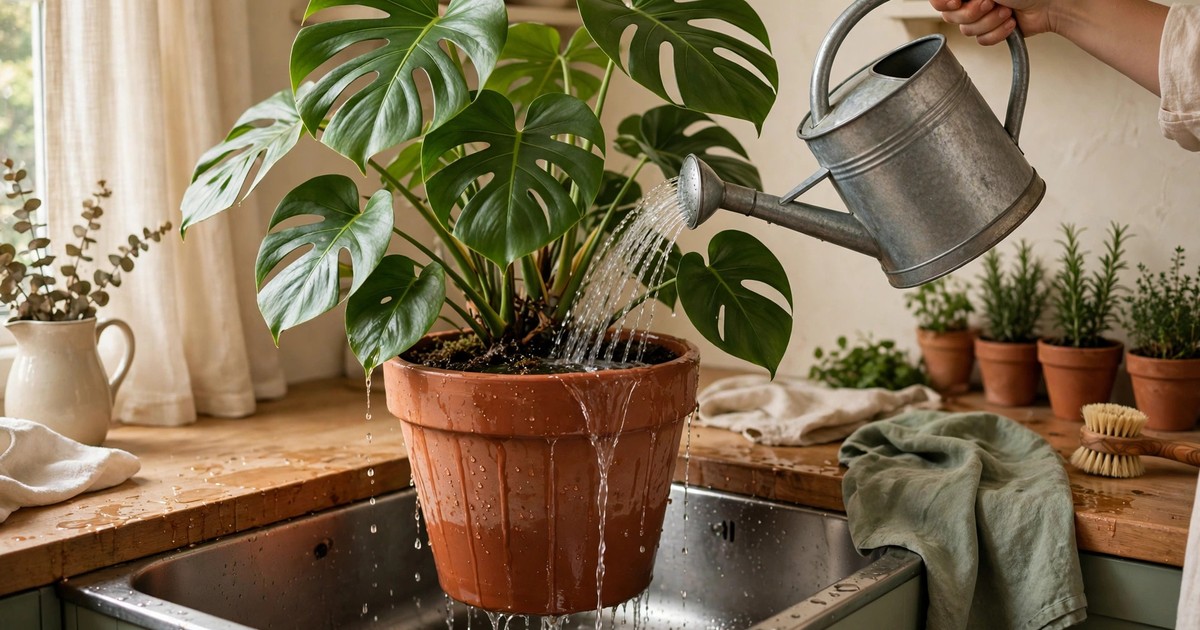
The single most useful thing you can do is water thoroughly the day before departure, not the morning you leave. Soak each plant until water runs freely from the drainage holes, let it drain completely, then empty the saucer so no plant sits in standing water. Deep watering saturates the whole root ball, which buys your plants far more time than a quick splash on the surface ever will.
Why it works is simple: dry pockets in the middle of the pot are what kill plants during a holiday, because roots in dry compost cannot drink even if the top looks damp. Watering a day early also gives you a chance to spot problems — a plant that drains instantly may be root-bound and need a soak in the sink, while one that stays soggy may need its drainage holes cleared. Do this the evening before you go, and your plants start the holiday fully hydrated.
2. Group your plants together for humidity
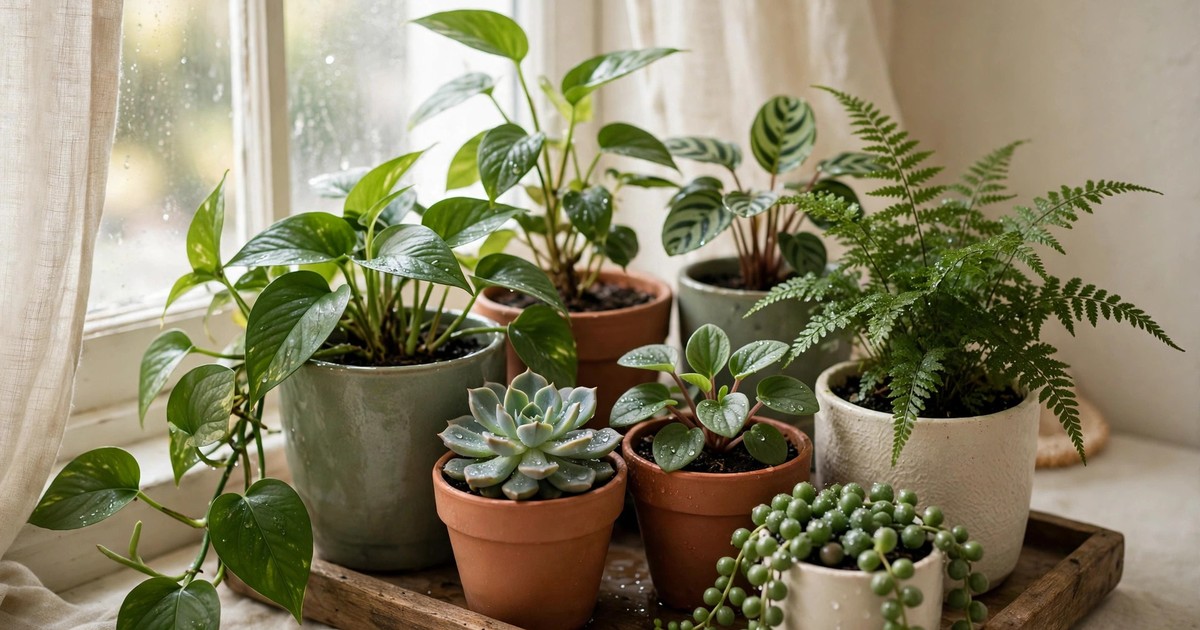
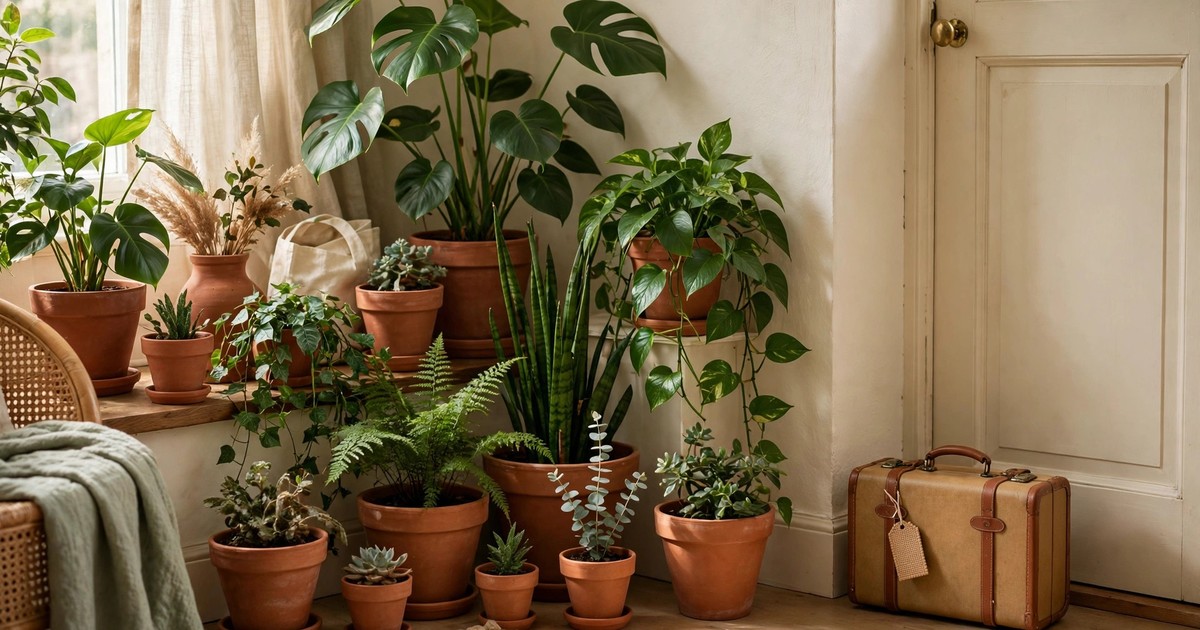
Once every plant is watered, gather them together in one spot, ideally in the bathroom or kitchen where the air is naturally more humid, or on a tray in a bright room. Plants grouped together create their own little microclimate: each one releases moisture through its leaves, and the group shares it, so the air around them stays damper than it would around a lone plant on a windowsill.
This trick costs nothing and it genuinely works, especially for humidity lovers like calatheas, ferns and peace lilies, which suffer first in dry, centrally heated rooms. Keep the group out of direct sun and away from radiators, and leave a little space between pots so air can still circulate. One crowded corner of happy plants beats ten isolated plants slowly drying out across the flat.
3. Set up a simple wick watering system
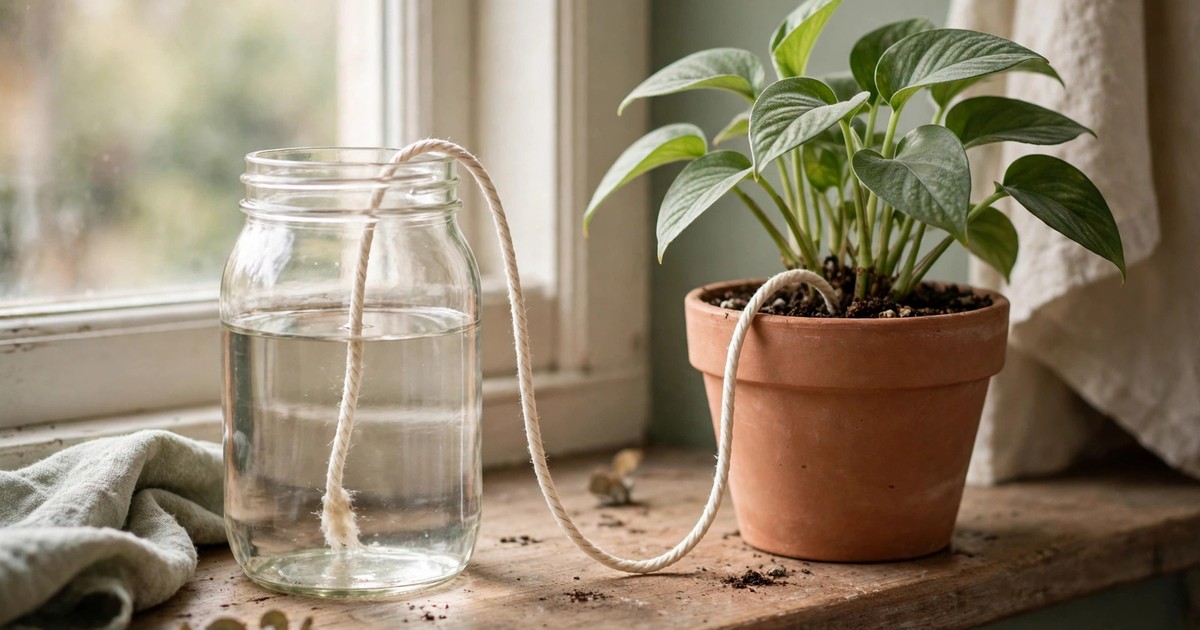
For plants that drink a lot, or holidays longer than a week, a wick system is the cheapest self-watering hack there is. Take a length of cotton string or a strip of old cotton T-shirt, push one end a few centimetres into the soil, and drop the other end into a jar or bottle of water placed slightly higher than the pot. Capillary action draws water slowly and steadily into the soil, exactly when the plant needs it.
This is a renter's dream: no gadgets, no timers, no plumbing, and the whole setup costs pennies. It works best for medium-sized pots and thirsty plants like peace lilies and ferns, and one large jar can serve a plant for a week or more. Test it for a day before you leave so you can see the soil is actually dampening — if the wick is too thin or the jar too low, it will not draw properly, and a quick test run saves a nasty surprise.
4. Make a pebble tray for humidity lovers
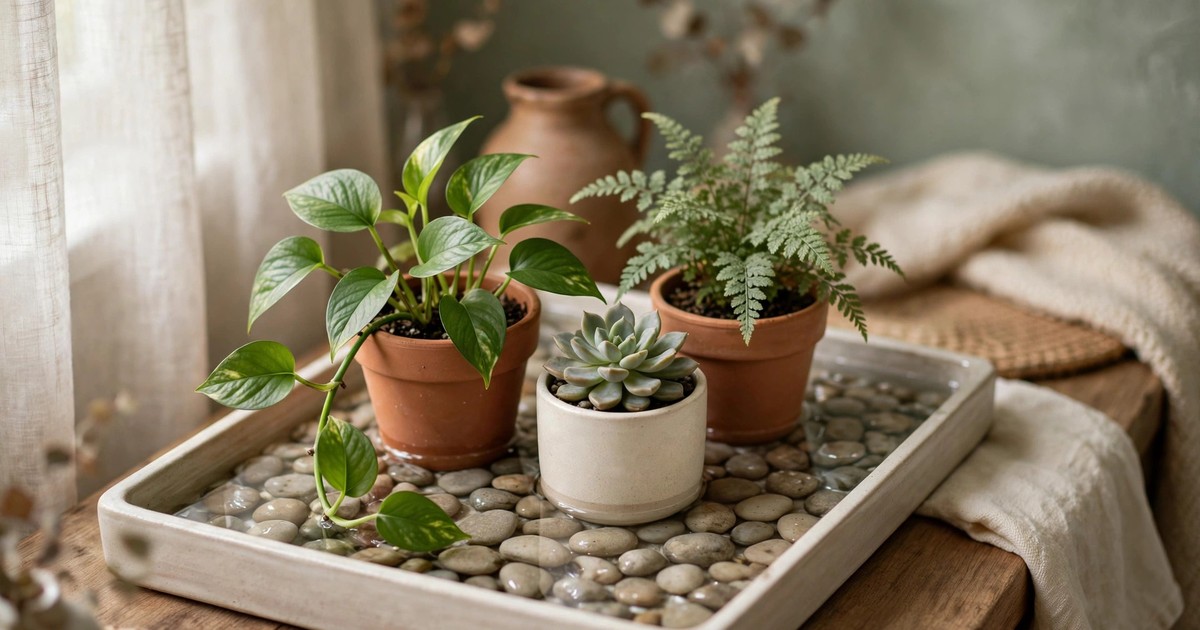
A pebble tray is the companion trick to grouping: fill a shallow tray or baking dish with pebbles, add water until it sits just below the tops of the stones, and stand your pots on top. As the water evaporates, it raises the humidity immediately around the plants, which is exactly what tropical plants crave in a heated winter home.
The key detail is that the pots sit on the pebbles, not in the water — roots sitting in standing water will rot, which is worse than dry air. A tray from the pound shop and a bag of decorative stones is all you need, and you probably already have a baking tray that will do. This is the trick that saves ferns, calatheas and orchids over Christmas, when radiators run all day and indoor air gets brutally dry.
5. Move plants back from the window
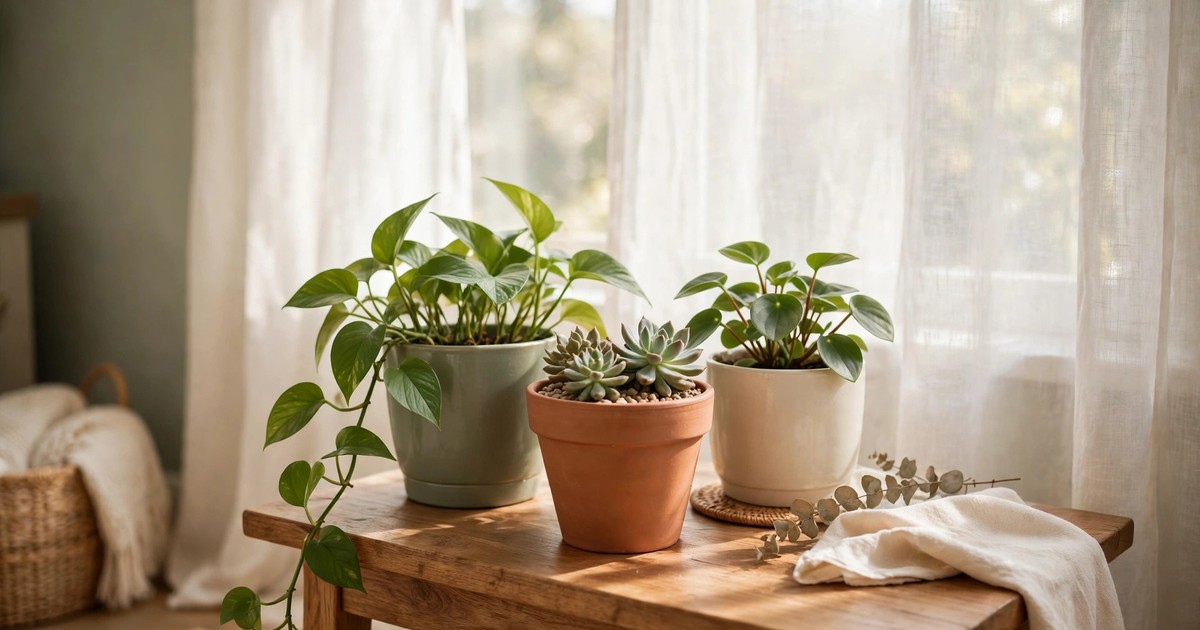
It feels counterintuitive, but before a holiday you should move most plants a step back from the window, into bright indirect light rather than direct sun. A plant in a sunny south-facing window dries out fast, especially in winter when the sun is low and strong through the glass, and a plant that dries out in three days will not survive a ten-day trip.
Moving plants a metre or so back slows everything down: less light means slower growth and slower water use, which is precisely what you want while you are away. Keep them away from radiators and cold draughts too — a spot in the middle of a bright room is ideal. Your plants will not mind the dimmer light for a week or two, and they will thank you for the extra moisture when you return.
6. Skip the fertiliser until you return
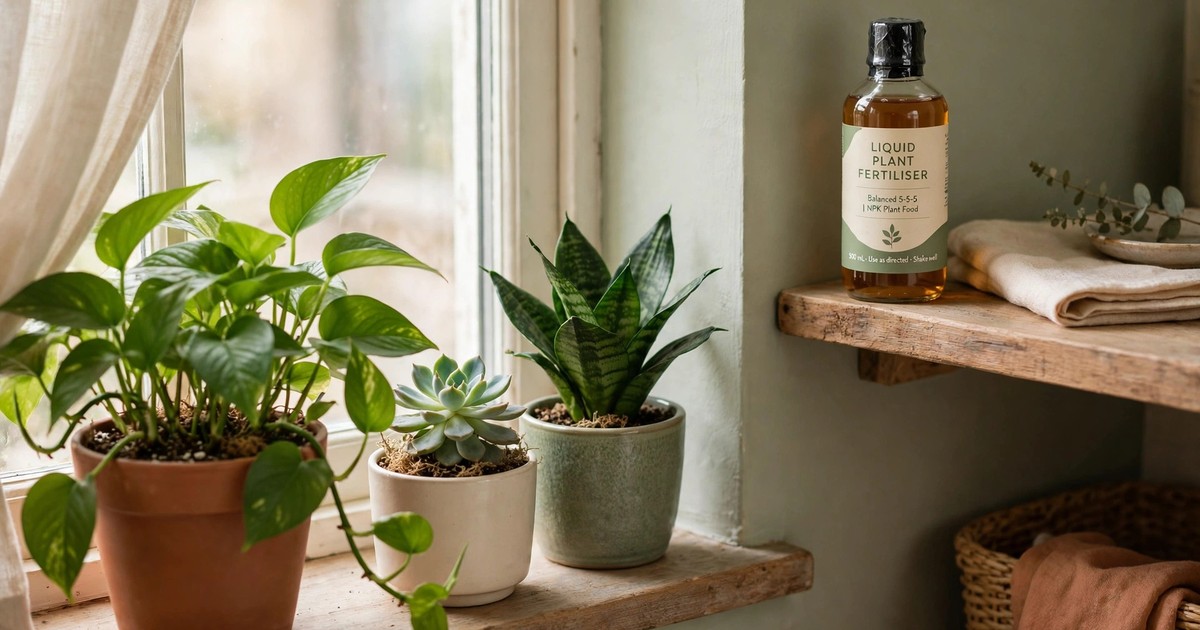
It is tempting to give plants a feed before you leave, as a sort of parting gift, but resist it. Fertiliser encourages new growth, and new growth is soft, thirsty growth that demands more water and more light — the opposite of what a plant needs when it is about to be left alone. Fed plants also risk fertiliser burn if the soil dries out, since salts concentrate as water evaporates.
Your plants will be perfectly fine without food for a fortnight, and most houseplants barely grow at all in winter anyway. Save the feed for when you get home, when you can water it in properly and watch the plant respond. This is one of those rare plant-care rules where doing nothing is genuinely the best thing you can do.
7. Leave a plant-sitter checklist if someone can pop in
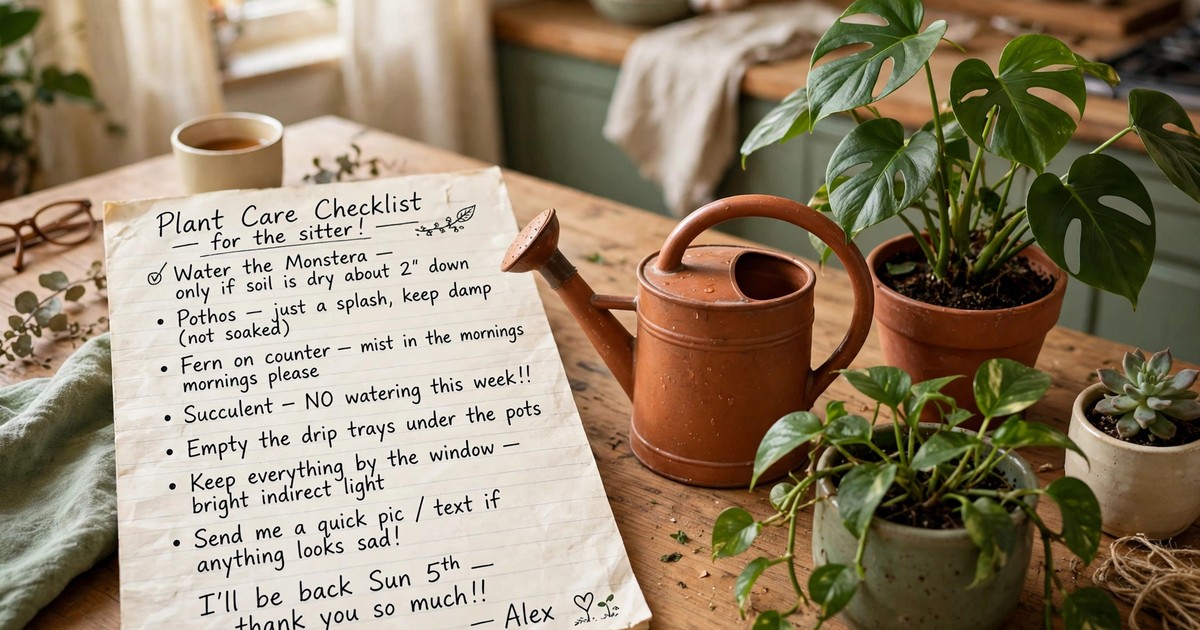
If a friend, neighbour or family member can pop in even once, your plants' odds improve enormously — but only if you make it easy for them. Write a short, simple checklist and leave it by the plants: which plants need water, how much, and which ones to leave alone. A line per plant is plenty, and a photo of each plant on the list removes all guesswork.
Keep the instructions foolproof. "Water the monstera on Sunday — one full watering can, let it drain" beats "keep the soil moist" every time, because a well-meaning helper can easily drown a plant that was doing fine. Group the plants that need watering together and put the ones that should be left alone somewhere else, so your sitter cannot mix them up. A thank-you bottle of wine or a box of chocolates costs far less than replacing a collection.
8. What to do the day you get home
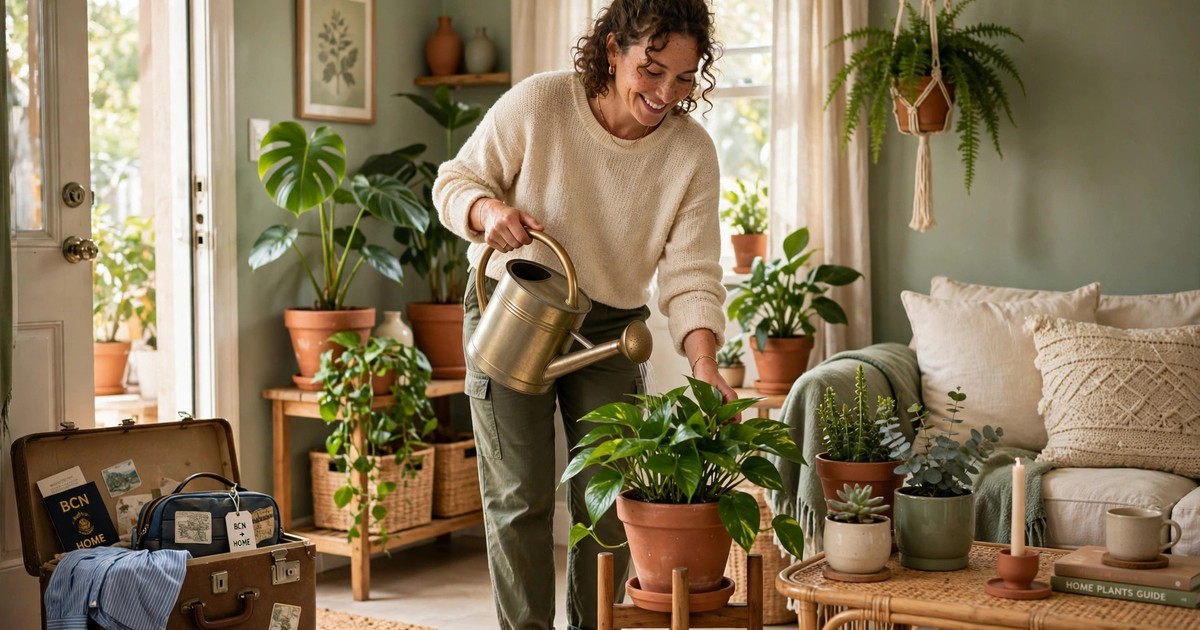
When you get home, resist the urge to flood every plant at once. Check the soil first: push a finger a couple of centimetres in, and water only the plants that are actually dry. Plants that still have damp soil do not need more water, and overwatering a plant that survived your holiday is a heartbreaking way to lose it after the fact.
Then do a gentle tidy-up. Trim off any yellow or crispy leaves, remove the wicks and pebble trays, and move plants back to their usual spots over a day or two rather than all at once. Most plants bounce back within a week of normal care, and a little patience now pays off: a plant that looks sorry on arrival often puts out new growth within days. Wait a week before feeding anything, so roots can recover before they are asked to grow.
Enjoy the holiday
Your plants are tougher than you think, and a holiday is not the threat to them that it feels like. Deep watering, grouping, a wick or two, and a step back from the window will carry most houseplants through a week or two with no drama at all. Set it up the day before you leave, hand over a checklist if someone can pop in, and then stop worrying — your jungle will be waiting for you when you get home.