Nothing deflates a Christmas display faster than a garland that was lush on the first weekend of December and is brown and shedding by the second. Cut greenery — fir, pine, cedar, holly, eucalyptus — is alive when you buy it, and it stays alive for weeks if it gets what a cut stem needs: water, cool air, and protection from heat. Most greenery dries out early not because it was old, but because it was hung over a radiator, never watered, or bought already half-dry. Every step below is renter-friendly, costs almost nothing, and adds days or weeks to your display.
The single most important idea is this: treat cut greenery like cut flowers, not like a plastic decoration. It drinks, it dries, and it responds to its environment. Get the buying, the preparation, and the placement right, and a garland bought in late November will still look good on New Year's Day.
Step 1: Buy fresh, and test before you pay
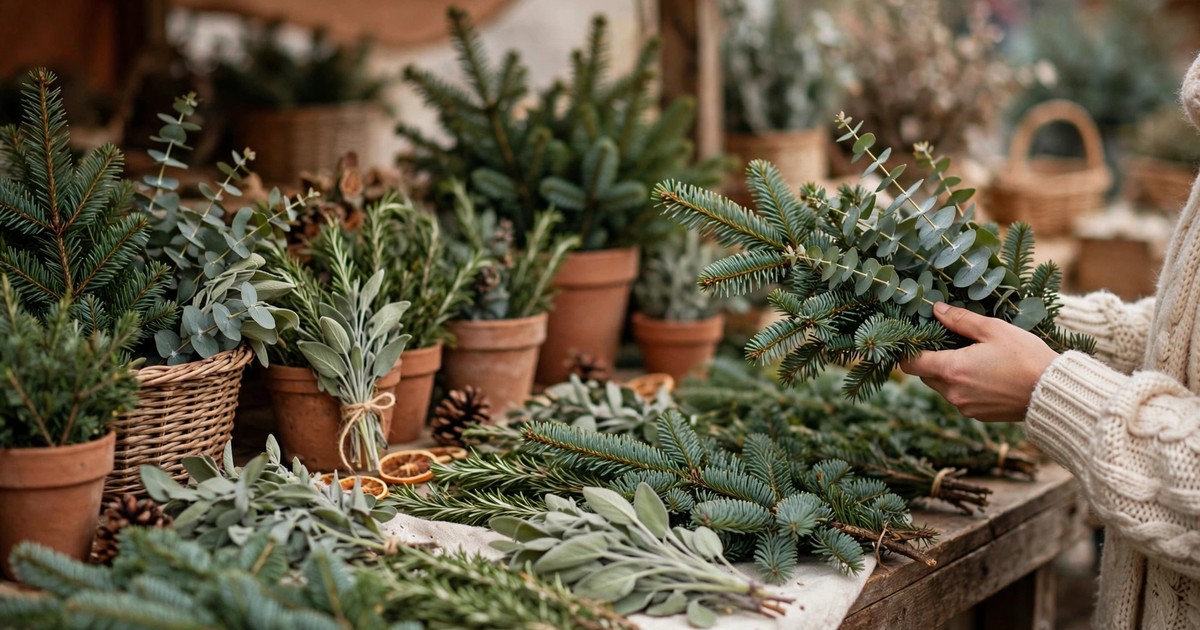
Fresh greenery bends without snapping, smells strongly of pine or cedar, and holds its needles when you run a hand along a branch against the grain. Dry greenery snaps, smells faint, and sheds at a touch. Bend a branch tip gently — it should flex — and shake the bunch lightly over the ground; a few dropped needles are normal, a shower is not.
Buy as close to decorating day as you can, and buy from a source that keeps its stock outside in the cold, not stacked in a heated shop. If you are buying a pre-made wreath or garland, check the back as well as the front, since the hidden side is where dry patches start. Fresh stock costs the same as tired stock; the test takes ten seconds and saves a month of shedding.
Step 2: Give every stem a fresh cut
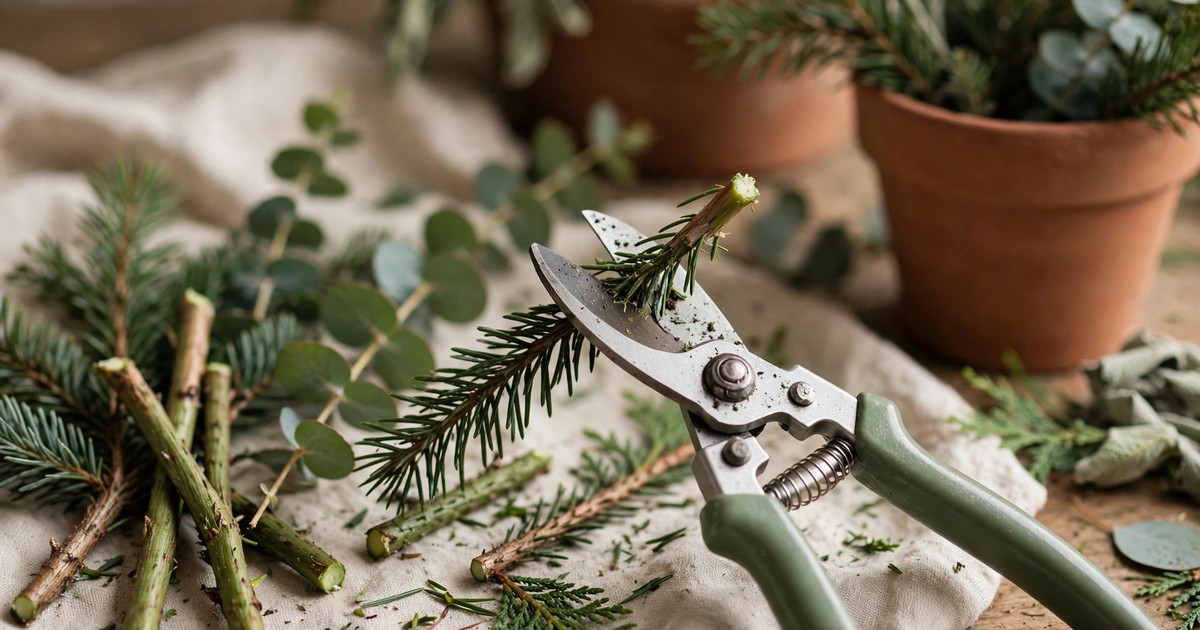
Cut at least 2 cm off the end of every stem at a sharp angle before you arrange it. The original cut seals over within hours of harvesting, blocking water uptake, and a fresh angled cut reopens the stem's drinking channels. Use sharp secateurs or a knife — a crushed stem drinks worse than an uncut one — and cut under water if you can, which stops air bubbles entering the stem.
This step applies to loose branches you arrange yourself and to any stems you add to a bought wreath or garland. It does not apply to a fully wired wreath you cannot take apart; for those, focus on misting and placement instead. Recut stems that have been sitting dry for more than a day, since the seal reforms quickly in warm indoor air.
Step 3: Soak branches overnight before arranging
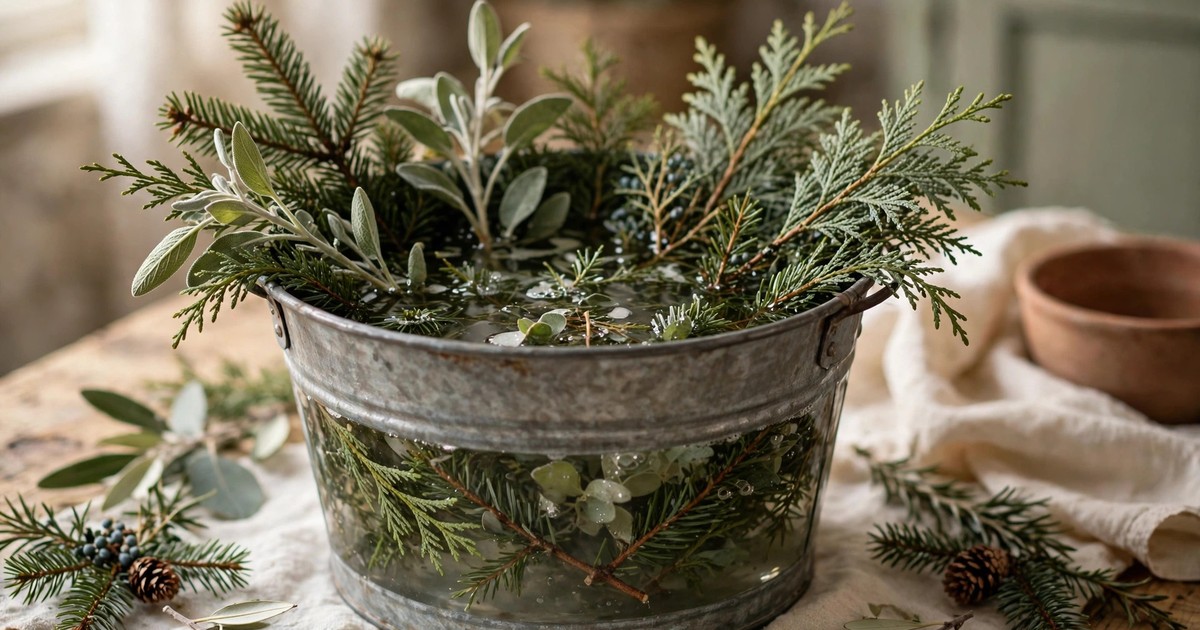
Stand loose branches in a bucket of cool water overnight — or for at least a few hours — before you build your garland, wreath, or arrangement. A long drink before arranging hydrates the foliage fully, so it starts December saturated rather than already drying, and it makes the branches more flexible and easier to work with.
Add nothing fancy to the water: plain cool water is best, and commercial flower food makes little difference to woody evergreen stems. Keep the bucket somewhere cool — a balcony, a garage, or a cold room — rather than beside a radiator, and change the water if it looks cloudy. This one step alone can add a week to a garland's life.
Step 4: Mist regularly, especially wreaths and garlands
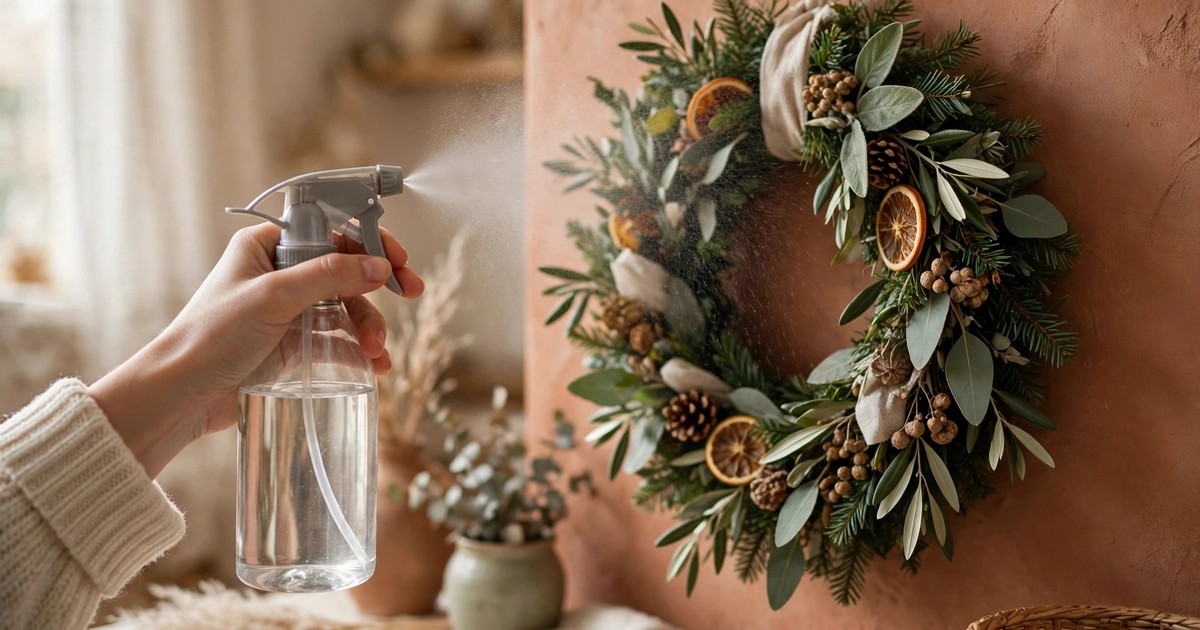
Wreaths and garlands cannot drink from a vase, so misting is their water supply. Spray the foliage lightly every two to three days, until the leaves are damp but not dripping, and mist the back of a wreath as well as the front, since the back dries first against a door or wall. A small spray bottle by the front door makes this a ten-second habit rather than a chore.
Mist in the morning so the foliage dries before evening, which reduces mould risk in a warm home. Avoid misting decorations with paper or fabric elements that water would damage, and skip misting on days when the greenery is already damp from humidity. If a wreath hangs outside in rain or snow, it needs less misting — nature is doing the job.
Step 5: Keep greenery away from heat sources

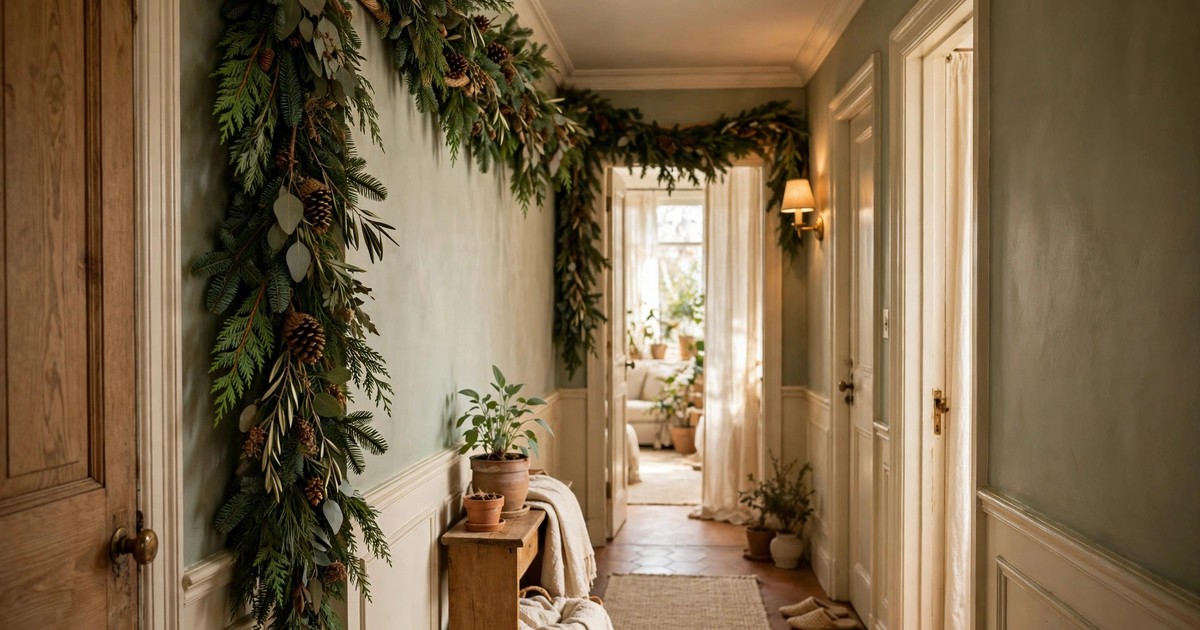
Heat is the fastest killer of cut greenery. A garland over a radiator, a wreath beside a fireplace, or branches above a television will dry out in days, no matter how well you misted them. Hang greenery on cool walls, in hallways, and on doors away from radiators, and keep it out of direct sun through south-facing windows, which acts like a slow oven in a heated home.
This matters doubly in a small apartment, where every wall seems to have a radiator on it. Choose the coolest available spot — an entryway, a north-facing wall, a bedroom door — even if it is not the spot you first imagined. A garland that lasts all month in a hallway beats a garland that crisps in a week above the radiator, however photogenic the radiator spot looked.
Step 6: Use water sources where you can
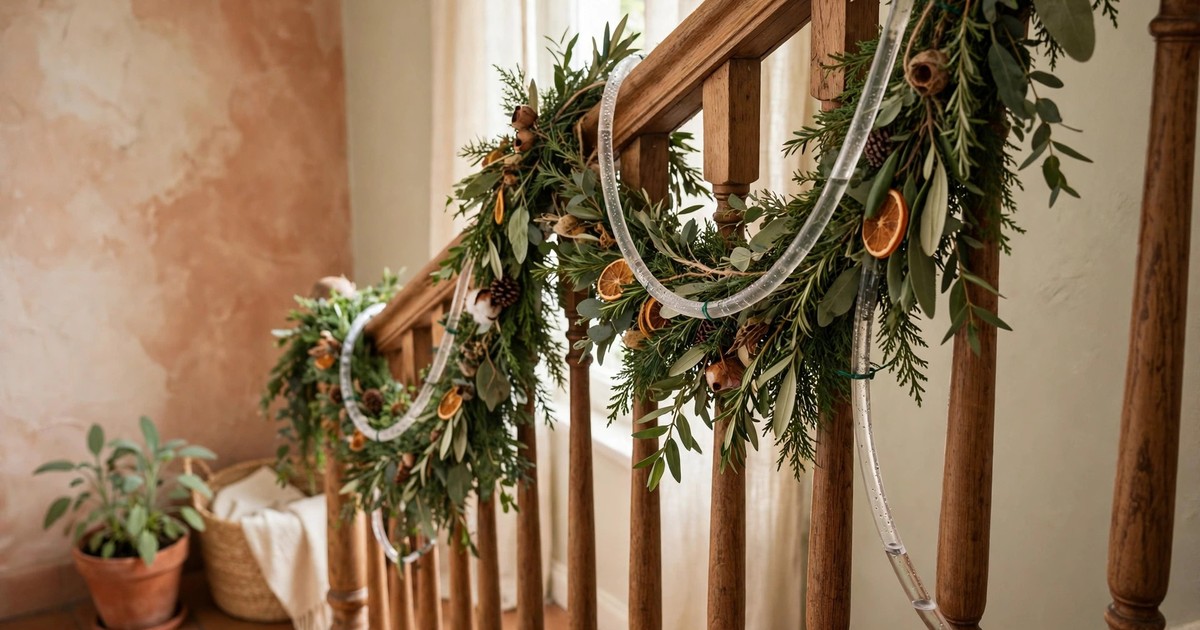
Where greenery sits in a vase, a jar, or an arrangement, keep the water topped up — evergreen stems drink steadily, and a vase that runs dry for a day costs a week of life. For garlands and swags, tuck small water tubes (the kind florists use for single stems) onto the thickest stems at intervals, hidden behind foliage, and refill them every few days.
For a mantel garland, a damp oasis block or a length of damp moss tucked behind the foliage acts as a slow-release reservoir. Wrap the reservoir in plastic so it does not drip onto furniture or damage a rental surface, and check it when you mist. Any water source, however small, beats none at all for a display that cannot sit in a vase.
Step 7: Choose long-lasting varieties for the longest displays
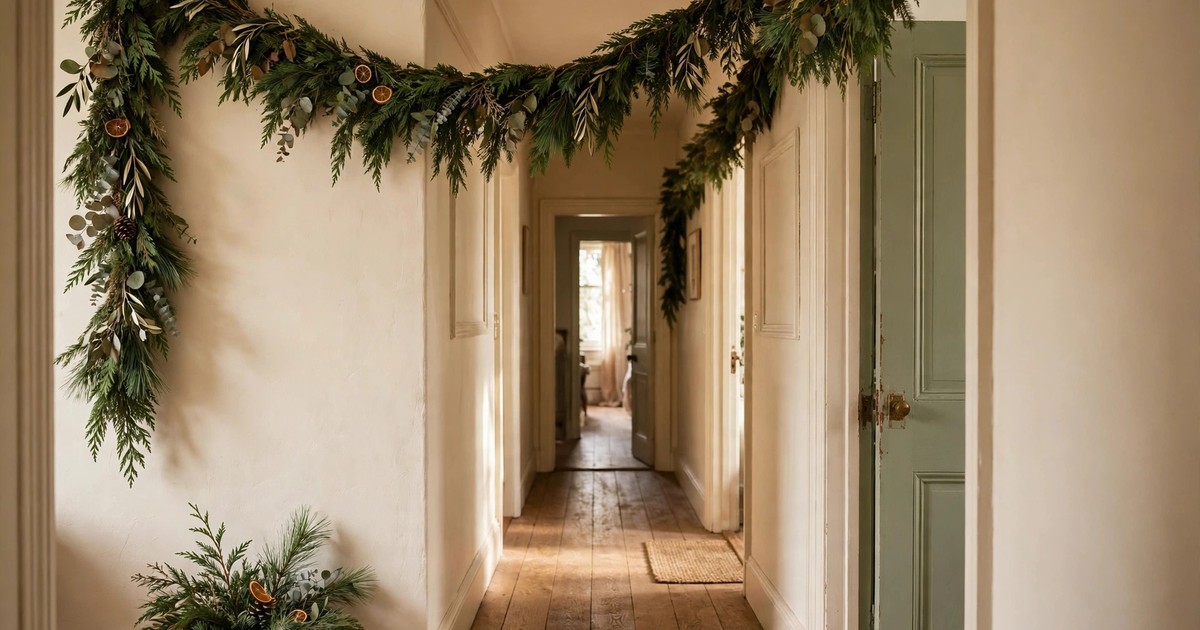
Not all greenery ages equally. Cedar, pine, and juniper hold their needles far longer than spruce, which sheds notoriously fast indoors; fir sits in the middle. If your display must last from late November to New Year, build it mainly from cedar and pine, and use spruce only for short-lived arrangements you plan to replace.
Mix varieties for texture — cedar's flat sprays, pine's long needles, juniper's berries — but let the long-lasting types carry the structure. Eucalyptus dries gracefully rather than shedding, so it is a good choice for displays you accept will dry, since dried eucalyptus still looks intentional. Knowing your varieties turns a guessing game into a plan.
Step 8: Refresh, prune, and replace as December goes on
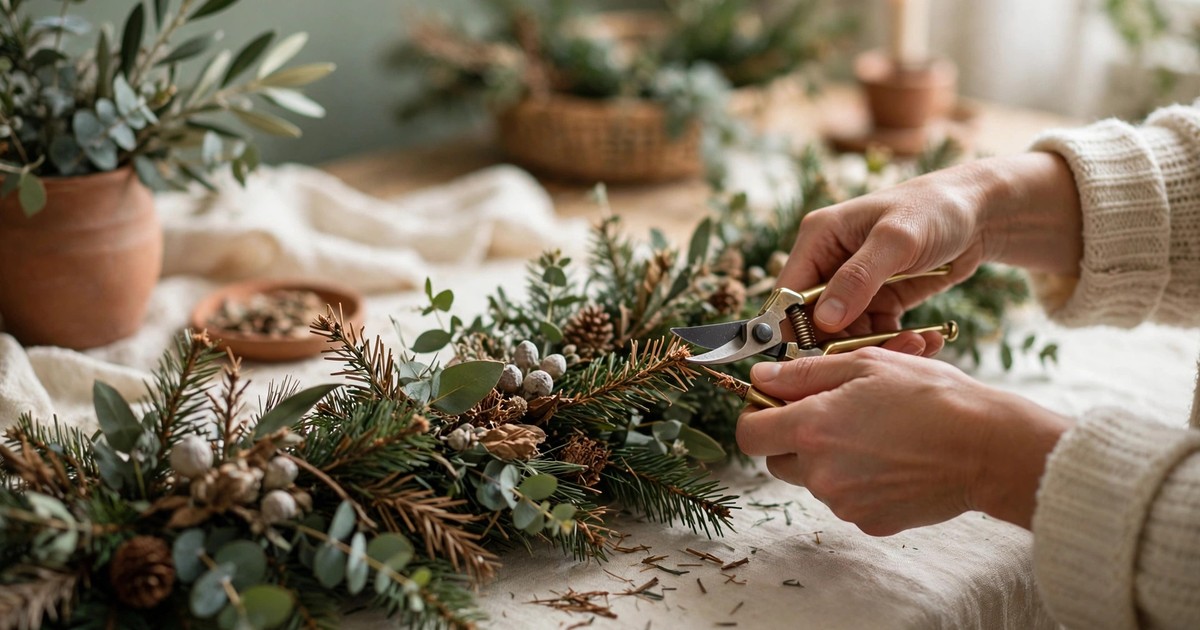
Even well-cared-for greenery loses a few tips and sheds a few needles, and a mid-December refresh keeps the whole display looking new. Snip off brown tips, pull out any fully dry sprigs, and tuck in a few fresh branches — kept in water on a balcony or in a cool room as spares — to fill gaps. A garland refreshed twice in December looks better on Christmas Day than one left untouched since November.
Keep a small bag of spare branches when you buy your greenery, specifically for this purpose. The spares cost almost nothing, they store well in a bucket of water in a cool spot, and they turn a fading display into a fresh one in ten minutes. Vacuum or sweep under garlands weekly, since fallen needles on a rental floor become a cleaning problem if left.
Step 9: Take displays down before they become a fire risk

Very dry greenery near fairy lights or candles is a genuine fire risk, and knowing when to retire a display is part of keeping it fresh — a display kept too long stops being festive and starts being hazardous. If branches snap easily, shed heavily, and feel papery despite misting, take them down, even if it is before New Year.
Dispose of greenery through garden waste or compost where available, and check for fallen needles behind furniture and in carpet edges — a thorough clean protects your deposit as well as your safety. Note which varieties lasted longest and where you hung them, so next year's buying and placement decisions start from evidence rather than hope.