Winter is when a small apartment needs plants the most and when plants have the hardest time. The light drops, the heating dries the air, and the rooms feel smaller as the days close in. Trailing plants are the answer to all three problems at once: they draw the eye upward, which makes a room feel taller; they soften hard corners and bare walls; and they ask for almost no floor space, which is the one thing a small flat cannot spare. A pothos on a high shelf does more for a winter room than a whole corner of ornaments.
The ten ideas below are all about placement — where a trailing plant earns its keep in winter — plus the small care adjustments that keep vines happy through the cold months: less water, more light, and no cold draughts. Every idea is renter-friendly, since trailing plants hang, sit, or drape rather than needing anything fixed to the wall.
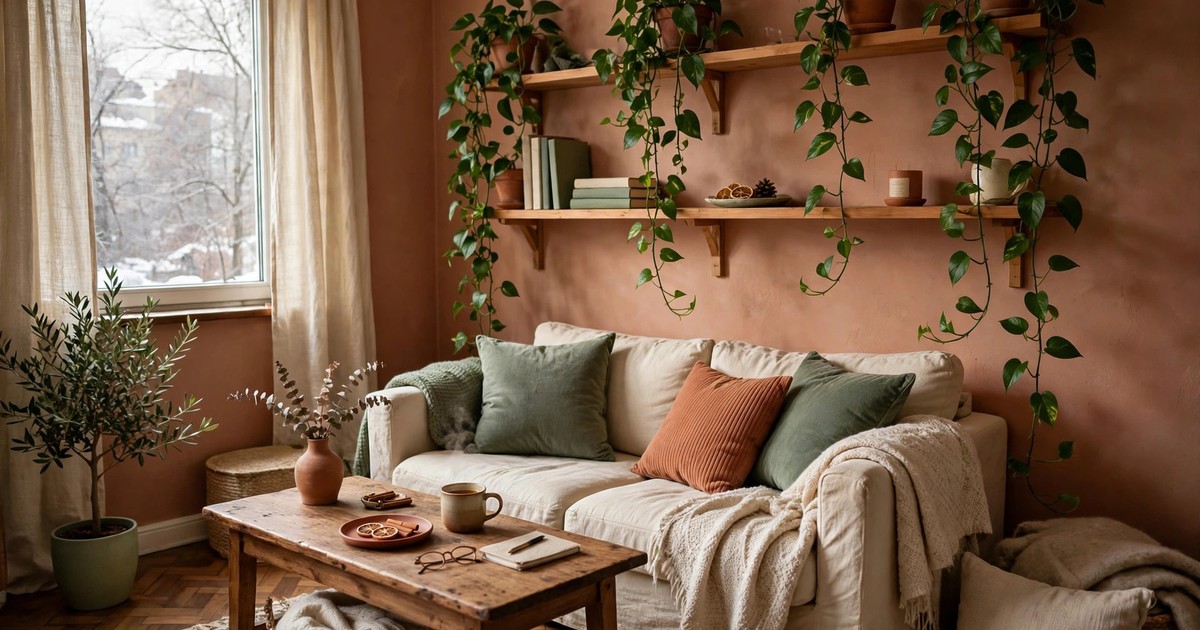
1. The high shelf cascade
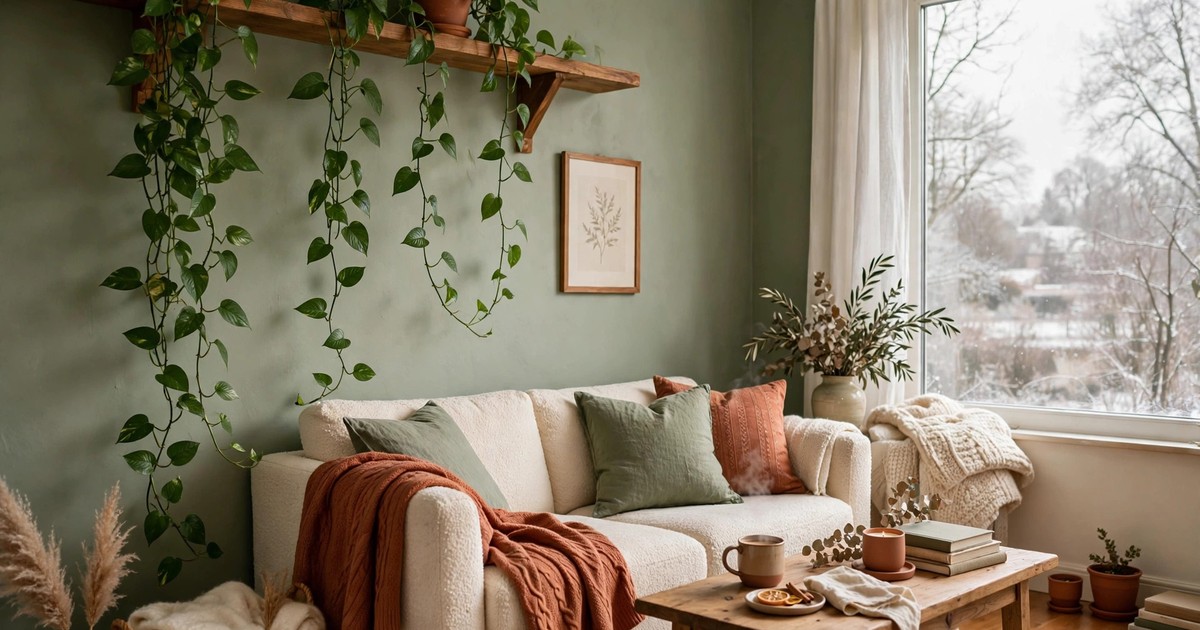
Why it works: a trailing plant on a high shelf is the single most flattering plant placement in a small room. The vines fall like a green curtain, they make the ceiling feel higher, and they turn a shelf that would otherwise hold a few books into a living feature. In winter, the height also helps the plant, since warm air rises and the top of the room is the warmest spot — as long as it is not directly above a radiator.
Where it fits: on top of a bookcase, a kitchen wall cabinet, or a wardrobe. Let the vines trail at least a foot before trimming, since a short trail looks like a plant that has not decided what it is yet. Water sparingly in winter — a high plant is easy to forget and easier to overwater when you finally remember it — and check the soil, not the calendar, before watering.
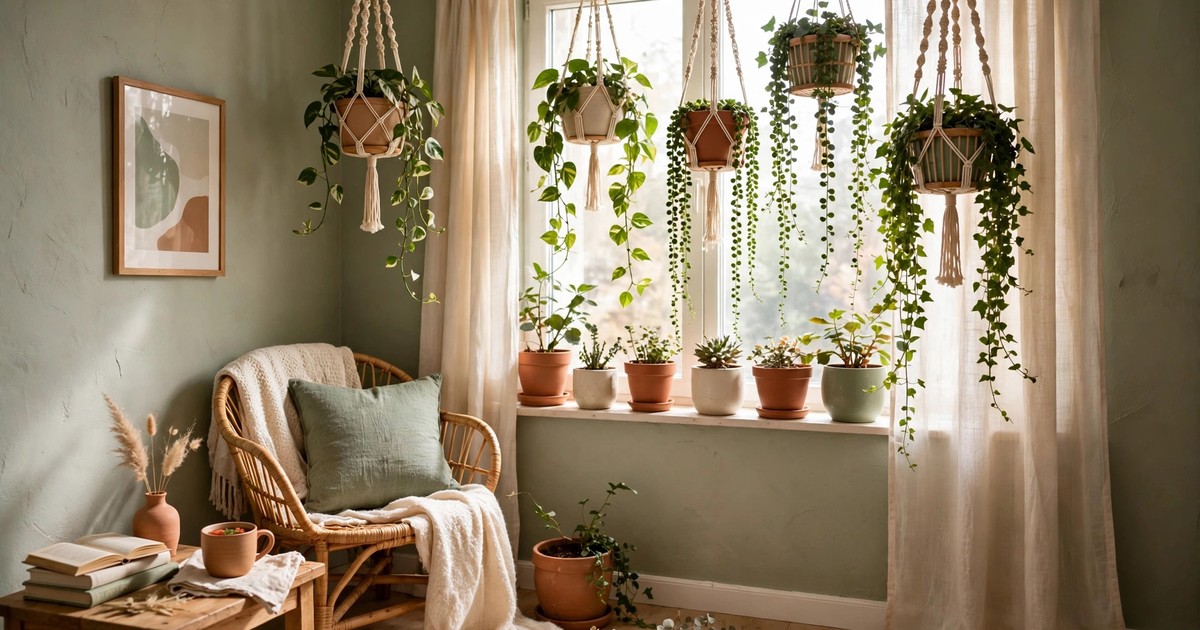
2. Hanging in the window for winter light
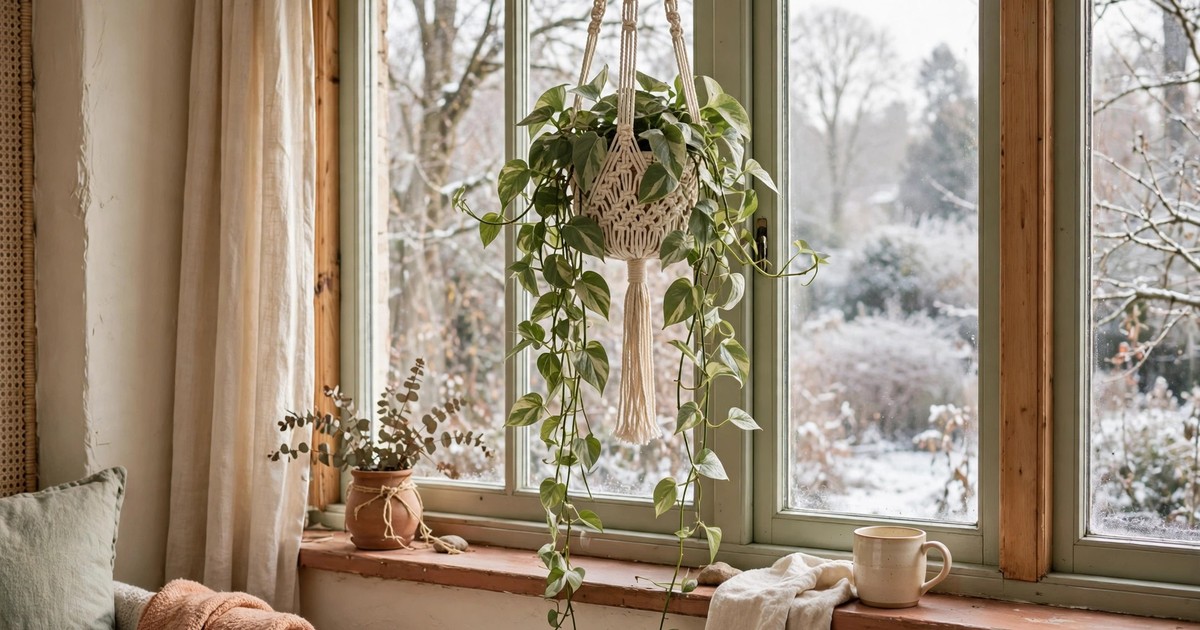
Why it works: winter light is weak, and a trailing plant in the window gets every bit of it. A hanging pothos or philodendron in a bright window keeps growing through winter when floor plants stall, and the vines frame the window like a living curtain that still lets light through — unlike heavy winter drapes, which block the little daylight there is.
Where it fits: in a south- or east-facing window if you have one, hung from a tension rod across the window frame or a hook in the ceiling. Keep the plant back from cold glass on freezing nights — leaves touching an icy windowpane will blacken — and rotate the pot every couple of weeks so the vine grows evenly rather than leaning hard toward the light.
3. Draped over a doorway or curtain rod
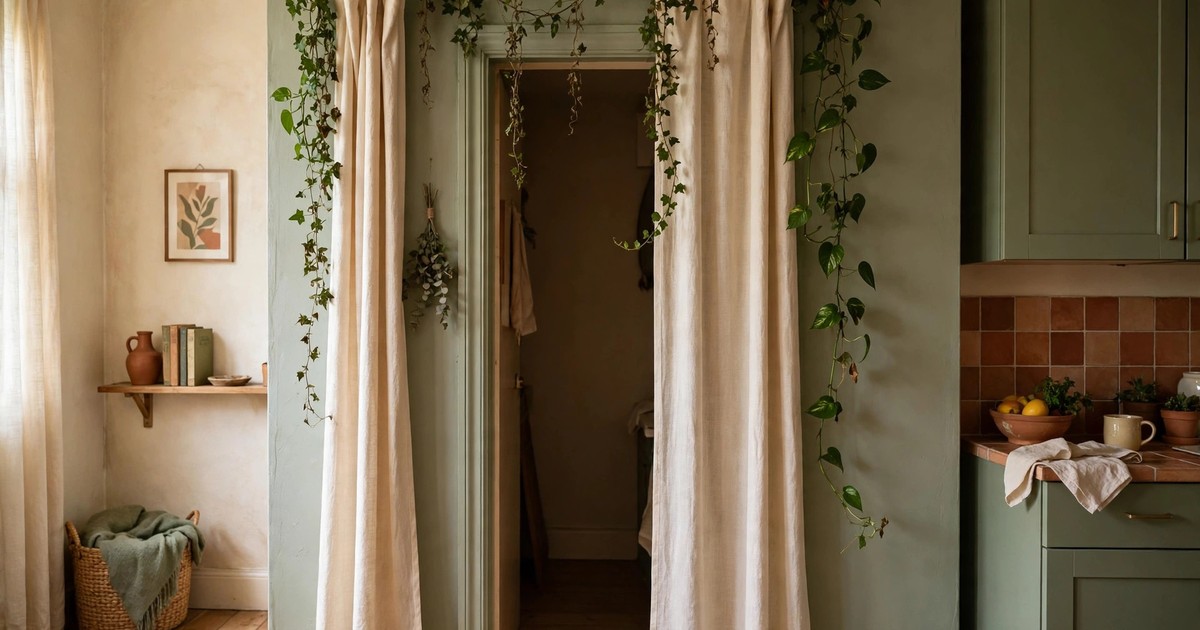
Why it works: a doorway dressed in trailing vines is a living archway, and it makes moving between rooms feel like moving through a garden rather than a corridor. It is also a genuinely clever use of space: the top of a door frame is otherwise entirely wasted, and a plant there is out of reach of pets and out of the way of daily life.
Where it fits: over an interior doorway, a curtain rod above a door, or the top of an open archway. Use a lightweight pot and a plant with flexible vines, like pothos or string of hearts, and secure the pot so it cannot be knocked down by the door swinging. This spot suits rooms where the doorway is wide and the plant will not brush faces — a trailing vine in the face every time you enter a room gets old fast.
4. The bookshelf waterfall
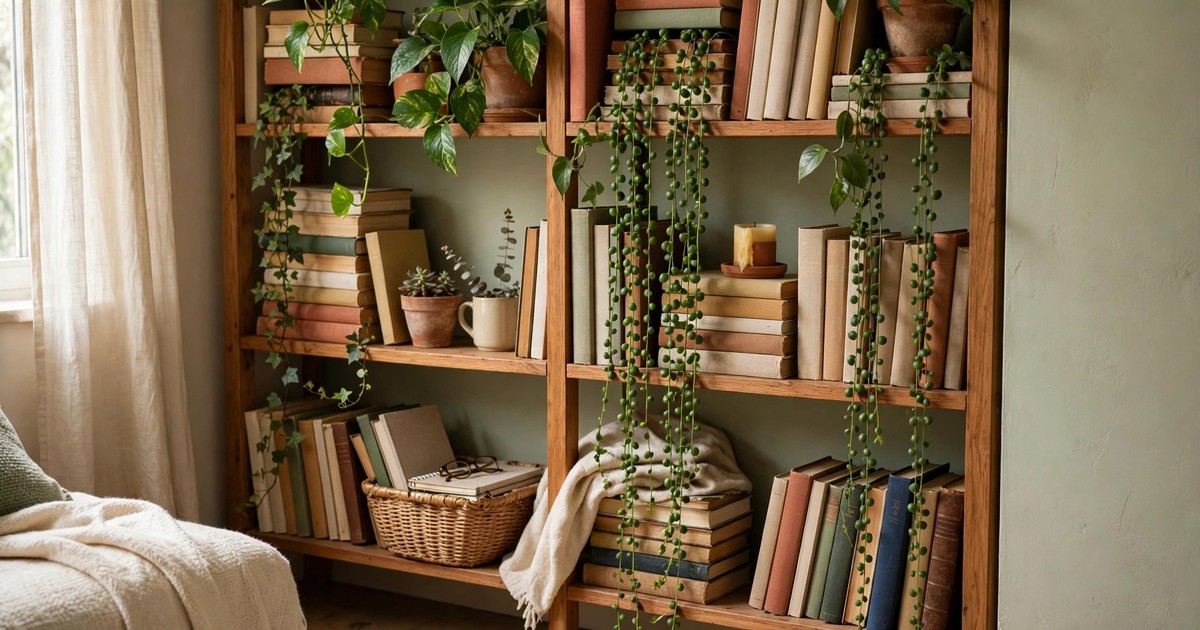
Why it works: books and trailing plants are the oldest styling partnership there is, because the straight lines of books make the curves of vines look even better. A trailing plant on a bookshelf softens a whole wall of rectangles, and the vines weaving between books look like the room has been lived in and loved, not staged.
Where it fits: on the top shelf of a bookcase, with vines allowed to fall down the side, or on a middle shelf with vines trailing across the books below. Keep the plant in its own pot on a saucer, not planted directly among the books, so watering never reaches the pages. In winter, a bookshelf away from radiators is ideal — steady, moderate warmth suits most trailing plants better than blasts of hot, dry air.
5. Trailing plants in the bathroom
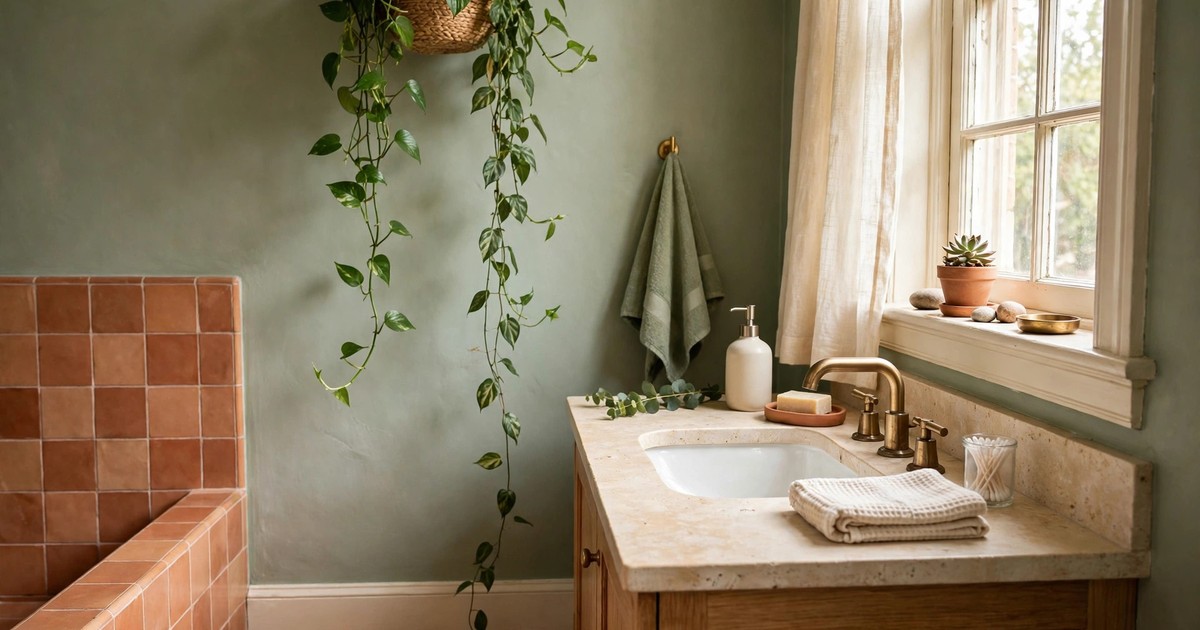
Why it works: bathrooms are the most humid rooms in a flat, and in winter, when heating dries every other room out, that humidity is gold for trailing plants. Philodendrons, pothos, and spider plants all love bathroom humidity, and a trailing plant in a bathroom turns the least glamorous room into a little jungle retreat.
Where it fits: on a high bathroom shelf, hanging from the ceiling, or trailing from the top of a cabinet. The plant needs some light, so a bathroom with a window is ideal; a windowless bathroom will need a plant that tolerates low light, like pothos, and even that will grow slowly. Keep vines away from the shower spray itself — humidity is good, a constant soaking is not.
6. Over the headboard shelf
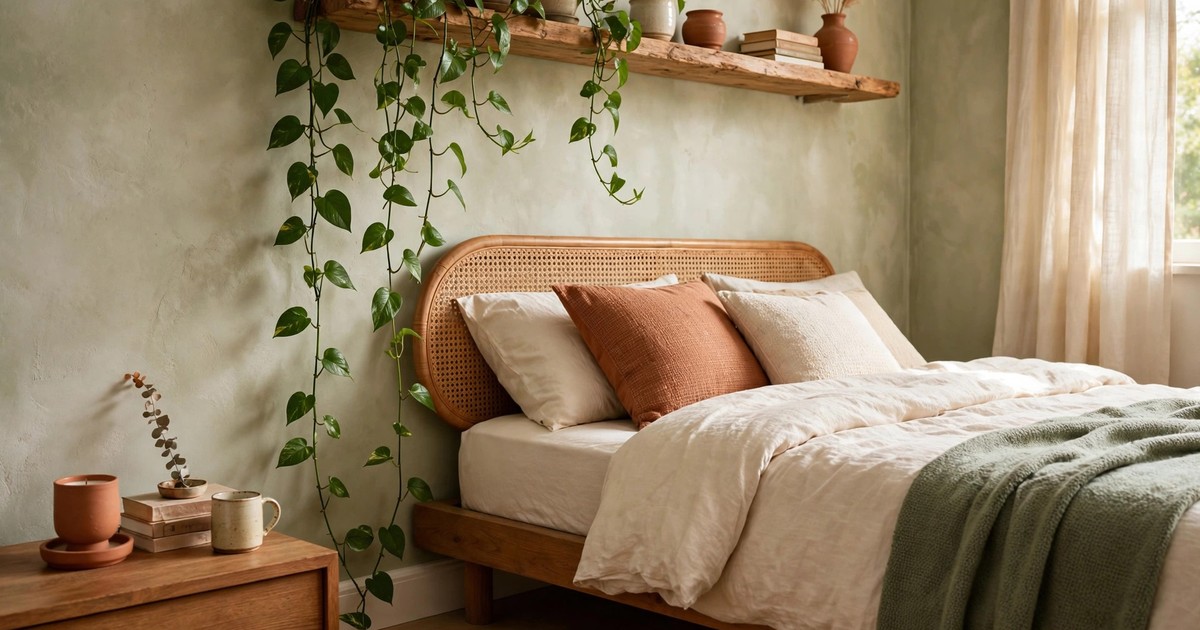
Why it works: a trailing plant above the bed makes the bedroom feel like a retreat rather than just a room with a bed in it. The vines falling softly beside the headboard frame the bed the way a headboard does, but with life in it, and in winter the green is a welcome contrast to heavy bedding and dark evenings.
Where it fits: on a shelf above the headboard, with vines trailing down one or both sides — not directly over the pillow, where falling leaves land on your face at 3 a.m. Secure the pot properly, since a plant above a bed is the one place a falling pot is more than an inconvenience. Choose a plant that does not shed much, like pothos, over one that drops leaves constantly.
7. Trailing herbs in the kitchen
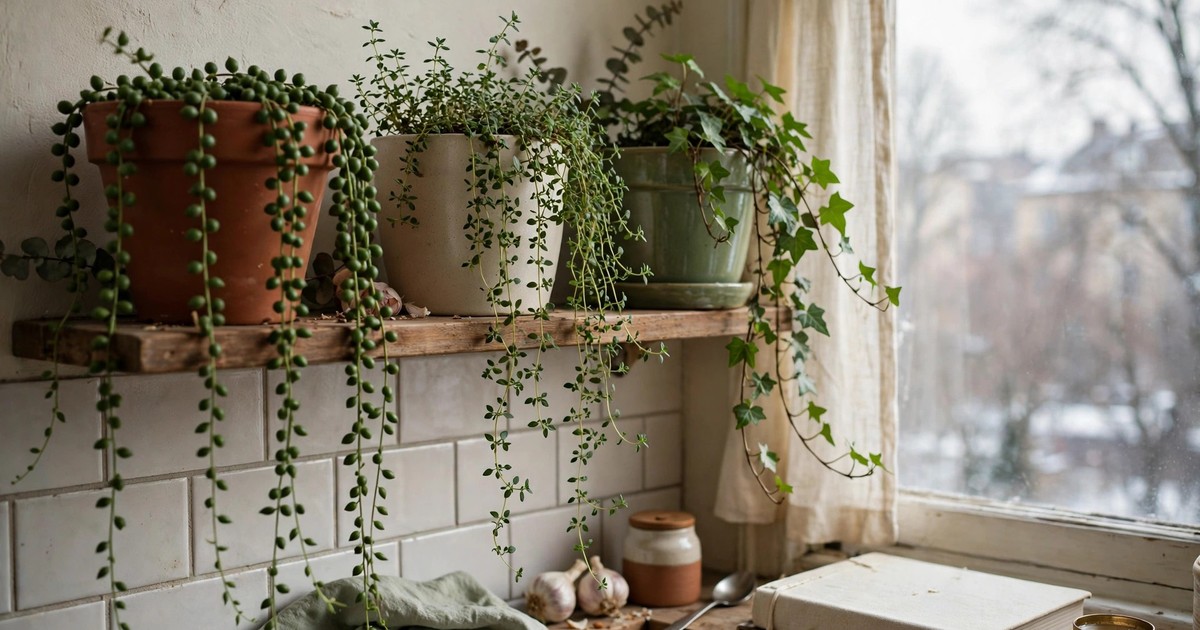
Why it works: trailing herbs — trailing rosemary, oregano, or even a leggy mint — are the kitchen's version of a trailing plant, and they earn their keep twice: they look beautiful trailing from a shelf, and you cook with them. In winter, when fresh herbs cost more and taste less, a kitchen herb plant is both decor and pantry.
Where it fits: on a kitchen shelf near the window, or hanging by the sink where it is easy to snip. Kitchen herbs need more light than pothos, so the brightest kitchen spot is the one to choose, and they need less water in winter than in summer — soggy winter soil is the fastest way to kill a kitchen herb. Keep trailing mint in its own pot, or it will try to take over the whole shelf.
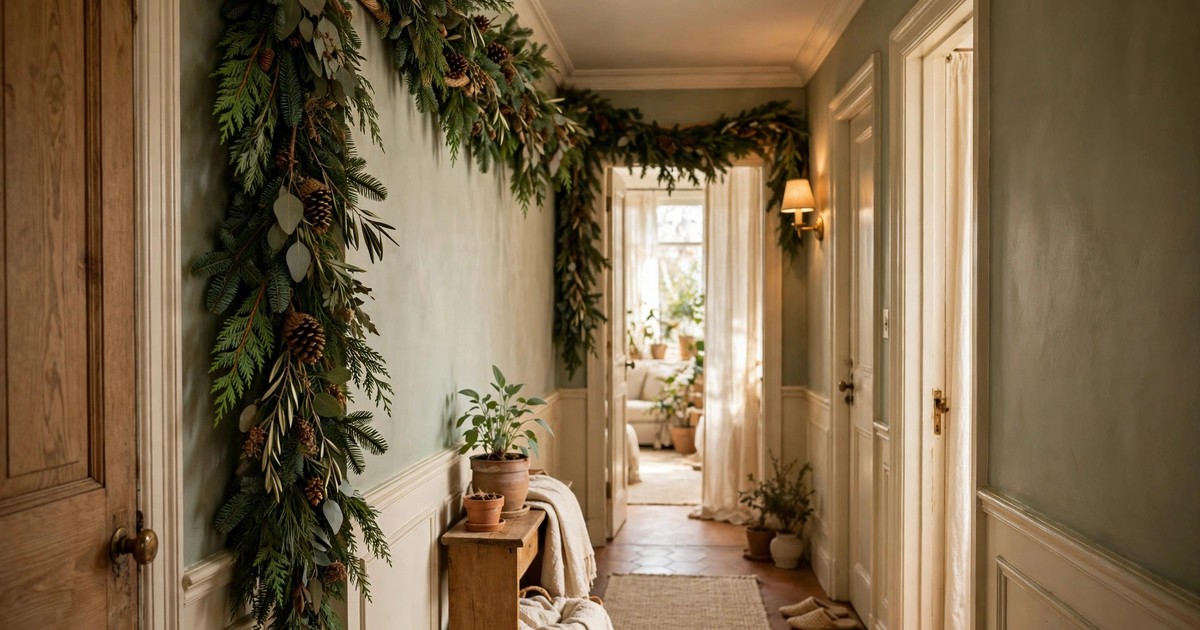
8. The hallway console waterfall
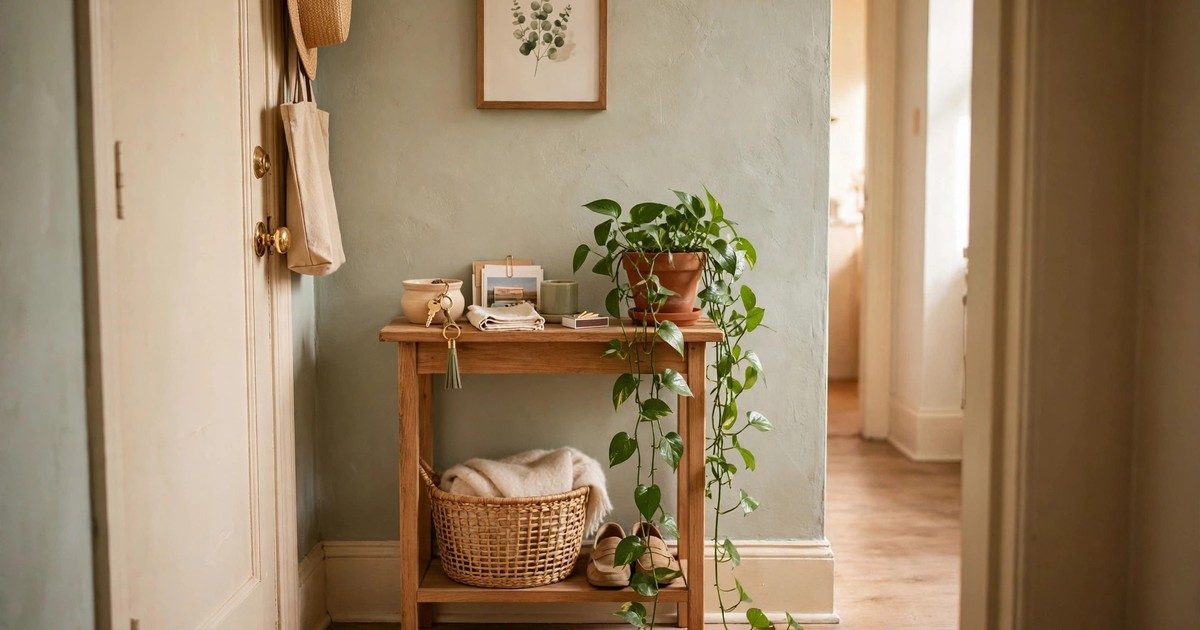
Why it works: hallways are the most neglected spaces in small flats — narrow, dark, and purely functional. A trailing plant on a console table turns a hallway from a corridor into an entrance, and the vines falling down the side of the table draw the eye forward into the flat instead of letting it stop at the front door.
Where it fits: on a narrow console or a wall-mounted shelf in the hallway, with vines trailing down beside the table legs. Hallways are often low-light, so choose a tolerant plant like pothos or philodendron, and accept slow winter growth rather than forcing it with extra water. A small mirror above the console doubles the plant's impact by reflecting the vines.
9. Macrame hanger plus fairy lights
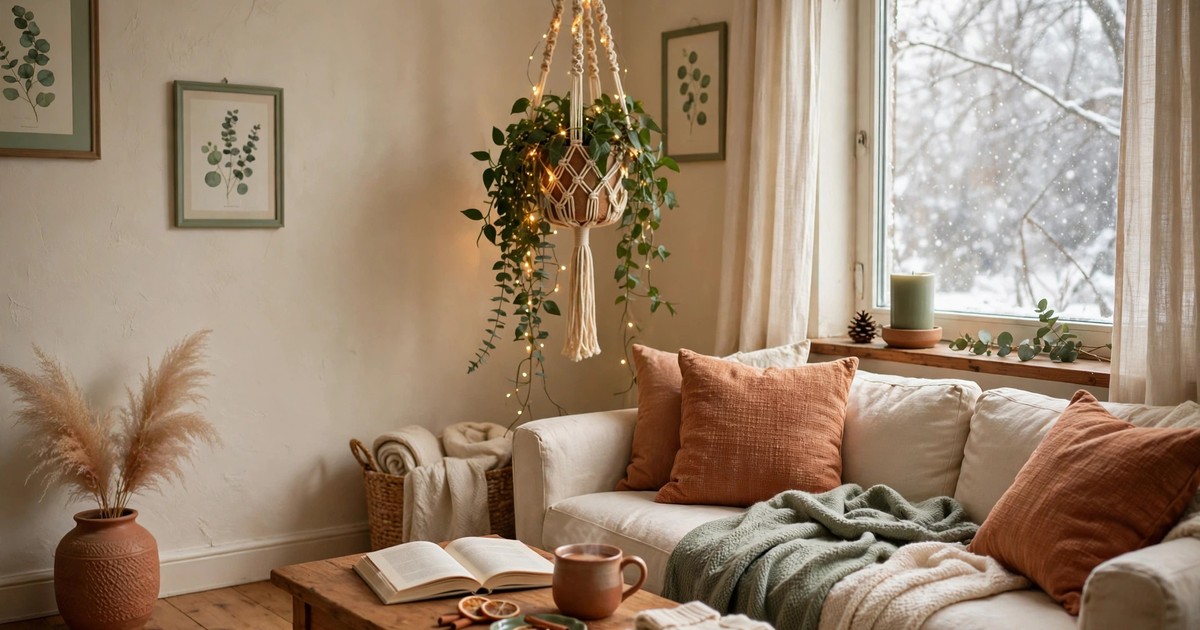
Why it works: a macrame hanger is the classic trailing-plant home, and in winter it gains a second act: woven with a string of warm fairy lights, it becomes a living lamp. The lights warm up the whole corner, the vines soften the light, and the combination is the cosiest thing you can hang in a small flat in December — no fireplace required.
Where it fits: hanging from a ceiling hook in a living room corner, by a reading chair, or beside the sofa. Use battery-operated fairy lights that stay cool, and keep the lights on the hanger and the pot, not tangled through the vines themselves, where they are hard to remove and can damage new growth. This is also a genuinely good winter gift: a hanger, a pothos cutting, and a set of lights, all for under $25.
10. Grouping trailing with upright plants
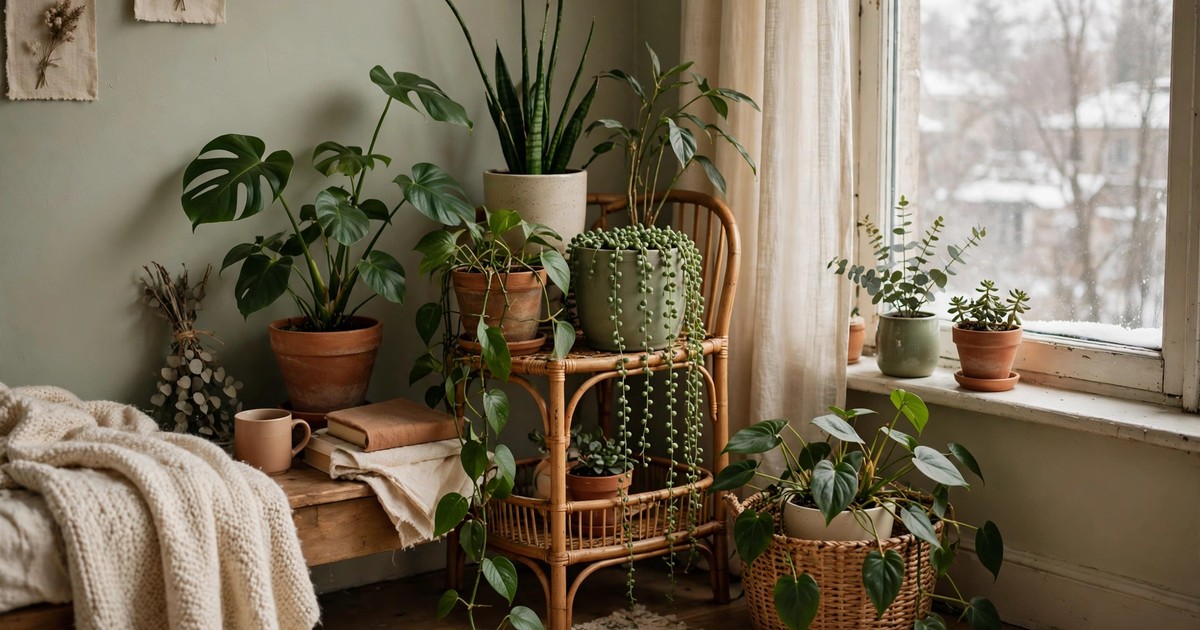
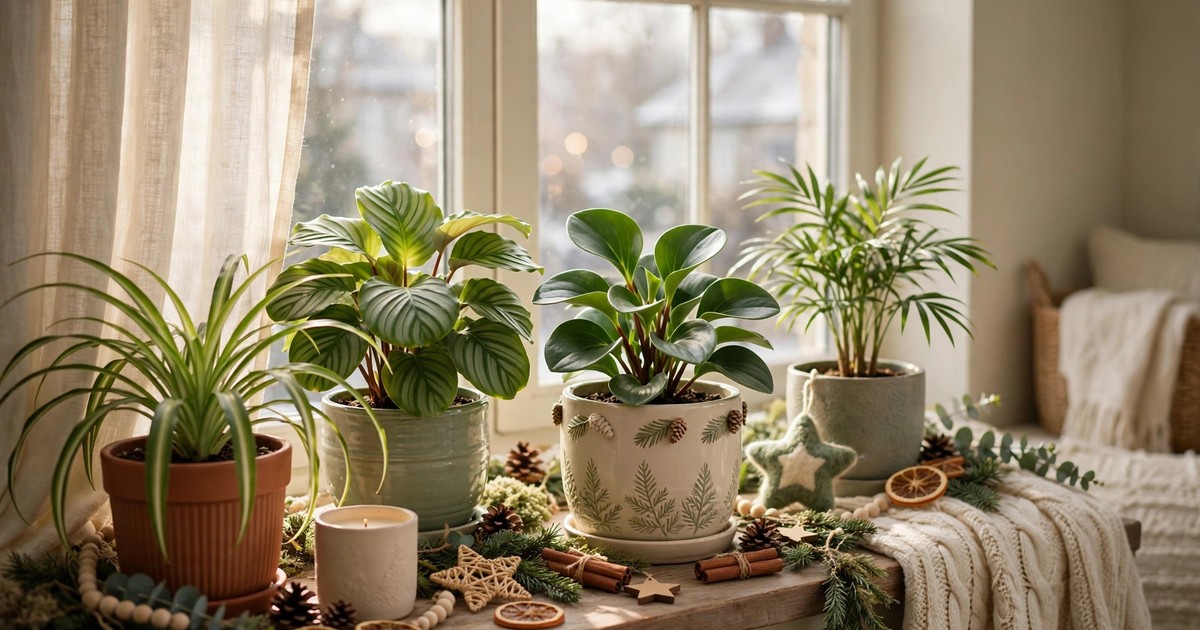
Why it works: a single trailing plant is pretty; a group of trailing and upright plants together is a jungle. The contrast — tall, structural leaves beside soft falling vines — is what makes a plant corner look designed rather than accidental, and in winter a dense group also helps the plants, since grouped plants raise the humidity around each other slightly.
Where it fits: in a corner by a window, on a plant stand with multiple levels, or on a bench where plants of different heights can sit together. Put the tallest upright plant at the back, trailing plants at the front and on top, and leave enough space between pots for air to circulate — a crowded, airless group in winter invites pests. Water each plant by its own needs, not the group's: the most common grouping mistake is watering everything on the same schedule.
Winter care in one paragraph
Trailing plants in winter need three things: less water than you think, as much light as you can give them, and protection from cold draughts and hot radiators alike. Water only when the top inch of soil is dry, move plants closer to windows during the shortest days, and keep them away from both the cold glass and the radiator below it. Do not feed in winter — most houseplants rest in the cold months, and fertiliser in December does more harm than good. Follow those four rules and your vines will come into spring ready to grow hard.