Few textiles change a room as fast as mudcloth. Those bold black-and-white geometric patterns — the triangles, the zigzags, the little fields of dots — read instantly as art, which is why they've become the backbone of the Afrohemian look that's up 220% in Pinterest searches this year. The best part for renters: a pillow swap needs zero landlord approval. No drilling, no paint, no holes — just cushions doing the heavy lifting.
But there's a catch, and it's worth knowing before you buy. Real mudcloth (Bogolan) is a handwoven, hand-dyed Malian textile with centuries of meaning in every pattern; much of what's sold cheaply online is flat printed fabric that frays and fades in a season. This guide shows you how to spot the real thing, build a warm Afrohemian palette around it, layer it with natural textures, style it room by room, and do all of it with renter-safe tricks that leave the flat untouched. Total budget: comfortably under $60 for a full sofa refresh, or under $25 for a single statement cushion.
Pair these pillows with our Afrohemian decor finds under $25 for the rest of the look.
Step 1: Learn to spot real Bogolan before you spend a penny
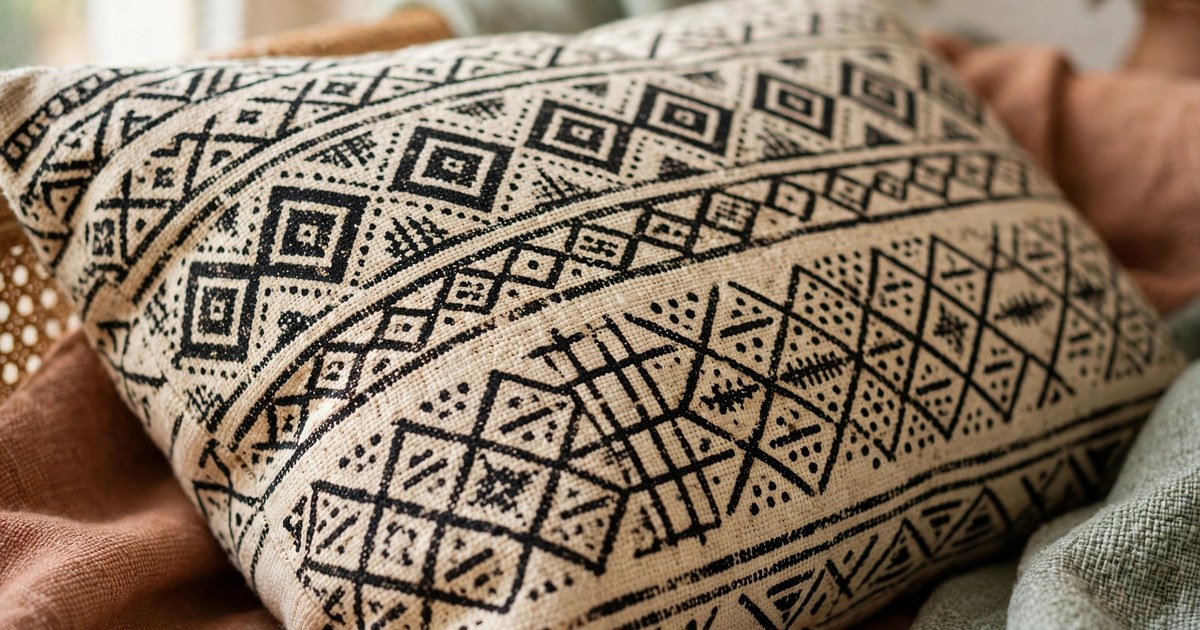
Authentic mudcloth starts as hand-spun cotton, woven in narrow strips on a loom, sewn edge to edge, then painted with fermented mud and plant dyes. The process leaves telltale signs that no mass-printed knockoff can fake. Flip the fabric over: real Bogolan shows the pattern on both sides (the dye soaks through), while printed fakes show a washed-out or blank reverse. Run your hand across it — genuine mudcloth has visible weave texture and slight irregularities; the lines wobble a little, the dots aren't perfectly spaced. That's the hand of the maker, not a defect.
Also check the edges. Because traditional strips are narrow (roughly 15–25 cm wide), real mudcloth almost always has visible vertical seams where strips were joined. A "mudcloth" pillow with one seamless metre-wide panel and razor-straight print is almost certainly a screen print on poly-cotton. That doesn't make it ugly — but it won't wear, wash or age like the real thing, and the price should reflect it.
Budget move: real mudcloth pillow covers on Amazon and Etsy routinely sell for $15–25 each — you do not need the $80 designer versions. Search for "authentic mudcloth pillow cover" and look for sellers who photograph the reverse side of the fabric; that's the honesty test. Shop authentic mudcloth pillow covers
Step 2: Build your Afrohemian palette around the cloth
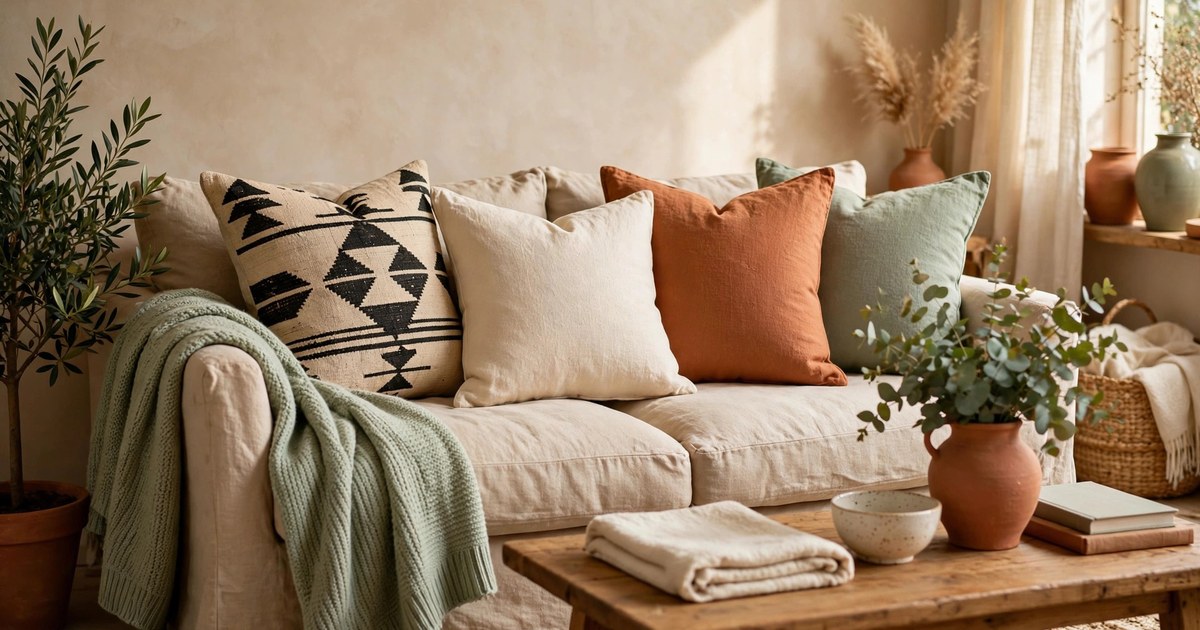
Mudcloth's classic black-on-white is high contrast, which means it can look stark if it's the only pattern in the room. The Afrohemian palette warms it up: cream and unbleached cotton as the base, terracotta and clay for earth, sage or olive for a botanical note, and small hits of brass or gold for warmth. Think desert market stall, not monochrome gallery.
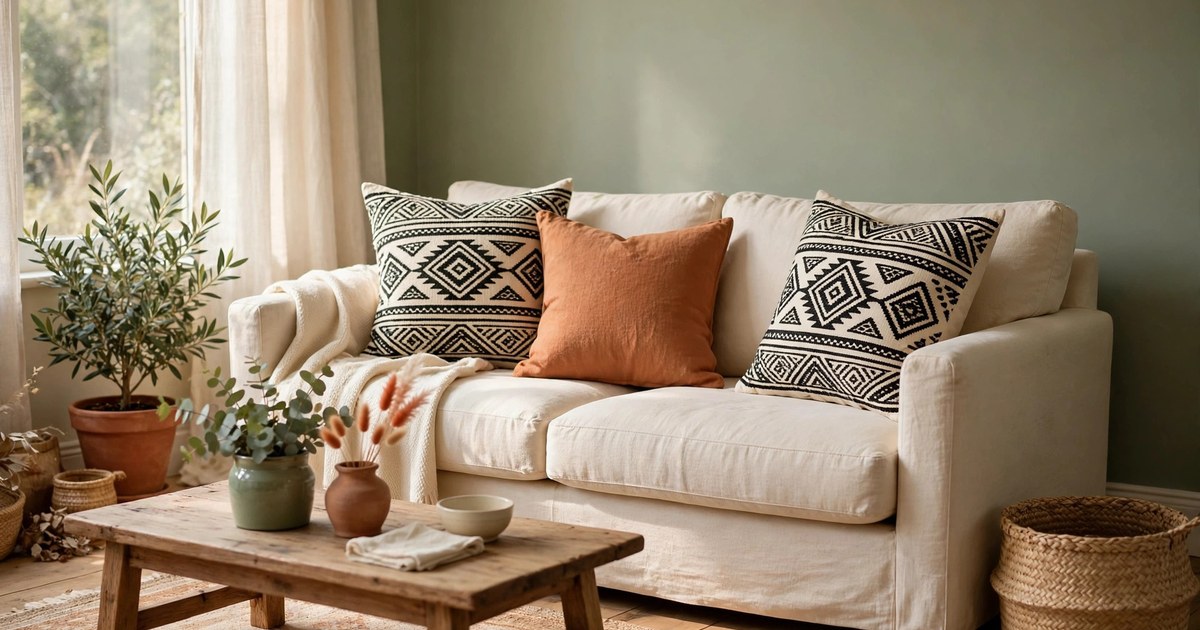
A foolproof formula for a sofa: two mudcloth cushions (the statement), two solid cream or oatmeal cushions (the breather), and one terracotta or rust cushion (the warmth). Odd numbers of cushions always look more styled than even rows — three or five beats four. If your existing sofa is grey or beige, the terracotta cushion does the crucial job of bridging the cool upholstery and the earthy textile; without it, the mudcloth can feel like it's visiting from another room.
Renter note: you don't need to repaint to join this palette. A cream throw draped over a dark sofa arm and one terracotta cushion can shift the whole colour temperature of a living room for under $30 — the cheapest "renovation" you'll ever do.
Step 3: Layer natural textures underneath and around
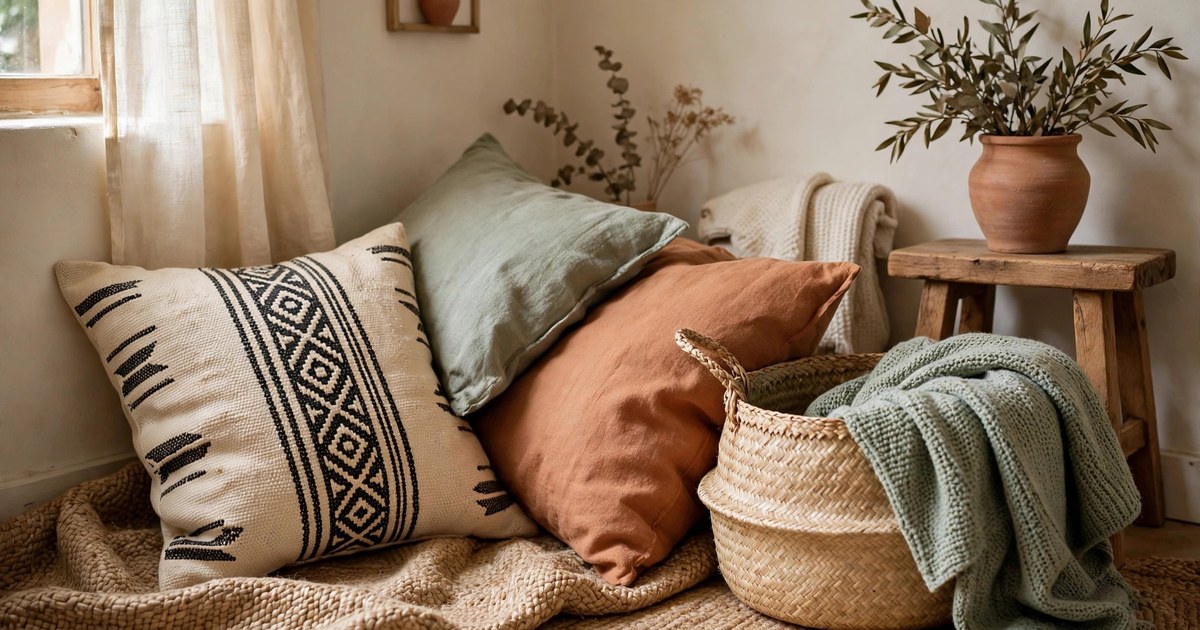
Afrohemian isn't just a pattern — it's a texture story. Mudcloth against a flat, shiny sofa reads as "boho pillow"; mudcloth against jute, rattan, raw wood and nubby cotton reads as a world. So before you arrange the cushions, audit the textures around them. A jute or sisal rug under the coffee table, a woven seagrass basket holding a throw or a plant, a rattan tray on the sofa arm — these are the supporting cast that makes the mudcloth look intentional rather than random.
The good news: natural textures are the thrift store's best category. Baskets, wooden trays, woven placemats and clay pots turn up constantly in charity shops for a few pounds or dollars, and they don't need to match — mixed weaves in the same warm-toned family look collected, not chaotic. One large basket beside the sofa does triple duty: it holds the spare throw, hides the remote controls, and gives the mudcloth something to lean against visually.
The rule that ties it together: keep the wood tones warm. Cool grey-brown laminate fights with mudcloth's earthy palette; one basket or tray in a warm honey tone is enough to harmonise a cool sofa with the textiles on top of it.
Step 4: Style the sofa, then steal the look for the bedroom
Here's the sofa arrangement that never fails: anchor with your largest solid cushions at the back corners, place the two mudcloth cushions in front of them slightly angled (a 45-degree tilt looks relaxed; dead-straight looks showroom), and tuck the single terracotta cushion off-centre at one end. Drape a cream or striped throw over one arm. Step back — the asymmetry is the style. Afrohemian is collected-over-time, not staged-for-sale.
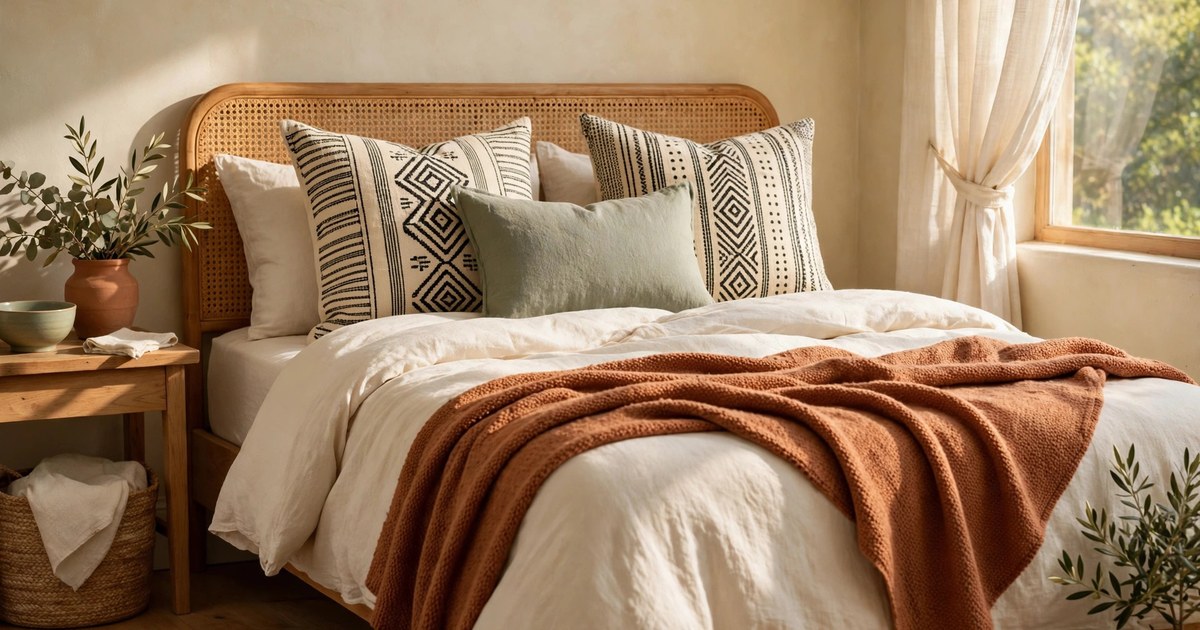
Now steal the same formula for the bedroom, where mudcloth is arguably even better: bedroom lighting is softer, so the black patterns read as cosy rather than graphic. Two mudcloth shams or euro cushions against the headboard, cream sleeping pillows in front, one terracotta lumbar cushion on top. The whole bed goes from "landlord beige" to boutique in sixty seconds. (More small-bedroom tricks in our 15 small bedroom ideas under $100.)
Deposit-safe pro move: pillow styling is the ultimate renter decor because nothing touches the walls. But if the room itself is cold and white, pair the bed or sofa refresh with renter-friendly wall decor that needs no nails — a mudcloth wall hanging or a woven basket cluster above the sofa extends the look upward without a single hole.
Step 5: Use the three no-hole styling tricks
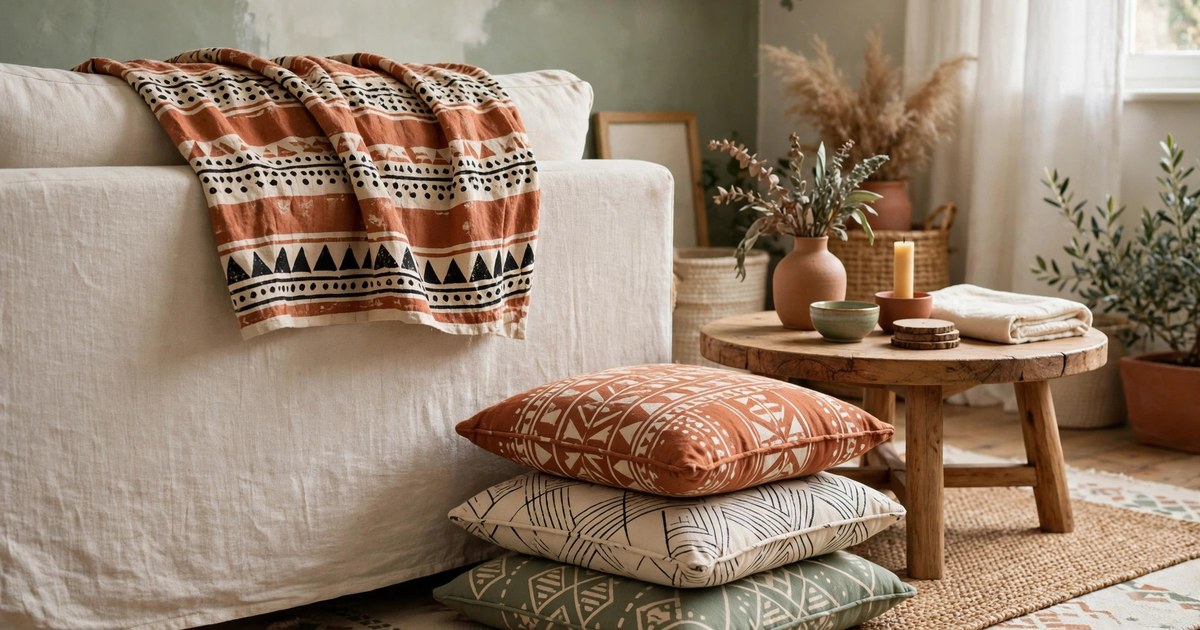
Renters have three moves that homeowners rarely think about, and all three flatter mudcloth. First, the drape: fold a mudcloth throw (or an unzipped pillow cover) over the back of the sofa or an armchair. It reads as an art textile, costs nothing extra, and moves with you on moving day. Second, the basket stack: roll or fold spare mudcloth covers and stack them in a tall seagrass basket beside the sofa — instant styled vignette, zero commitment. Third, the floor cushion: a large mudcloth floor cushion (or two standard covers stuffed into a floor-pillow insert) creates a reading corner around a coffee table, which is pure gold in small rentals where every square metre has to multitask.
What not to do: don't frame mudcloth behind glass. The fabric's beauty is in its weave and matte dye, and glass flattens both while adding glare. If you want it on the wall, stretch a cover over a canvas frame or hang it from a wooden dowel with clip rings — both come off without a trace.
Small-space bonus: in a studio, one mudcloth textile can zone the room. A draped throw on the sofa-back visually separates the "living room" from the "bedroom" in an open-plan flat — the same zoning logic we use in studio apartment layout ideas, done with fabric instead of furniture.
Step 6: Source under $25 and care for the cloth properly
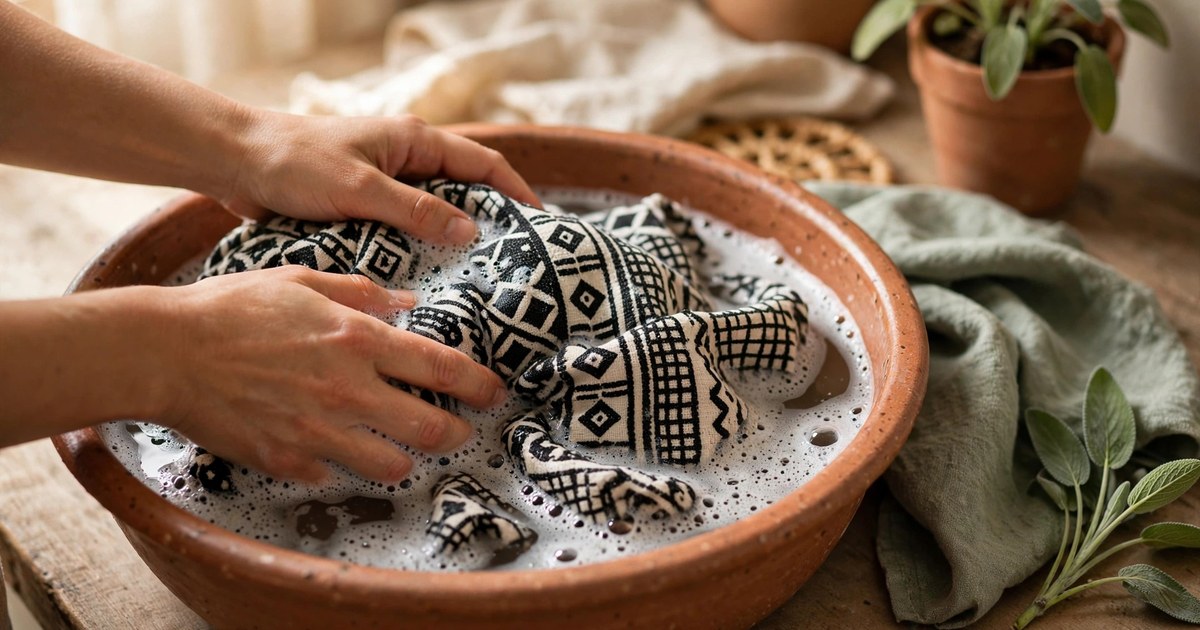
Real mudcloth is sturdy — it was made to be worn and washed — but it has two enemies: harsh detergent and direct sun. Wash covers inside-out in cold water with a gentle, dye-free soap; skip the bleach and the fabric softener, both of which attack the natural dyes. Line-dry in shade, not in blazing sun, or the black will slowly grey out. Expect a little fading over the years — mudcloth ages like denim, and a softened, slightly faded cover looks even better than a crisp new one.
For sourcing, the sweet spot is $15–25 per cover. Below $12, be suspicious (that's printed-poly territory); above $40, you're paying for branding. Etsy sellers who show the reverse side of the fabric are usually the real deal, and many will tell you the meaning of the pattern if you ask — a lovely detail to know about your own sofa. On Amazon, filter for listings that say "handwoven" and "100% cotton" and read the reviews for the words "seams" and "both sides". Shop handwoven mudcloth pillow covers
The full-room math: two real mudcloth covers ($20 each) + two cream cushion inserts from a discount store ($8 each) + one terracotta cover ($12) = $68 for a sofa that looks like a design studio did it. Skip the designer inserts and reuse cushions you already own, and you're under $50.
That's the whole system: real cloth, warm palette, layered textures, styled rooms, no holes, honest care. Your rental still gets its deposit back — it just looks like it belongs in a magazine while you live there.
Frequently Asked Questions
Is mudcloth the same as tribal print?
No — and the difference matters. Mudcloth (Bogolanfini) is a specific handwoven, mud-dyed cotton textile from Mali, with patterns that traditionally carry proverbs and stories. "Tribal print" is a vague marketing term, usually for mass-printed fabric with generic geometric motifs. Buying real Bogolan supports the craft tradition; buying printed fabric is fine too, but know which one you're paying for.
How do I stop black mudcloth dye from rubbing off on my sofa?
Real mudcloth is colourfast once properly set, but a brand-new cover can shed a little excess dye. Wash it once alone in cold water before first use, and you'll almost never have an issue. If you're worried about a light-coloured sofa, use a cream-coloured cushion insert inside the cover as a barrier layer — any loose dye hits the insert, not your upholstery.
Can mudcloth work in a minimalist rental?
Yes, with restraint. One mudcloth lumbar cushion on an otherwise plain cream sofa, or a single folded throw at the foot of a white bed, gives you the texture and story without the pattern taking over. The Afrohemian look scales — full layered boho is one end, one beautiful textile is the other, and both are valid.
Will a landlord object to mudcloth wall hangings?
Only if they damage the wall, which is entirely avoidable. A mudcloth cover stretched over a lightweight canvas frame leans on a shelf or sits on a picture ledge — no fixings at all. If you do hang it, use removable adhesive hooks rated for the weight (a cotton cover weighs very little) and remove them with the pull-tab technique at move-out. Fabric is one of the most deposit-friendly wall treatments there is.