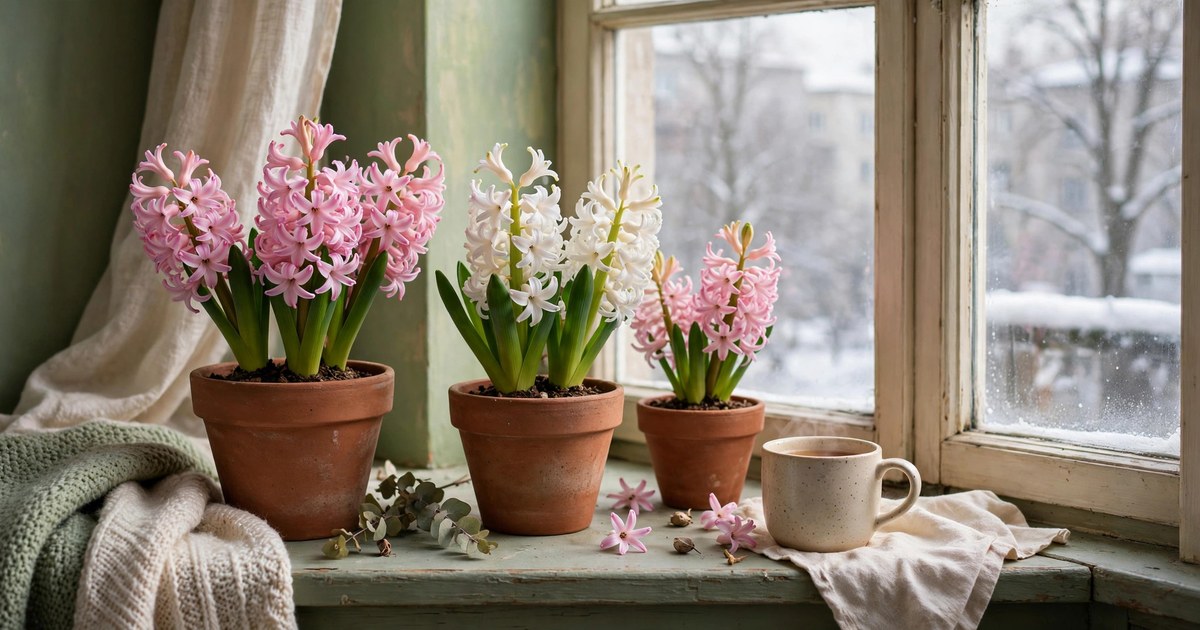
Few things lift a grey winter windowsill like a hyacinth in full bloom. The scent alone is worth the effort — sweet, rich and unmistakably spring-like — and the flowers themselves are dense, jewel-bright spikes of pink, blue, white or purple that look far more expensive than they are. A pot of forced hyacinths costs less than a bunch of cut flowers, lasts longer, and turns a plain rental windowsill into the prettiest spot in the flat. For renters, they are an ideal project: no garden, no tools, no permanent changes, and the whole thing fits in a space no bigger than a cereal bowl.
Forcing sounds technical, but it is really just tricking a bulb into believing winter has already happened. Hyacinths need a cold period — roughly ten to twelve weeks at a temperature between about 2 and 9°C — before they will bloom. Outdoors, the soil does this naturally. Indoors, you supply the cold yourself, usually in the fridge, and then plant the chilled bulbs so they flower exactly when you want them. Start in October or November and you will have midwinter blooms, with flowers opening from late December through February, right when the flat needs colour most.
The method below works in any small space, costs very little, and asks for about fifteen minutes of work at each stage. You do not need a greenhouse, a cold frame or any specialist equipment — a paper bag, a fridge shelf, a pot and a windowsill will do. Follow the steps in order, be patient during the dark, cool wait, and you will be rewarded with one of the most satisfying indoor gardening wins there is.
1. Choose the right bulbs
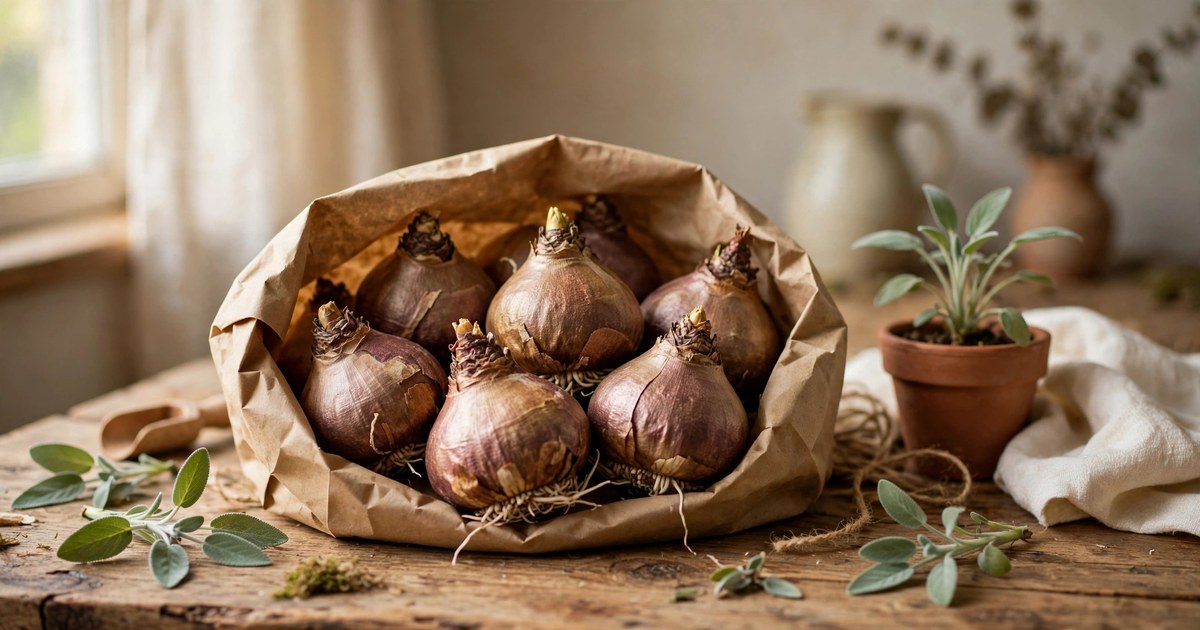
Everything starts at the shop, and choosing well is half the battle. Buy your bulbs in autumn, when garden centres, supermarkets and online sellers stock them fresh, and look for bulbs that feel firm, heavy and plump for their size — about the size of a small onion, with a dry, papery outer skin intact and a flat base where the roots will emerge. Reject any bulb that feels soft, light or spongy, or that shows mould, dark patches or shoots already growing wildly in the bag. A soft bulb is a bulb that will rot, not bloom, and no amount of careful forcing will rescue it.
For forcing specifically, look for bulbs labelled "prepared" or "for forcing" if you can find them. Prepared bulbs have already had part of their chilling done by the grower, which shortens the cold period you need to supply and makes timing more predictable. They cost a little more, but for a first attempt the extra reliability is worth it. Ordinary garden hyacinth bulbs work perfectly well too — they simply need the full ten to twelve weeks of chilling — so if prepared bulbs are sold out or over budget, buy the regular ones and start a fortnight earlier.
Variety matters more in a small space than most people realise. Hyacinths come in tall and compact forms, and a towering spike in a tiny pot topples easily on a narrow sill. For windowsills and small flats, choose compact or dwarf varieties such as 'Jan Bos' (deep pink), 'Blue Jacket' (rich blue) or 'White Pearl' (clean white), which stay shorter and sturdier. Single-flowered varieties are more reliable than doubles for forcing, and they are also cheaper. Think about colour too: one variety per pot looks far more intentional than a jumble, and a row of matching pots in pink, white and blue reads as a deliberate display rather than a lucky accident. A note on safety before you start handling them: hyacinth bulbs can irritate skin, so wear gardening gloves when you handle them, and keep bulbs well away from pets — they are toxic if eaten.
2. Chill them properly — the cold trick that makes forcing work
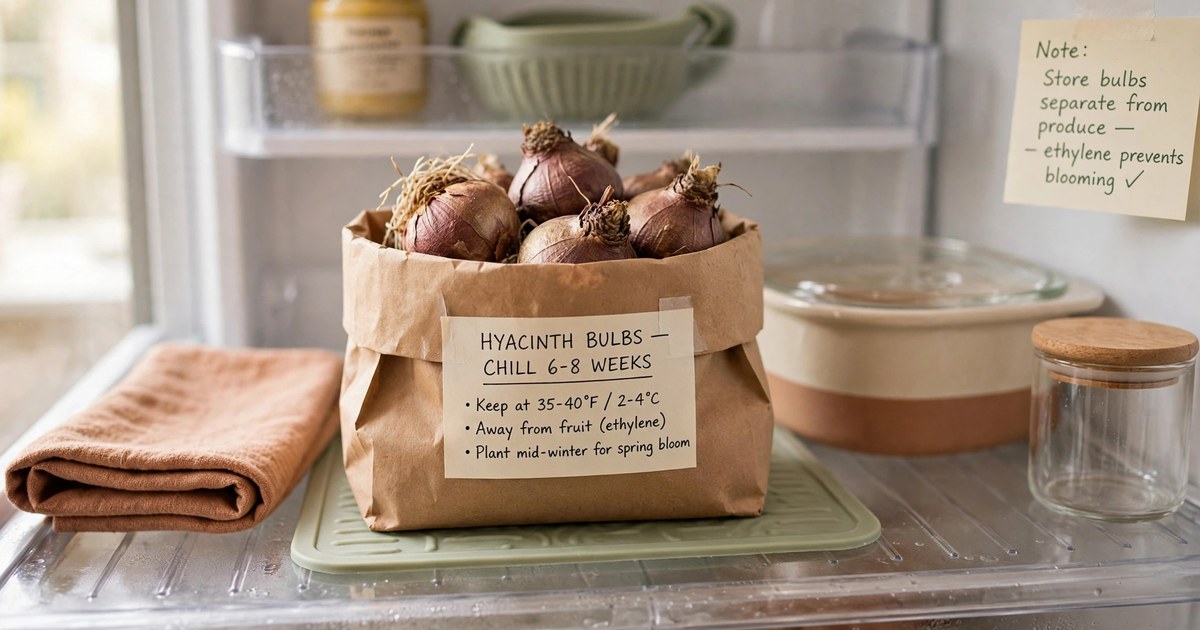
Chilling is the step that makes forcing work, and it is also the step people most often rush. Hyacinths evolved to need winter before spring: the cold period triggers the chemical changes inside the bulb that allow a flower spike to form. Without enough cold, you get leaves and no flowers, or a stunted spike that never opens properly. The rule is ten to twelve weeks at roughly 2 to 9°C, which is exactly the temperature of an ordinary fridge — so the fridge is your cold frame.
Place the bulbs in a paper bag or an open cardboard box, never sealed plastic, because trapped moisture invites mould. Label the bag with the date you put them in and the date they come out, and tuck it onto a fridge shelf where it will not be crushed by milk cartons. One crucial warning: keep bulbs away from ripening fruit, especially apples, pears and bananas. Fruit gives off ethylene gas as it ripens, and ethylene can damage the flower inside the bulb, leaving you with a blind bulb that produces leaves but never a bloom. A separate shelf, or a drawer with no fruit in it, is the safest bet.
Count your weeks carefully. Twelve weeks from the last week of October lands you at the end of January; ten weeks from early November gives mid-January blooms. If you want flowers for Christmas, you need prepared bulbs started in early September, or you need to accept that your first forced hyacinths will bloom in January — which, honestly, is when you will appreciate them most, once the Christmas decorations are down and the flat feels bare. If you are forcing several pots, stagger them: chill one batch in October and a second batch a fortnight later, and you will get a succession of blooms rather than everything flowering in the same week.
3. Pick a pot or a forcing vase
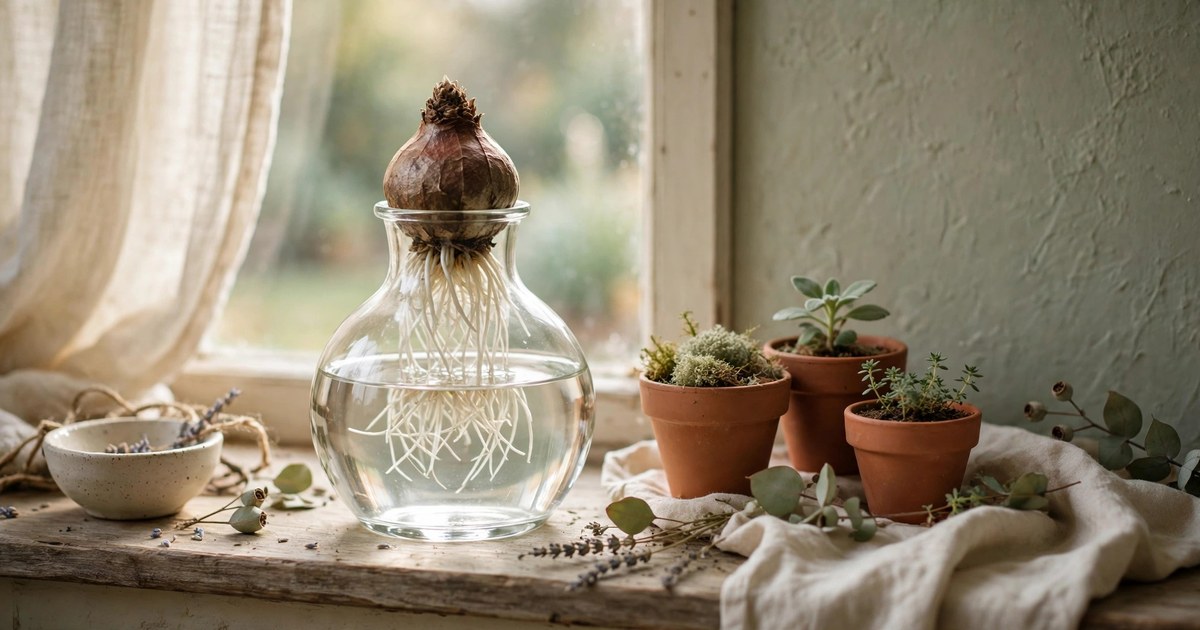
Once the bulbs are chilled, you need somewhere to grow them, and here you have two charming options: a pot of compost or a forcing vase. A forcing vase is a waisted glass vessel, narrow in the middle and wide at the top, designed so the bulb sits in the neck with its base just above the water. It is the prettiest way to force a single hyacinth — you watch the roots snake down into the water, which is half the pleasure — and a glass vase costs very little second-hand. The downside is that a vase holds one bulb, so a display needs several vases, and the glass shows every mark on the water. If you buy one, choose a vase with a wide, stable base so it cannot tip on a narrow sill.
Pots are the more practical and budget-friendly choice, especially for renters. A small terracotta pot, 10 to 12 cm across, holds one bulb comfortably; a wider bowl of 15 to 20 cm holds three, planted close together for a fuller display. Terracotta is ideal because it breathes, which helps prevent the bulb rot that is the main enemy of forced hyacinths, and it looks warm and classic against a windowsill. Any pot you use must have drainage holes — hyacinths sitting in soggy compost rot fast — so if you fall for a pretty pot without holes, use it as a cachepot with a plastic liner pot inside, and empty any water that collects in the bottom after watering.
Whichever you choose, measure your windowsill before you buy. A forcing vase or pot that overhangs the edge is an accident waiting for a cat, a curtain or an elbow. Three small pots in a row look better and are far more stable than one oversized bowl, and they let you mix colours while keeping each bulb in its own space. For the budget-conscious, the cheapest route is a plain terracotta pot from a pound shop or garden centre sale — a dab of paint or a ribbon around the rim makes it look deliberate rather than cheap.
4. Plant at the right depth
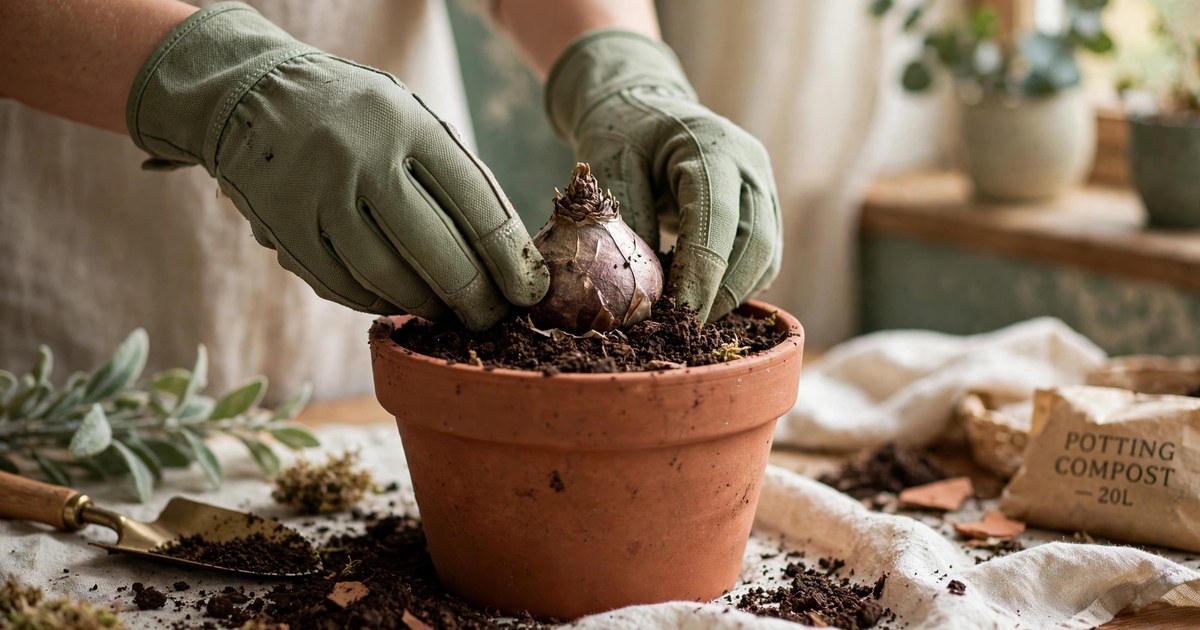
Planting day is quick, but depth and orientation matter. Take the bulbs out of the fridge — still wearing your gloves, since the skins can irritate skin — and check each one: firm, no mould, and ideally with a small nub of roots or a shoot just beginning. Fill your pot with bulb compost or a free-draining multipurpose compost to about two-thirds full, and set the bulb on top, flat base down and pointed tip up. Planted upside down, a bulb will waste weeks trying to correct itself and may never flower, so check the orientation before you cover it.
The golden rule of hyacinth depth is this: plant the bulb so that its tip sits just above the soil surface, with the top third exposed. This is different from planting bulbs outdoors, where you bury them deep, and it matters because a hyacinth bulb buried in damp compost is a bulb that rots. Gently firm compost around the sides until the bulb is held upright, leaving that pointed tip poking out like a small beak. In a wide pot with three bulbs, space them about 3 cm apart — close planting is not overcrowding for hyacinths; it is how they support each other and how you get a lush, full display instead of three lonely spikes.
If you are using a forcing vase instead, fill it with water to just below the bulb's base — the water should touch the very bottom of the bulb or sit a hair below it, never submerging the bulb itself. A bulb sitting in water rots in days, and a rotted bulb smells dreadful and blooms never. Set the bulb in the neck of the vase, tip up, and check the water level every few days, topping it up as it evaporates. For pots, water the compost lightly after planting, just enough to settle it around the bulb, and let any excess drain away completely before the pot goes back on its saucer.
5. The dark, cool wait
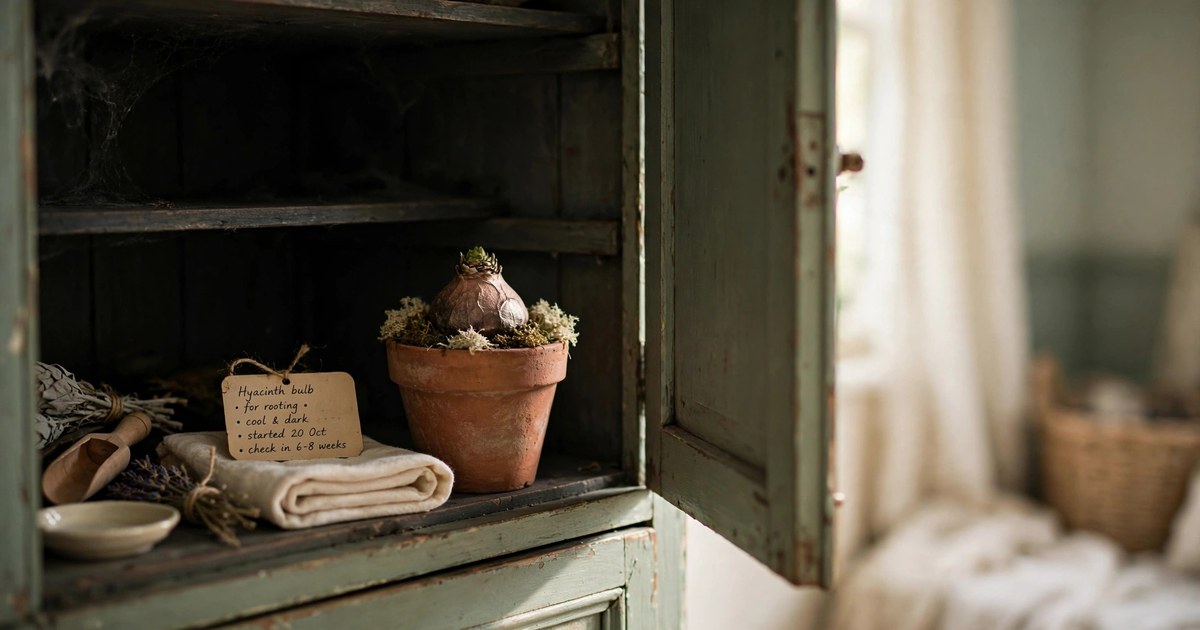
Here comes the hardest part of forcing hyacinths: doing nothing, in the dark, for several weeks. After planting, the bulbs need a cool, dark period to grow roots before they grow leaves. This is the stage that separates strong, sturdy plants from pale, leggy ones that flop at the first sign of a flower spike. Put the planted pot somewhere cool and dark — a cupboard, a garage shelf, the bottom of a wardrobe, or a cool hallway — at roughly 9 to 13°C, and leave it there for four to six weeks.
The darkness matters because it encourages the bulb to put its energy into roots rather than shoots. A bulb brought into the light too early races upward with weak, pale growth and a flower spike that cannot support its own weight. Check on the pot once a week: the compost should stay just barely moist, like a wrung-out sponge, never wet and never bone dry. Water sparingly if the top feels dry, but resist the urge to peek daily or move the pot into the light "just to see" — patience now pays off in sturdy stems later. For forcing vases, the same rule applies: keep the vase in a dark, cool spot, and check the water level weekly, topping up to just below the bulb's base.
You will know the dark period is working when you see signs of life without disturbing the bulb. After three or four weeks, a pale shoot may begin to push through the tip, and if you gently tip the pot you may see white roots threading through the drainage holes. That is your cue that rooting is well underway, but do not rush the next step. Wait until the shoot is about 5 cm tall and the roots are clearly established before moving the pot into the light — a week longer in the dark is always safer than a week too soon. If you are forcing several pots, label each one with its variety and planting date so you can stagger their move into the light and enjoy a longer season of blooms.
6. Bring them into the light gradually
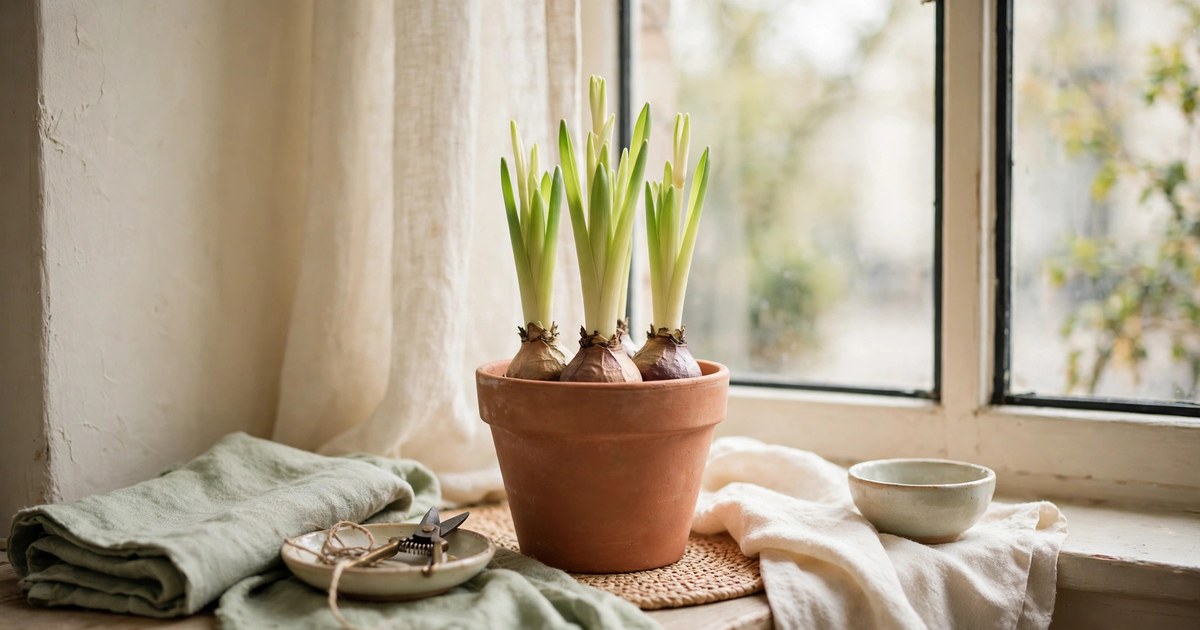
When the shoots reach about 5 cm and the roots are established, it is time to bring your hyacinths into the light — but gradually, not all at once. A bulb that has spent weeks in darkness will scorch or bleach if it is thrust straight onto a sunny south-facing sill, so give it a few days in a bright but indirect spot first: a north-facing windowsill, a bright room away from direct sun, or a shelf near a window. Once the shoot has greened up and begun to grow steadily, move the pot to its final position in bright, indirect light, ideally a spot that gets a few hours of gentle morning sun.
A cool room is your friend here. Hyacinths bloom longest at around 16 to 18°C, so a cool windowsill beats a spot above a radiator every time — heat forces the flowers open fast and fades them in days, while cool air stretches the display to two or three weeks. Turn the pot a quarter-turn every day or two so the stem grows straight instead of leaning towards the window. A leaning hyacinth is not a failure, just phototropism at work, but a daily turn keeps the display even and the spike upright.
Watch the flower spike as it emerges from the centre of the leaves. It starts as a tight green bud and gradually colours up, with individual florets opening from the bottom of the spike upward. This is the most exciting week of the whole project, and it is also when the plant is most top-heavy. If the spike starts to lean, prop it gently with a slim bamboo cane pushed into the compost and a loose loop of twine — stake early, before the lean becomes a flop. Keep the pot away from draughts and from the blast of hot air above radiators, and your hyacinth will reward you with a full, fragrant spike that perfumes the whole room.
7. Watering and feeding while in bloom
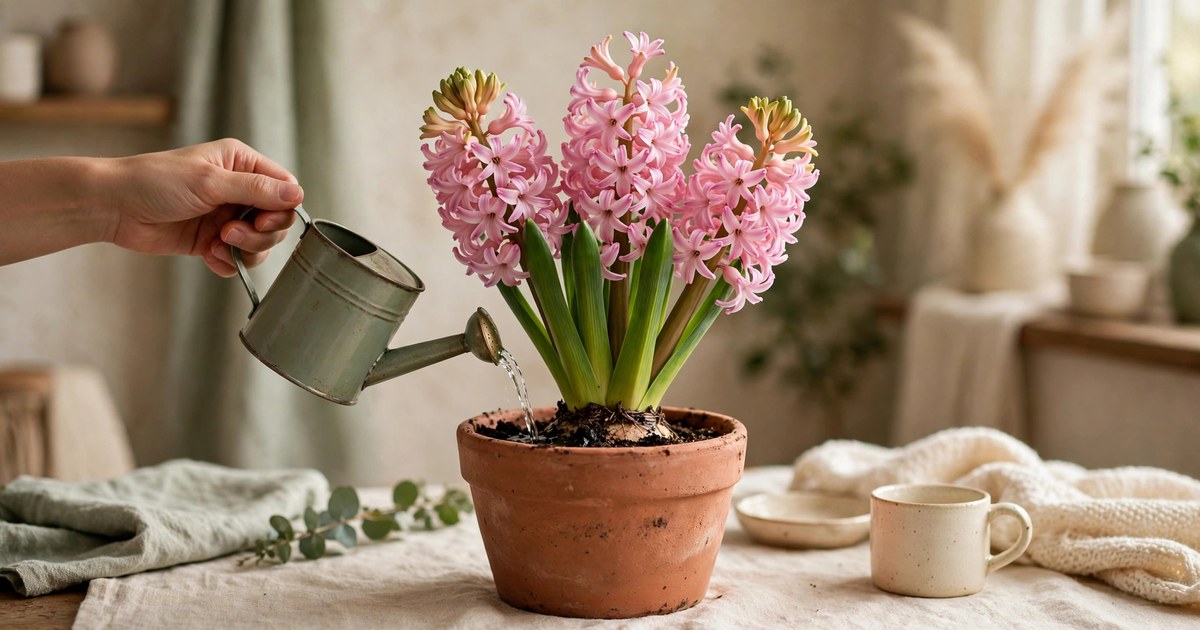
While your hyacinths are in bloom, watering is a matter of little and often, and the golden rule is to keep the compost moist but never soggy. Water from the base if you can — set the pot in a saucer of water for ten minutes and let the compost draw moisture up — or water gently at soil level with a small can, taking care not to splash the flowers or the bulb's exposed tip. Wet flowers bruise and brown quickly, and water pooling around the bulb's neck invites rot, which can kill a bloom overnight.
Check the compost every two or three days by pressing a fingertip into the top centimetre. In a heated flat, a small terracotta pot can dry out surprisingly fast, and a thirsty hyacinth will show it with limp leaves and florets that wilt from the bottom up. On the other hand, a pot that is constantly wet is worse than a pot that is occasionally dry, so always empty the saucer after watering and never let the pot sit in standing water. For forcing vases, keep the water level just below the bulb's base and change the water completely once a week to keep it fresh and clear — stale water turns cloudy and can smell, which is the last thing you want on a windowsill.
Feeding is optional but helpful. A half-strength liquid houseplant fertiliser, given once when the flower spike first shows colour, supports a fuller bloom — but do not feed a bulb that is already struggling, and never feed at full strength, which can burn the roots. Honestly, a well-chilled bulb carries most of the energy it needs inside itself, so if you skip the feed entirely your hyacinths will still flower beautifully. The real secret to a long bloom is temperature, not fertiliser: keep the plant cool, out of direct midday sun, and away from radiators, and the flowers will last up to three weeks. If the scent becomes overwhelming in a small room — and hyacinths can be intensely fragrant — move the pot to a larger room or open a window for an hour a day.
8. Aftercare — what to do when the flowers fade
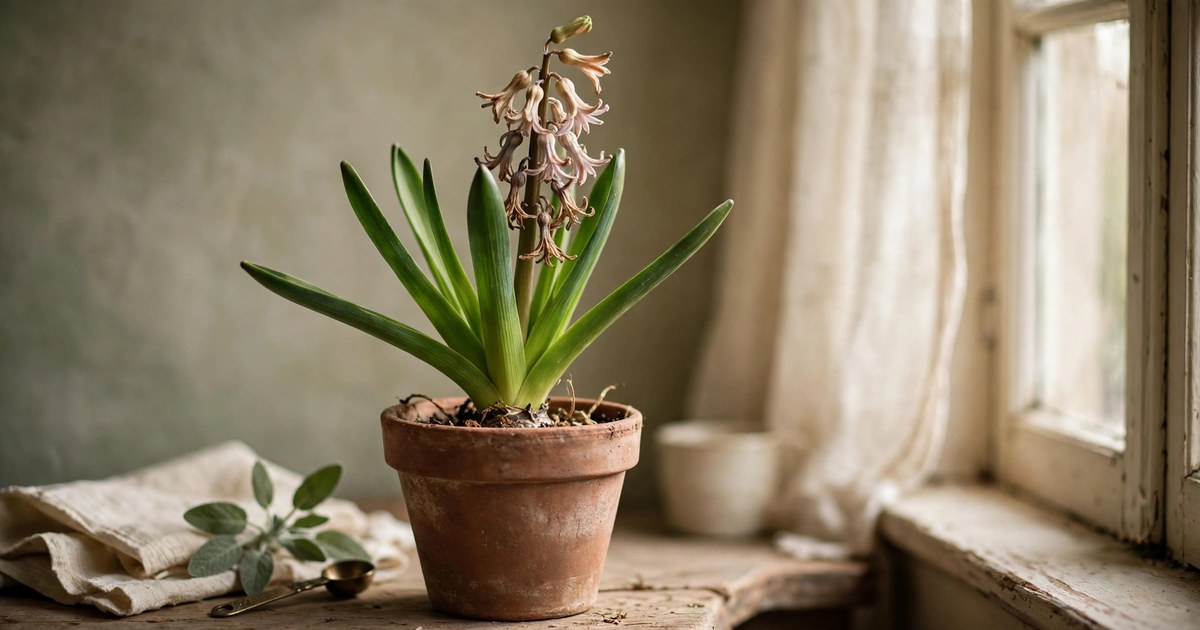
Every bloom ends, and with hyacinths the fade is gradual: individual florets brown from the bottom of the spike upward over a week or two. Snip off spent florets as they fade to keep the display tidy, and when the whole spike is finished, cut the flower stem back to the base, leaving the leaves alone. This is important: the leaves are still working, photosynthesising and feeding the bulb, and cutting them off now starves the bulb of the energy it needs to recover.
The honest news is that a forced hyacinth rarely blooms as well a second time. Forcing exhausts the bulb, and in most of the UK the bulb cannot rebuild enough energy indoors to flower again the following year. But do not throw it away just yet. If you have a garden, a balcony planter or even a communal green space where planting is allowed, plant the bulb outside after the leaves have died back naturally, about six weeks after flowering. Dig a hole twice the depth of the bulb, tuck it in, and treat any bloom next spring as a bonus rather than a plan. In a rental with no outdoor space, you can also plant the bulb in a larger outdoor planter on a balcony, where it may naturalise and surprise you.
If outdoor planting is not an option, compost the spent bulb without guilt. It gave you weeks of colour and scent for the price of a coffee, and that is a fair trade. Keep the pot, the vase and the saucer — they are yours for next year's batch, and forcing hyacinths becomes a small annual ritual that costs less each year as your kit builds up. Buy fresh bulbs next autumn, start the chilling in October, and you will have midwinter colour again, with a little more confidence and a little less waiting each time. For a windowsill garden that keeps giving all winter, stagger a second batch of bulbs a fortnight behind the first, and try paperwhites for Christmas too — they need no chilling at all, and the two together carry a small flat from December to February.
Shop this look: forcing hyacinth basics
- Hyacinth bulbs — firm, fresh, autumn-bought for forcing. Shop hyacinth bulbs
- Hyacinth forcing vase — waisted glass, one beautiful bulb per vase. Shop hyacinth forcing vase
- Small terracotta pots — breathable, classic, cheap by the set. Shop small terracotta pots
- Bulb compost — free-draining, so bulbs never sit soggy. Shop bulb compost
- Plant mister — gentle watering that keeps flowers dry. Shop plant mister
- Gardening gloves — hyacinth bulbs can irritate skin, so glove up. Shop gardening gloves
Frequently Asked Questions
How long do hyacinth bulbs need chilling before forcing?
Ten to twelve weeks at roughly 2 to 9°C, which is ordinary fridge temperature. Prepared or "for forcing" bulbs have had part of this done by the grower, so they need less time from you, but standard garden bulbs need the full period or they may produce leaves with no flowers.
When should I start forcing hyacinths for winter blooms?
Start chilling in October or early November for blooms from late December through February. Count back from when you want flowers: twelve weeks of chilling plus four to six weeks in the dark after planting, then one to two weeks in the light before the flowers open.
Can I force hyacinths without a fridge?
You need a reliably cold spot at roughly 2 to 9°C for ten to twelve weeks. A frost-free garage, an unheated porch or a cold shed can work if the temperature stays in range and the bulbs are protected from frost and mice, but a fridge is the most reliable option for most renters — and prepared bulbs shorten the cold period considerably.
Why did my forced hyacinth grow leaves but no flowers?
The usual cause is not enough chilling, or chilling disrupted by ethylene gas from ripening fruit stored nearby. A blind bulb — leaves, no flower — almost always means the cold period was too short or too warm. Next time, give the full twelve weeks in the fridge, keep fruit away, and buy firm, fresh bulbs.
Are forced hyacinths safe around pets?
No — hyacinth bulbs are toxic to pets if eaten, and the flowers and leaves can cause stomach upset too. Keep forced hyacinths on a high windowsill or shelf out of reach of cats and dogs, wear gloves when handling the bulbs, and wash your hands afterwards.