Every January, renters face the same puzzle: a flat full of Christmas decor and nowhere to put it. No attic, no garage, no spare room — just the same cupboards that were already full in November. The solution is not more storage space. It is smarter storage: using the dead spaces your flat already has, packing decor so it survives a year in a cupboard, and being honest about what deserves to come back next Christmas.
The rule that makes all of this work: decor gets stored where you never look. Under the bed, on top of the wardrobe, behind the sofa — the places that hold nothing else. If your Christmas bins live in prime cupboard space, they will be resented by February and raided by March.
1. Under-bed bins for the bulky stuff
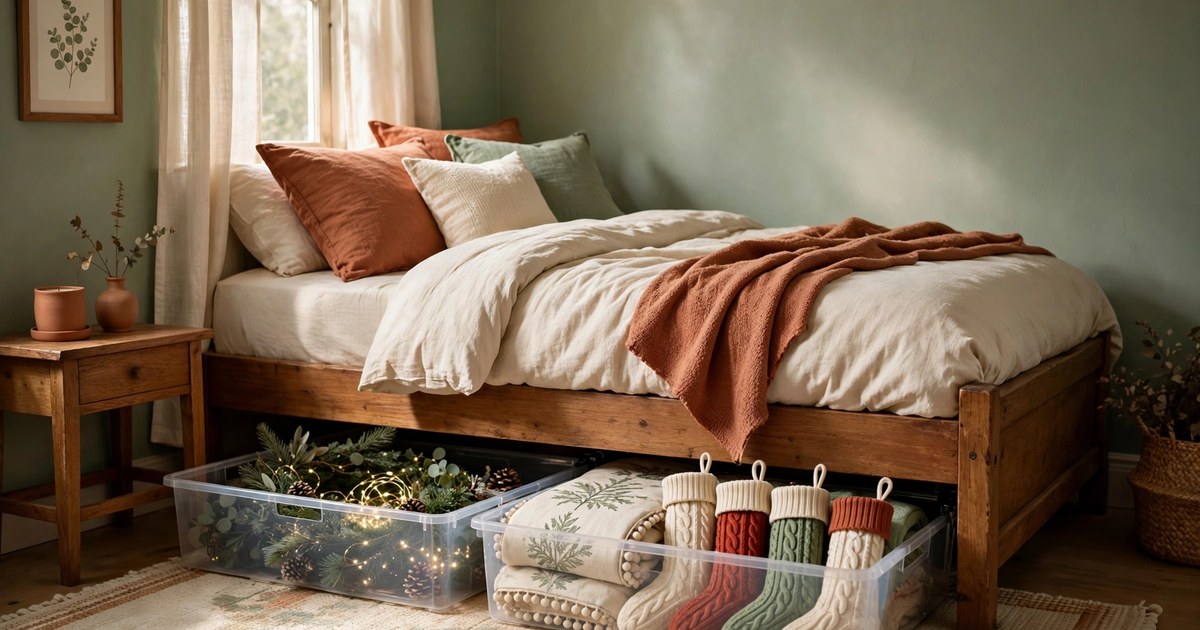
Why it works: the space under a bed is the largest unused storage area in most rentals, and it is exactly the right size for the bulkiest Christmas items — garlands, tree skirts, stockings, table linens. Flat, clear bins slide in and out easily, and because they are clear you can see what is inside without pulling every bin out.
Where it fits: under any bed with at least 15 cm of clearance; if your bed sits low, bed risers buy you the height for a few pounds and the extra space pays for itself many times over. Label each bin on the end that faces out, not the top — you will be reading the labels while lying on the floor. Keep one bin for "tree decor" and one for "everything else" rather than splitting into ten tiny categories that nobody maintains. Shop flat under-bed storage bins
2. Vacuum bags for soft decor
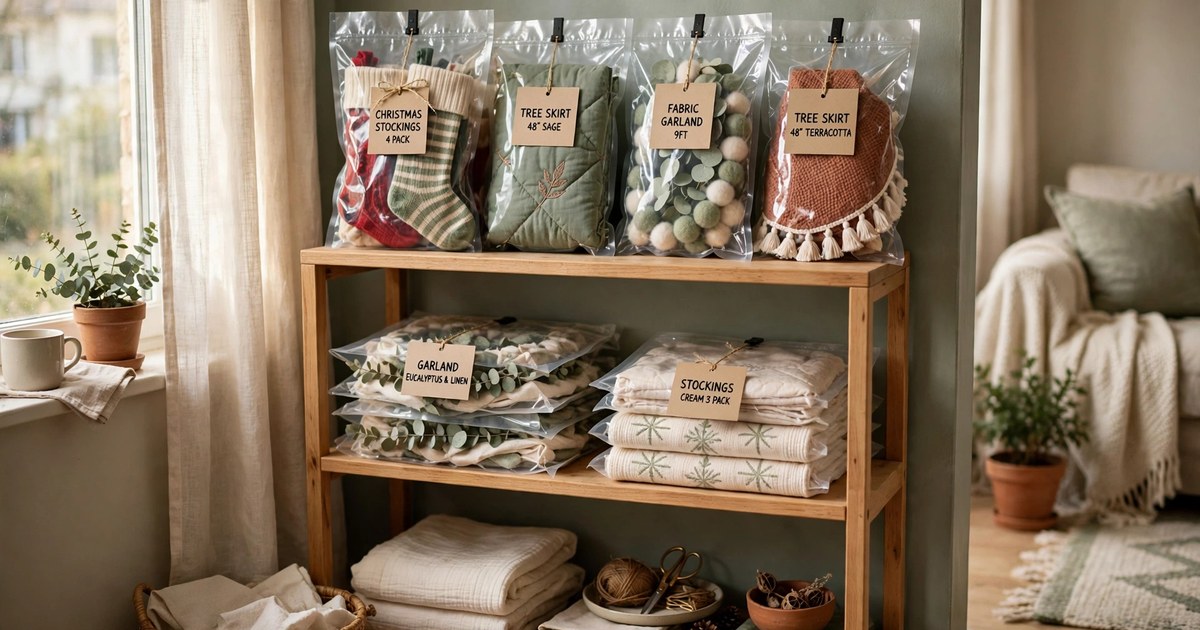
Why it works: soft decor — stockings, tree skirts, fabric garlands, advent calendars, Santa sacks — is mostly air. Vacuum bags compress it to a third of its volume, which turns a cupboard-filling pile into a flat package that slides under a bed or onto a high shelf. They also protect fabric from dust, damp and moths during eleven months of storage.
Where it fits: anywhere flat — under beds, on top of wardrobes, at the bottom of a suitcase you never use. Do not vacuum-seal anything with beads, sequins or delicate embroidery, which can crack under compression; bag those separately in a small box. And keep one bag unsealed until you are sure you have not packed the stocking someone still needs — every family has a January story about a sealed-away gift. Shop vacuum storage bags jumbo
3. Divided boxes for ornaments
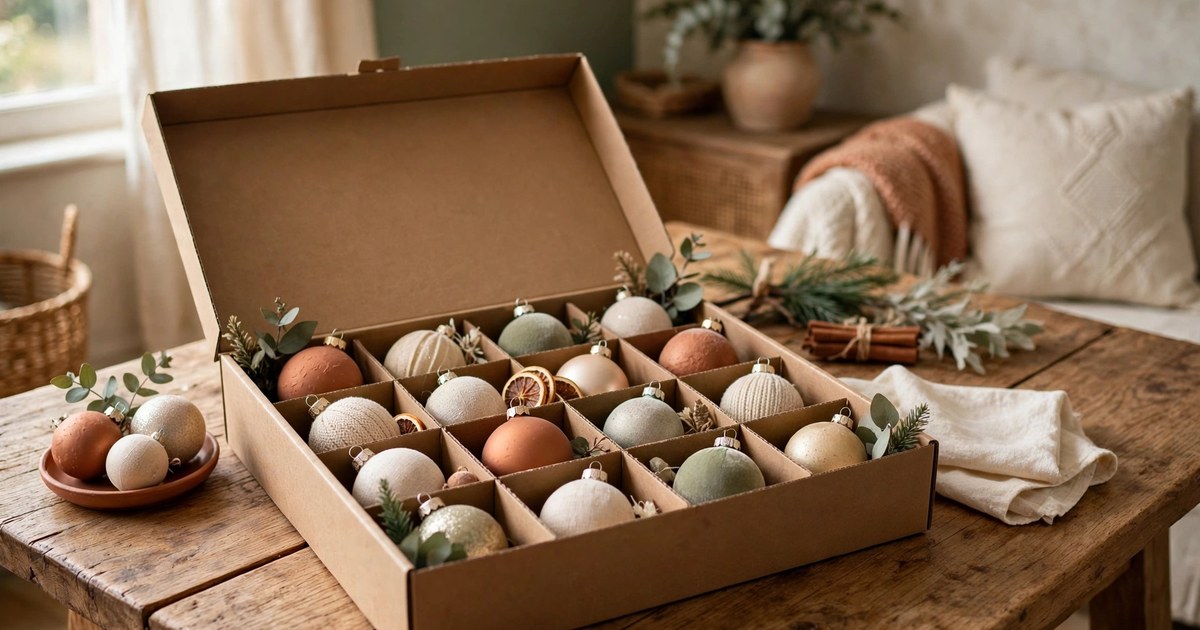
Why it works: ornaments are the items most likely to break in storage, and the way to prevent it is dividers — either a purpose-made ornament box or a DIY version with cardboard dividers in a sturdy box. Each ornament gets its own cell, nothing stacks on anything fragile, and next December you can see the whole collection at a glance instead of unwrapping newspaper for an hour.
Where it fits: on top of a wardrobe, in the bottom of a closet, or inside a larger bin as a box-within-a-box. Wrap genuinely fragile pieces (glass, heirloom, handmade) in tissue inside their cells; sturdier baubles can go bare. If you have more ornaments than box, that is information: the collection has outgrown the flat, and the January cull should start here. Shop ornament storage boxes with dividers
4. A wreath bag on the back of a door
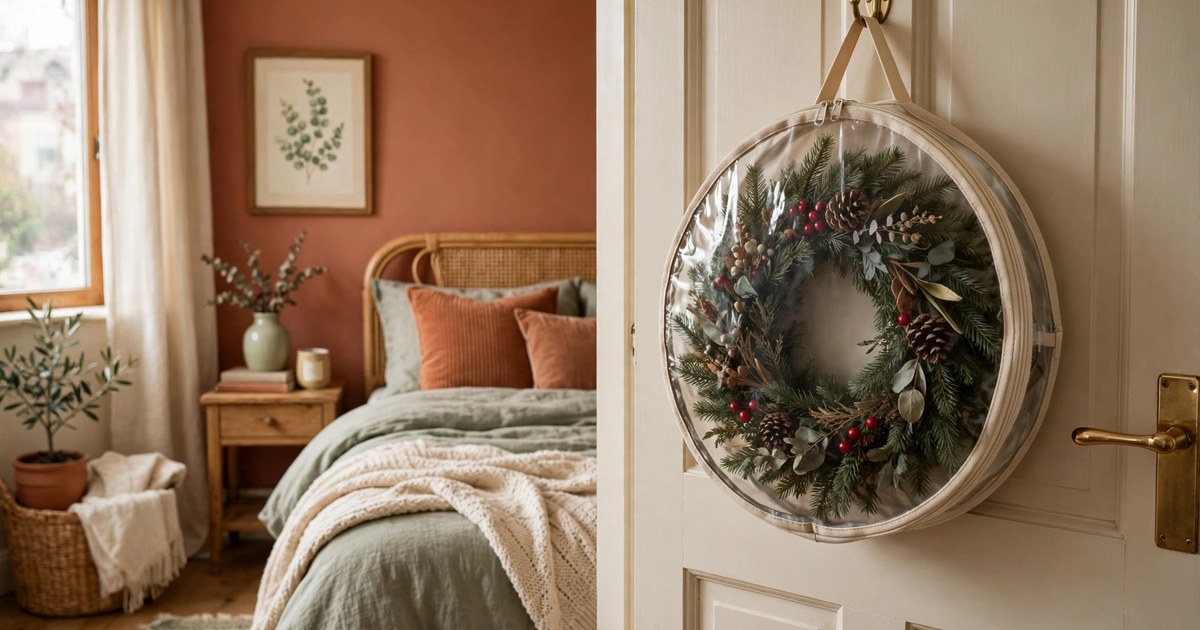
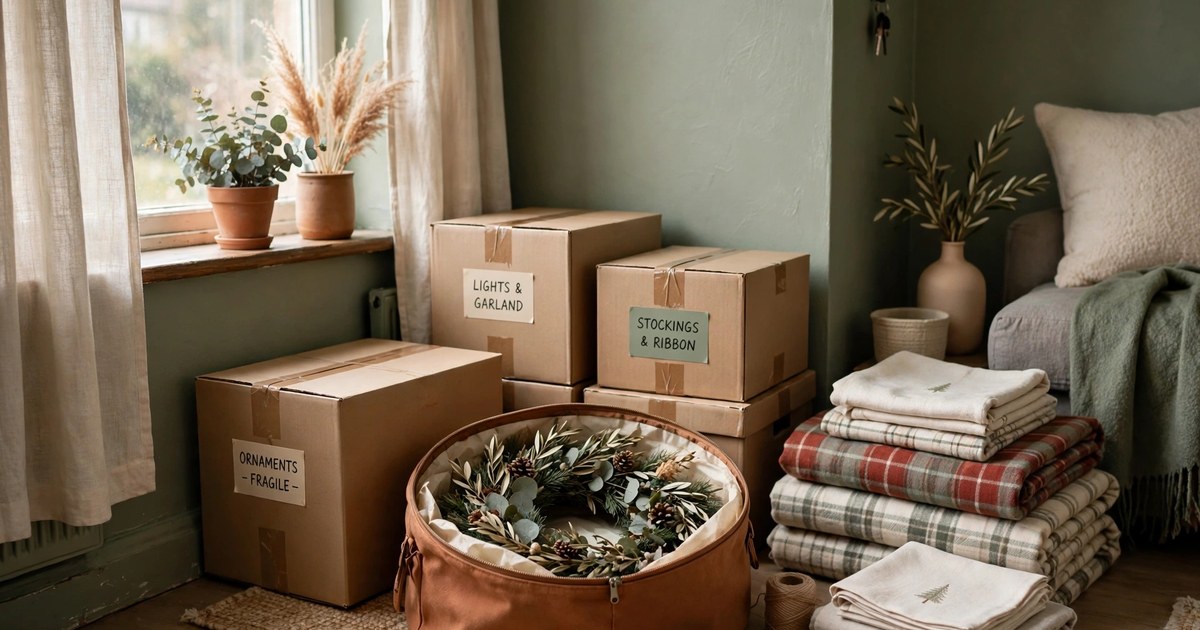
Why it works: wreaths are awkward — round, fragile, and impossible to stack. A zippered wreath bag solves all three problems: it holds the shape, protects the foliage from crushing, and hangs on a hook on the back of a door or inside a closet, using vertical space that was otherwise wasted. One bag holds one wreath, and that is the point — wreaths stored loose in a bin come out flat on one side every time.
Where it fits: on the back of a bedroom or closet door, on a hook inside a wardrobe, or hung from a high shelf bracket. If you own several wreaths, hang the bags in a row on a closet rod using shower curtain rings through the bag handles — a row of wreaths takes up about 30 cm of rod and zero floor space. Shop wreath storage bags
5. The top of the wardrobe
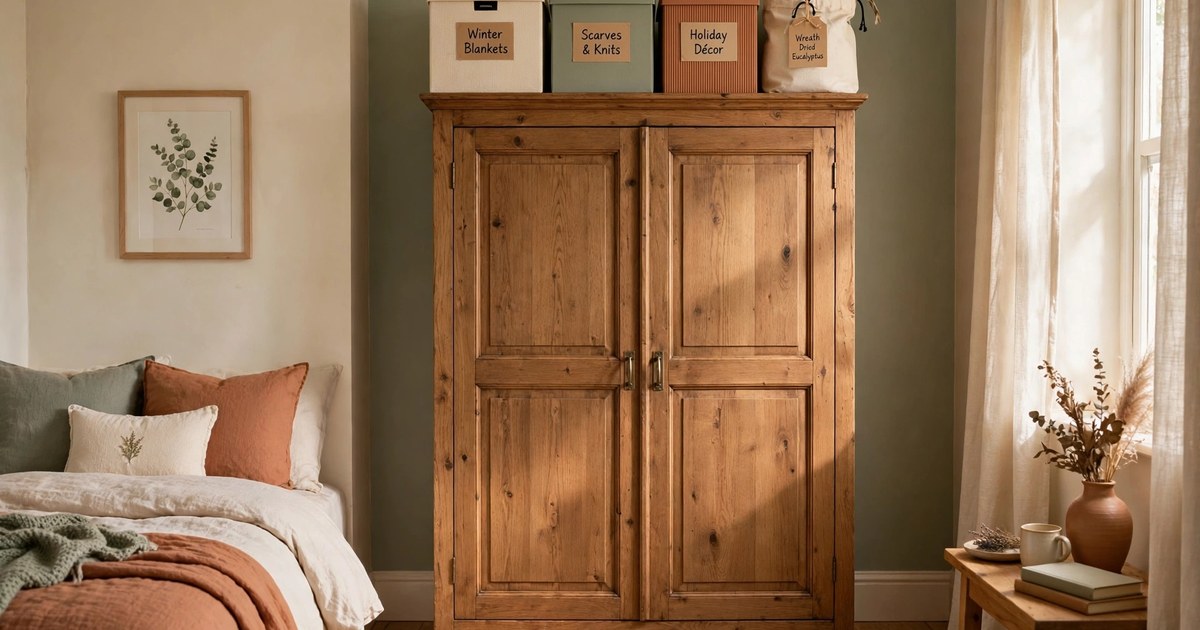
Why it works: the top of a wardrobe is dead space in most rentals — too high to reach daily, too visible to ignore, and perfect for the one box you touch once a year. A single large, labelled bin up there holds an entire small flat's Christmas decor if it is packed well, and it costs nothing because the space already exists.
Where it fits: on top of any wardrobe or tall cabinet, ideally in a bin with a lid (dust settles fast up high) and a label on the side you can read from below. Use a small step stool to get it down safely — do not climb furniture, and do not overload the bin, because a heavy bin at head height is a hazard. If the wardrobe top is visible from the door, choose a bin in a neutral colour rather than a printed Christmas one; it will look like storage, not like December never ended. Shop large lidded storage bins with labels
6. A rolling cart in the closet
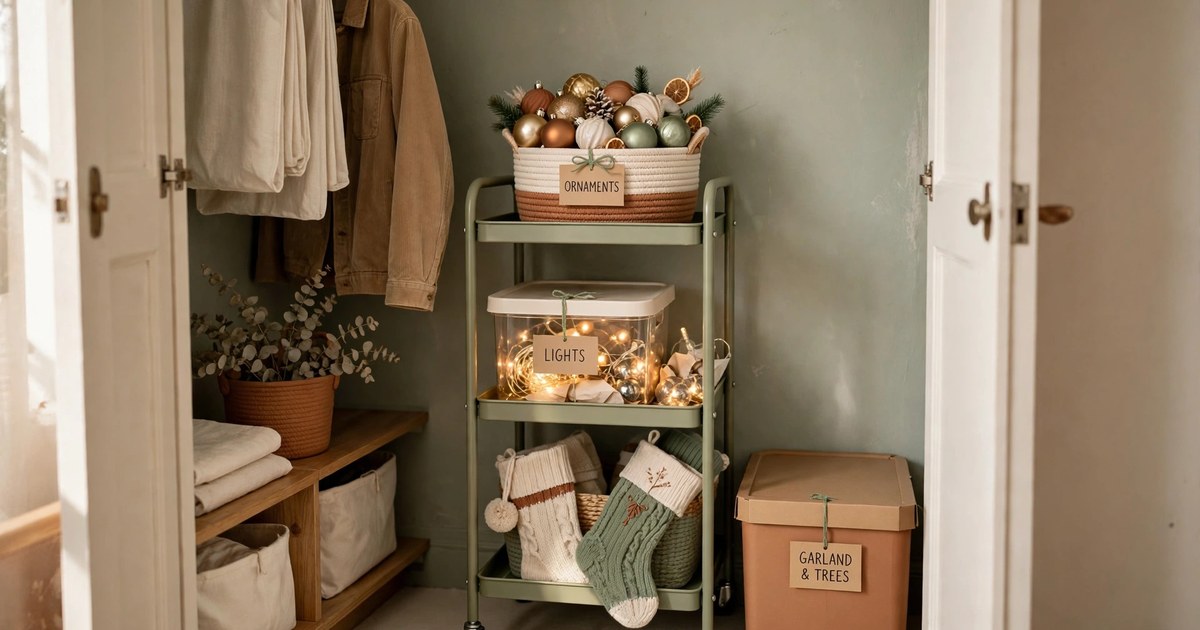
Why it works: if your closet has floor space but no shelves, a small rolling cart turns it into a Christmas storage unit that can be pulled out in December and pushed back in January. The cart's tiers separate categories — lights on one tier, ornaments on another, stockings on a third — so you never have to unpack a whole bin to find one string of lights.
Where it fits: in the bottom of a bedroom closet, a hall cupboard, or even under a desk. Measure the closet door first: the cart must fit through it fully loaded, or it becomes a permanent obstacle. This is also the best home for the wrapping station cart after the holidays — one cart, two jobs, twelve months a year. Shop slim rolling carts for closets
7. Stackable, labelled bins — and nothing unlabelled
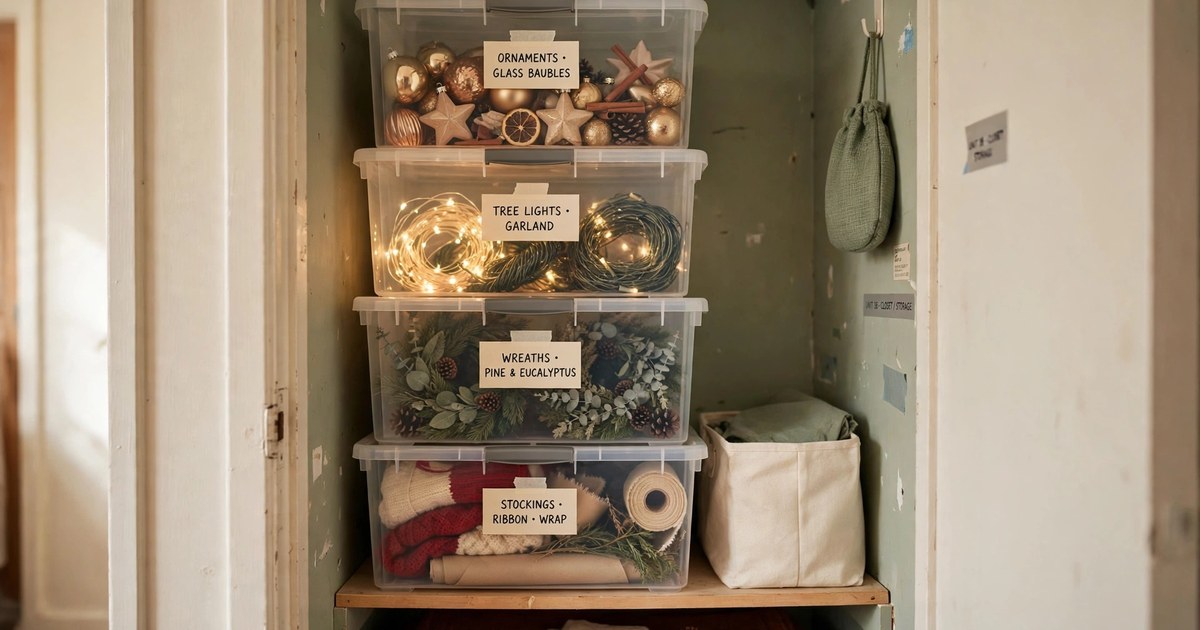
Why it works: the difference between a storage system and a pile of boxes is labels. A stack of clear, same-size bins with labels on the short end — "Tree ornaments", "Lights + garlands", "Table + stockings" — is a system you can actually use next December without opening everything. Same-size bins stack safely; mixed sizes topple.
Where it fits: in a closet, a cupboard, or a corner of a bedroom that can take a stack. Keep the stack to three bins high — taller stacks are unstable and the bottom bin becomes unreachable. Write labels on masking tape rather than directly on the bin, so the system can change as the collection changes, and include the year on the label if you rotate decor in and out. One unlabelled bin in the stack is a black hole; do not allow it. Shop stackable clear storage bins with lids
8. A tree bag, not the original box
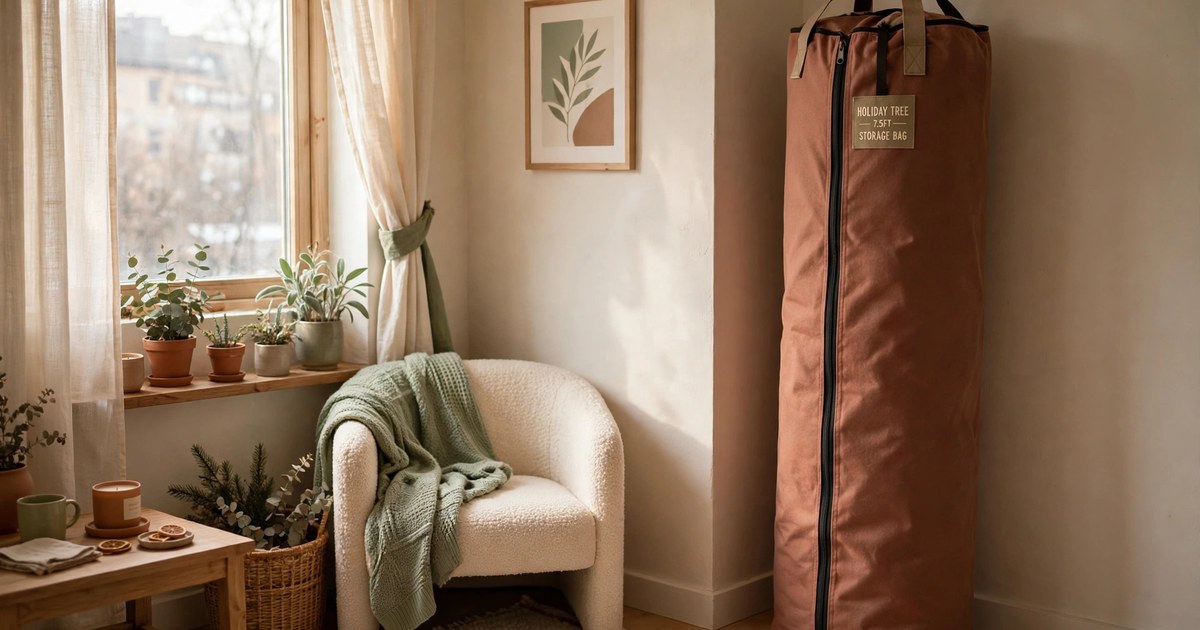
Why it works: the cardboard box an artificial tree arrives in is designed for shipping, not for eleven months of storage — it tears, it attracts damp, and it never quite closes again once the tree has been fluffed. A zippered tree bag is shaped for the job, has handles for carrying, and slides under a bed or behind a sofa where a rigid box will not fit.
Where it fits: under a bed, behind a wardrobe, or standing upright in a closet corner. If you have a small tree (under 120 cm), it may fit in a garment bag or even a large duffel, which costs nothing if you already own one. Before bagging, compress the branches gently section by section rather than forcing the whole tree in at once — forced branches snap, and a snapped branch is visible every December after. Shop artificial Christmas tree storage bags
9. Flat ornaments in the pizza-box trick

Why it works: flat ornaments — wooden shapes, felt decorations, paper stars — are the ones that get crushed in a general ornament box because they slide to the bottom. Layered in tissue inside a flat, rigid box (a clean pizza box is the classic, but any shallow rigid box works), they stay flat, visible and protected, and the box slides onto any shelf like a book.
Where it fits: on a bookshelf, on top of a wardrobe, or slipped between other flat storage. This is also the perfect home for handmade ornaments from children, which are flat, fragile and irreplaceable — they deserve their own box, not a corner of the general ornament bin. Label the box clearly; a flat box that looks like packaging is the first thing thrown away in a clear-out. Shop flat ornament storage boxes
10. The one-in-one-out rule
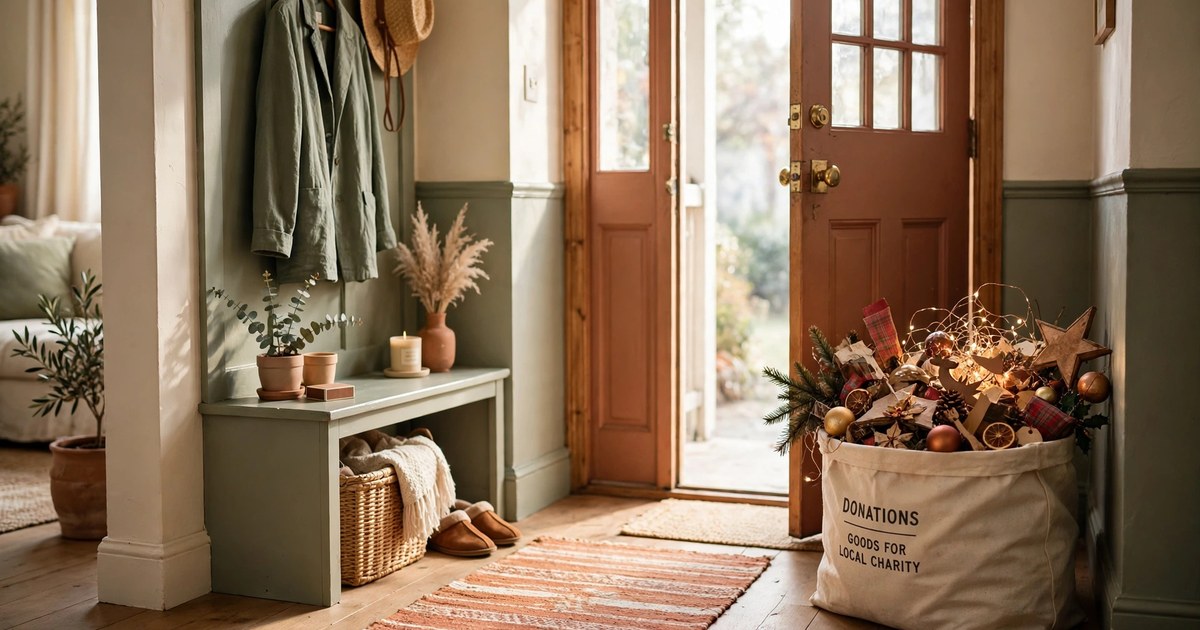
Why it works: no storage system survives a collection that grows every year. The one-in-one-out rule — every new decoration bought means one old decoration donated or discarded — keeps the total volume constant, which is the only way a small flat's storage keeps working year after year. It also forces a useful question at every purchase: is this better than something I already own?
Where it fits: in your January routine, not your December shopping. As you pack away, set aside anything you did not put up this year, anything broken, and anything you no longer love, and put the bag by the door for donation before you close the bins. Charity shops in January are grateful for Christmas decor — it is their stock for next year — and a smaller collection is a faster, happier December next time. Shop donation bags and storage labels
Shop this look: Christmas storage for tiny rentals
- Flat under-bed bins — the biggest dead space in the flat, used. Shop under-bed bins
- Vacuum storage bags — soft decor at a third of the volume. Shop vacuum bags
- Ornament boxes with dividers — no more broken baubles. Shop ornament boxes
- Wreath storage bags — wreaths that come out round. Shop wreath bags
- Tree storage bags — better than the box it came in. Shop tree bags
You may also like

How to Pet-Proof Christmas Decor in a Rental Without Losing Your Deposit
October 29, 2026
How to Take Down Holiday Decor in a Rental Without Losing Your Deposit
October 28, 2026