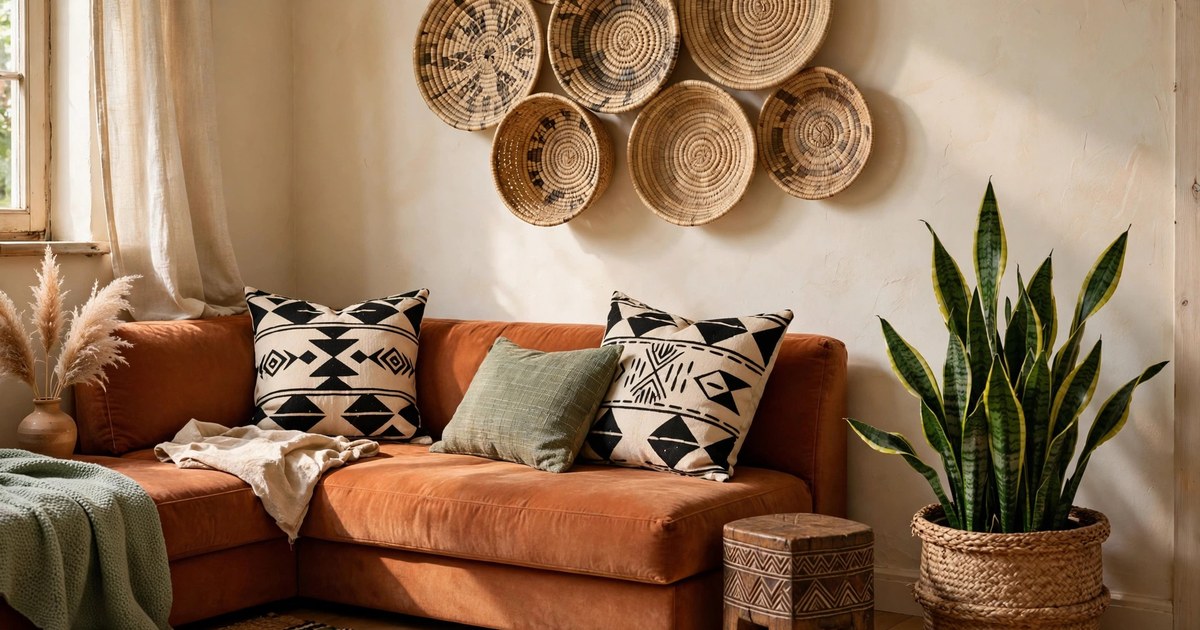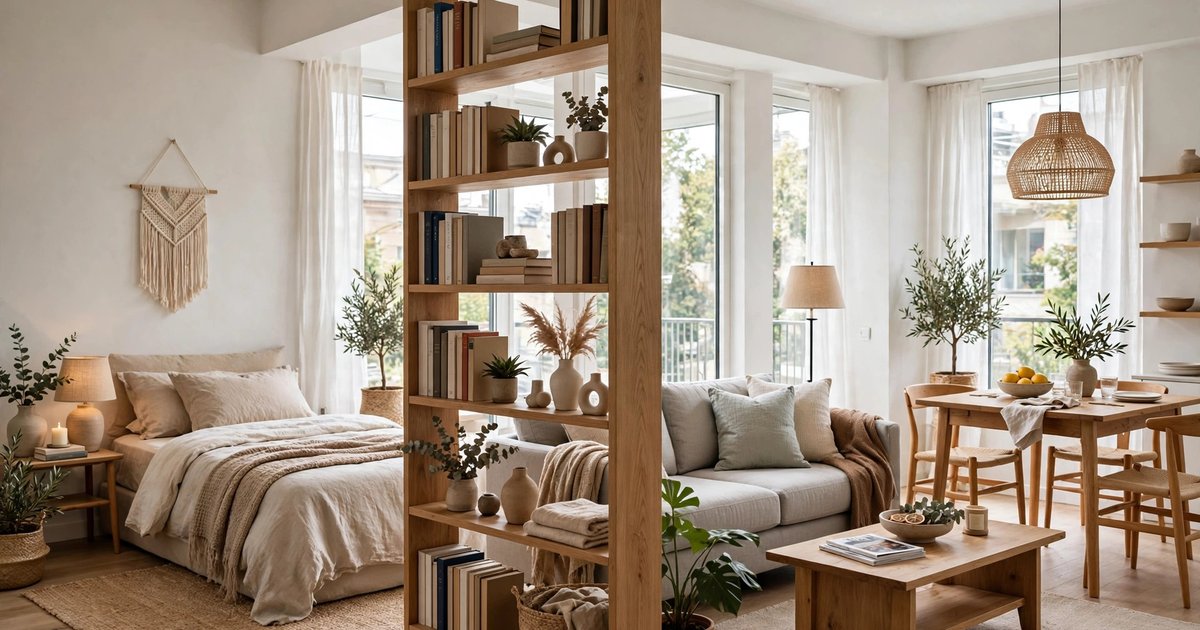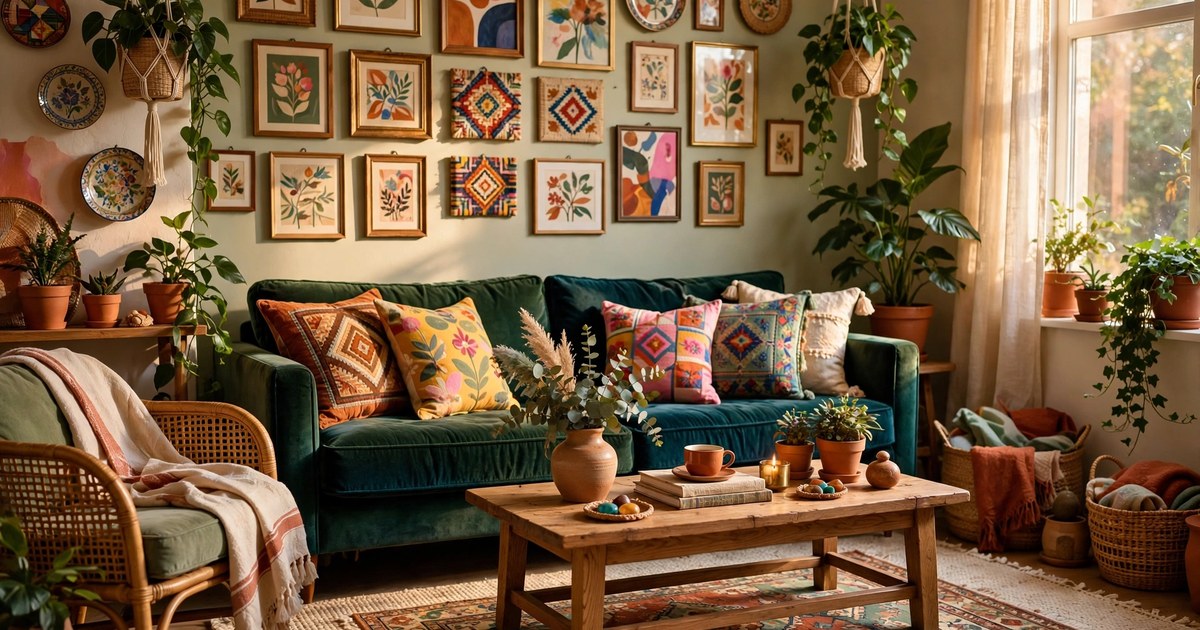
Grey-beige minimalism had a good run, but your nervous system is bored of it. Dopamine decor — the joyful, colour-drenched, more-is-more style driving Pinterest's 2026 FunHaus maximalism trend — is built for small living rooms. Big colour makes small rooms feel intentional instead of cramped, and nearly every idea here is renter-friendly: removable, reversible, and cheap enough to try this weekend.
The golden rule of dopamine decorating in a small space: commit to colour in layers, not in square metres. One bold wall beats four timid ones. Ten small joyful things beat one expensive "statement piece" you don't actually love. Here's where to start.
1. Give one wall a bold colour — the removable way
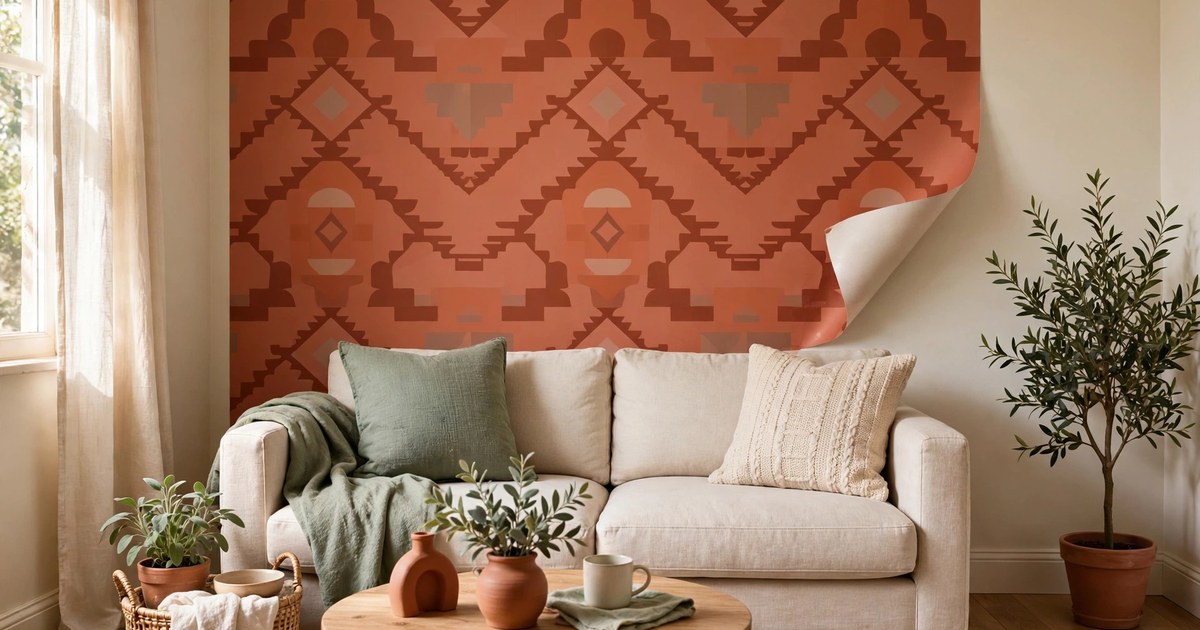
A single saturated wall — terracotta, mustard, deep teal, cherry red — does more for a small living room than any other single change. It gives the eye somewhere to land, makes neutral furniture look deliberate, and photographs beautifully. And yes, you can do it in a rental: peel-and-stick wallpaper has become genuinely good, with thick, forgiving panels that reposition without tearing.
Pick the wall your sofa sits against or the one you see first when you walk in. Measure twice, order one extra roll, and start from the least visible corner while you learn. A bold botanical or stripe pattern in a warm palette doubles the dopamine hit — pattern plus colour is the maximalist sweet spot.
Renter tip: test one panel behind a bookcase for a week before committing to the whole wall. Quality peel-and-stick removes cleanly with gentle heat, but cheap no-name brands can leave residue — buy from a maker with real reviews.
2. Look up — stripe the ceiling
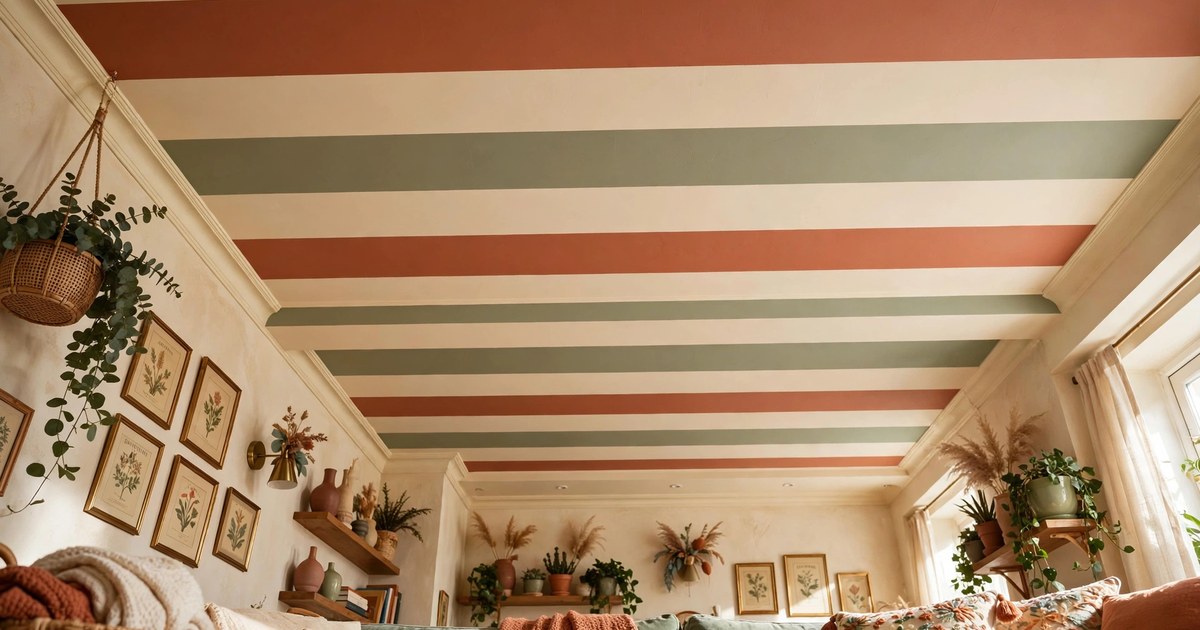
Pinterest's 2026 data shows searches for striped ceilings up 40%, and it's the cleverest dopamine trick for small rooms: colour on the ceiling draws the eye upward, which makes low ceilings feel taller, not shorter. In a rental, skip the paint and use removable striped decals or wide washi tape in two or three warm tones — terracotta and cream, sage and mustard, blush and rust.
Keep the stripes generous (15–20 cm wide reads calmer than pinstripes) and run them in the longest direction of the room. You don't need to cover the whole ceiling — striping just the area above the seating zone creates a "colour canopy" that makes the sofa area feel like its own joyful room-within-a-room.
Renter tip: washi tape lifts off cleanly for months, but test a strip on your ceiling paint first — some matte rental paints are fragile. If the tape pulls paint, switch to static-cling vinyl stripes instead.
3. Pile on clashing throw pillows
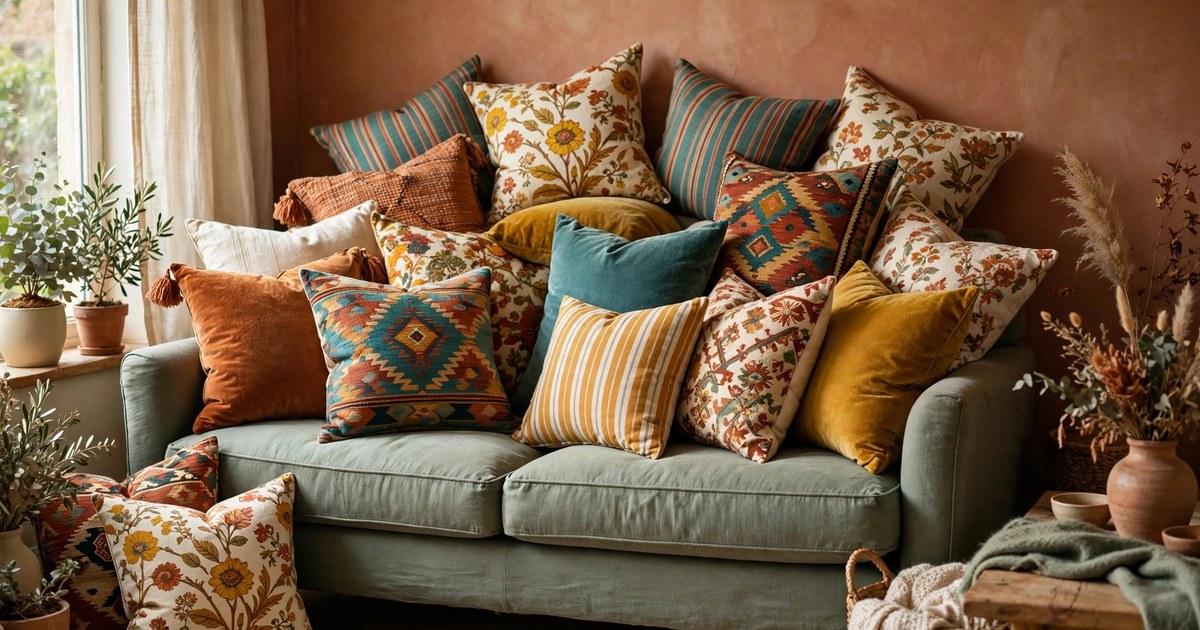
Nothing says dopamine decor faster than a sofa buried in pillows that technically shouldn't work together — florals with stripes, velvet with kilim, mustard with teal. The maximalist secret is that clashing works when the colours share a temperature: keep everything warm (rust, gold, terracotta, blush) or everything jewel-toned, and the chaos reads as curated.
This is the cheapest idea on the list. Charity shops sell cushion covers for a few pounds each, and a plain cushion insert plus a metre of bold fabric becomes a custom cover in ten minutes with iron-on hemming tape — no sewing. Aim for five to seven pillows on a two-seater; in a small room, abundance on the sofa reads as luxury, not clutter.
Renter tip: store the landlord's beige cushions (if the flat came furnished) in a vacuum bag under the bed. Swap them back on moving day and keep your colourful ones for the next place.
4. Build a maximalist gallery wall
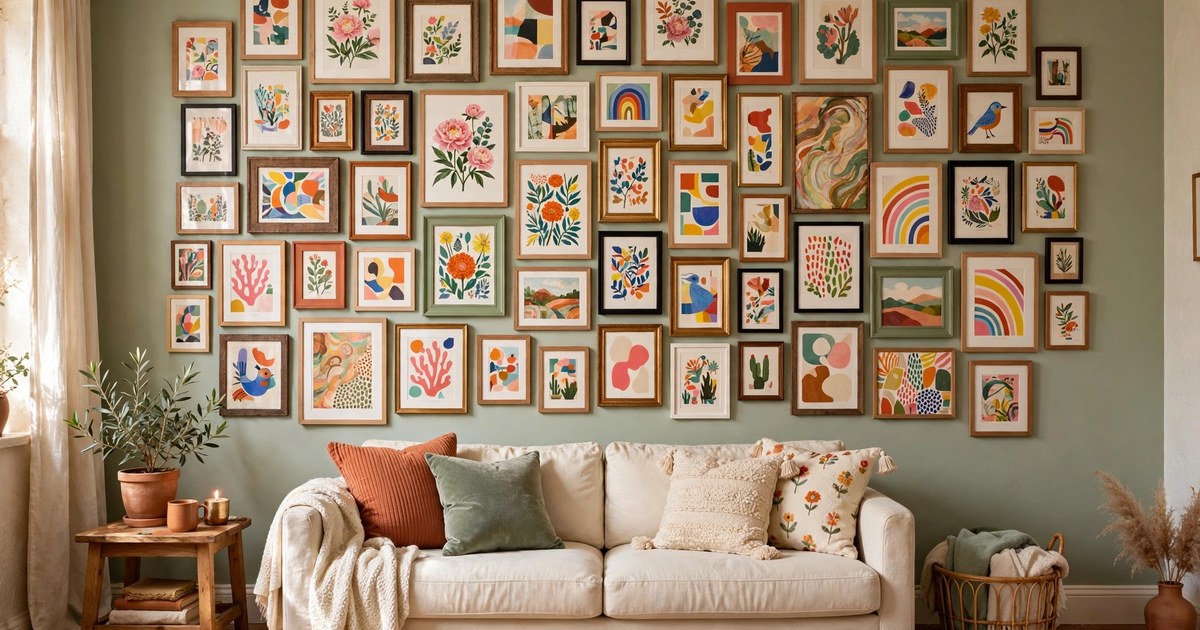
One lonely frame on a big wall whispers "temporary". Twenty frames in mixed sizes, colours, and styles shout "someone joyful lives here" — and a gallery wall is the single best way to fill vertical space in a small living room without eating a centimetre of floor. Mix free printable art, postcards, charity-shop paintings, family photos, and one weird thing you love.
The renter-friendly hanging method matters: adhesive picture-hanging strips hold frames up to several kilos and remove without marks when you pull the tab correctly (slowly, straight down, never outward). Lay the arrangement on the floor first, photograph it, then transfer it to the wall working from the centre outward.
Renter tip: keep every frame within one large invisible rectangle — the "contained chaos" trick. Wildly different art inside a disciplined overall shape looks maximalist; scattered randomly it just looks messy.
5. Hang one oversized colourful artwork
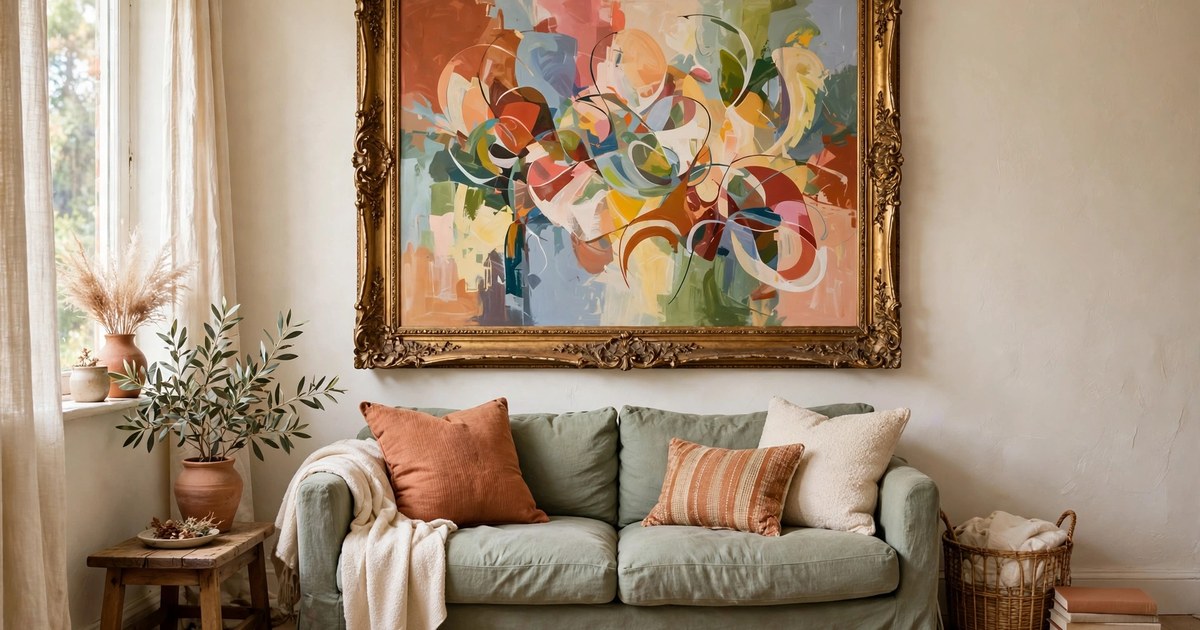
If a full gallery wall feels like too much commitment, go the opposite direction: one huge, unapologetically colourful piece. Oversized art is a classic small-room trick — a single large canvas makes the wall (and therefore the room) feel bigger, while lots of small pieces can feel fussy. Charity shops and car boot sales are full of large frames with forgettable art inside; keep the frame, replace the art.
For the artwork itself, free museum print collections offer high-resolution downloads of bold modern pieces you can have printed at poster size for the price of a takeaway. Or make your own: a £10 canvas, three tubes of acrylic in your palette, and an afternoon of joyful mess produces something genuinely you.
Renter tip: a large lightweight canvas on adhesive strips or a picture rail hook avoids heavy-duty fixings entirely. If you must use a nail, one small hole filled with a dab of filler on moving day is the cheapest repair in renting.
6. Layer a small colourful rug over your neutral one
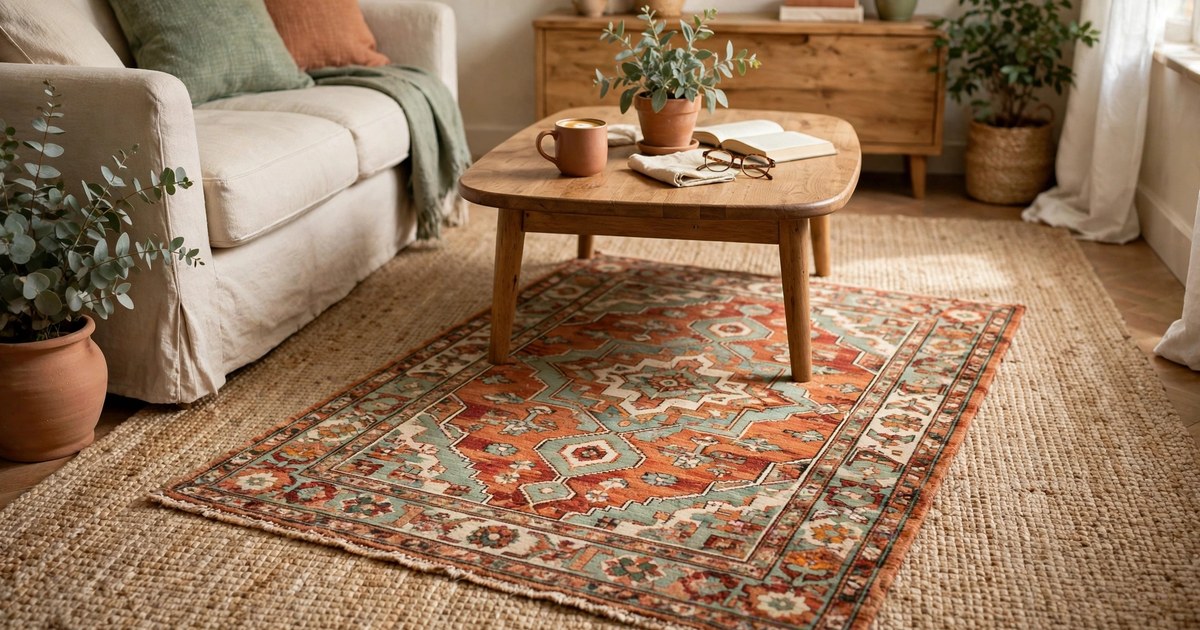
Rug layering is the maximalist's answer to the boring rental carpet or the too-small rug you already own. A 120×170 cm vintage-style or boldly patterned rug laid at an angle over a larger neutral jute or sisal rug adds colour, pattern, and that collected-over-time richness — for less than the cost of one proper-sized statement rug.
In a small living room, let the colourful top rug sit under the front legs of the sofa and the coffee table; the neutral base rug underneath extends the "zone" visually so the seating area feels generous. Slightly crooked is fine — actually, slightly crooked is the point. Perfectly aligned rugs read catalogue; artfully askew reads home.
Renter tip: a thin non-slip rug pad between the layers stops everything migrating across hard floors and protects the landlord's flooring underneath. Cut it slightly smaller than the top rug so it stays invisible.
7. Swap in colourful curtains on a tension rod
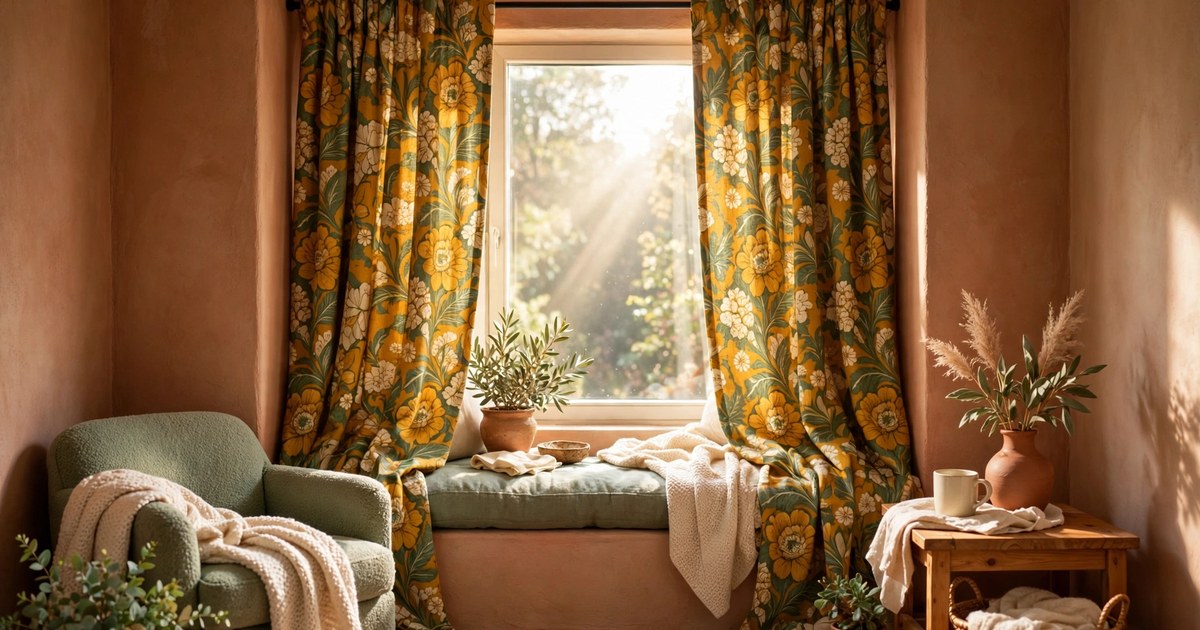
Windows are the most underused colour opportunity in small living rooms. Landlord blinds are almost always white or grey; a pair of ready-made curtains in a bold print or saturated solid — hung on a tension rod inside the window recess, zero drilling — frames the view and adds a huge vertical slab of colour for very little money.
Hang them high and wide: extend the tension rod a few centimetres beyond the recess on each side and let the curtains just kiss the floor. Longer, wider curtains make windows look bigger, which makes the whole room look bigger. Mustard velvet, terracotta linen-look, or a joyful floral — pick the colour that makes you smile when the morning light hits it.
Renter tip: keep the landlord's blinds exactly as they were underneath. Your curtains are purely decorative layers, so checkout day is a five-minute takedown, not a repair job.
8. Carve out a dopamine reading corner
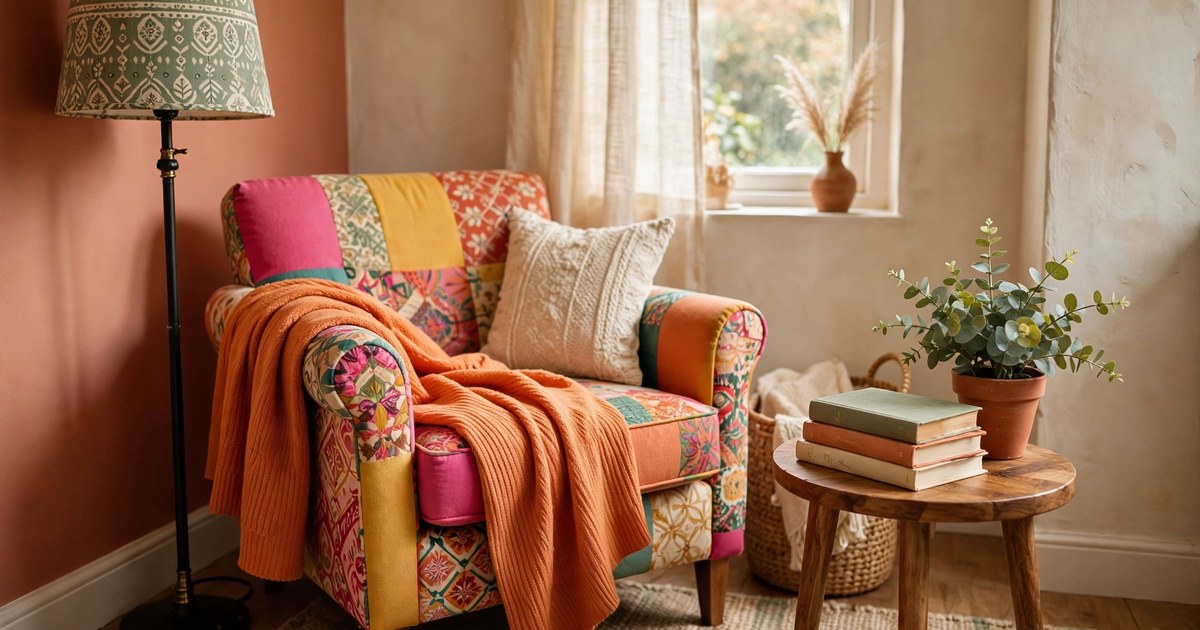
Every small living room has one awkward corner — too small for furniture, too big to ignore. Turn it into the happiest square metre in your home: a charity-shop armchair in a bold colour (or a neutral one with a colourful throw), a small side table, a floor lamp with a patterned shade, and a stack of books. It becomes the spot everyone gravitates to, and it gives the room a sense of purpose beyond "sofa faces TV".
The dopamine is in the details: a cushion in your favourite colour, a small plant, a candle that smells like something you love. This corner costs almost nothing if you thrift the chair — re-covering a tired armchair with a bright throw instantly erases its past life.
Renter tip: a plug-in wall sconce or a floor lamp means no wiring changes. Battery-operated picture lights above a small shelf of books add evening glow with zero landlord negotiations.
9. Chalk-paint a thrifted side table
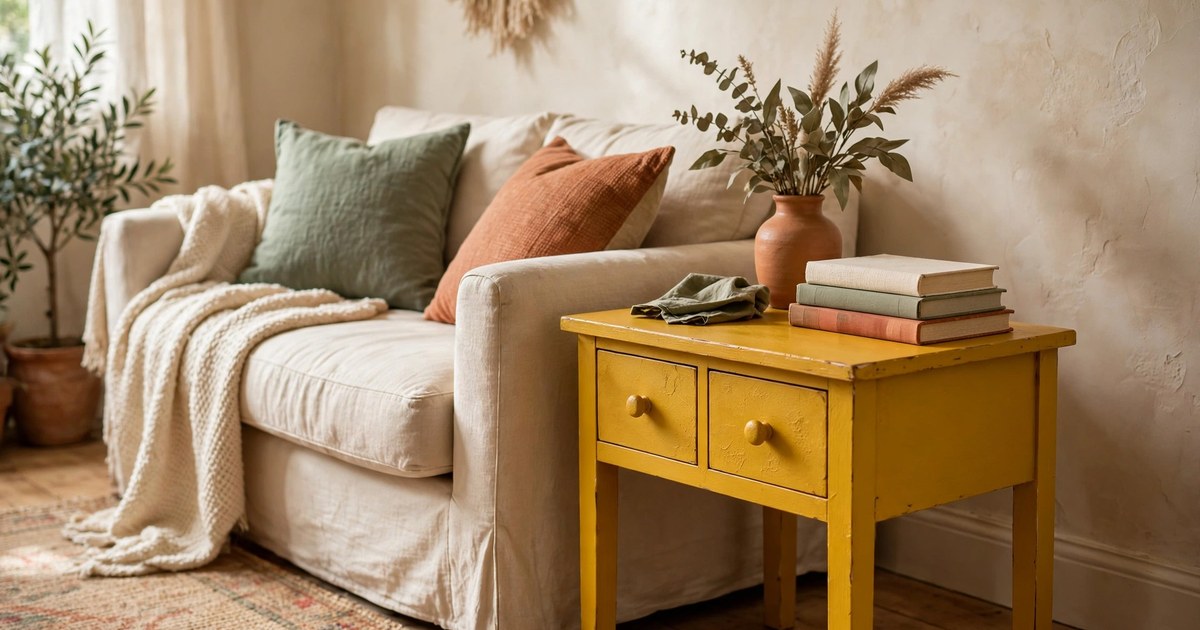
A £5 wooden side table from a charity shop, one tin of chalk paint in the boldest colour you dare, and a coat of wax: that's a custom designer-looking piece for under £20. Chalk paint sticks to almost anything without sanding or priming, dries fast, and the matte finish looks expensive in saturated colours — mustard, teal, cherry, cobalt.
Place your newly bold table somewhere it gets noticed: next to the sofa, between two chairs, or as a plant stand in that reading corner. One painted piece among neutral furniture is the textbook dopamine move — it's a punctuation mark, not a paragraph. If you love the result, paint a second piece; restraint with painted furniture keeps it joyful rather than chaotic.
Renter tip: this one is fully yours, not the landlord's — thrifted furniture you paint is an asset that moves with you. Start with pieces you own so there's nothing to explain at checkout.
10. Finish with colourful, warm lighting
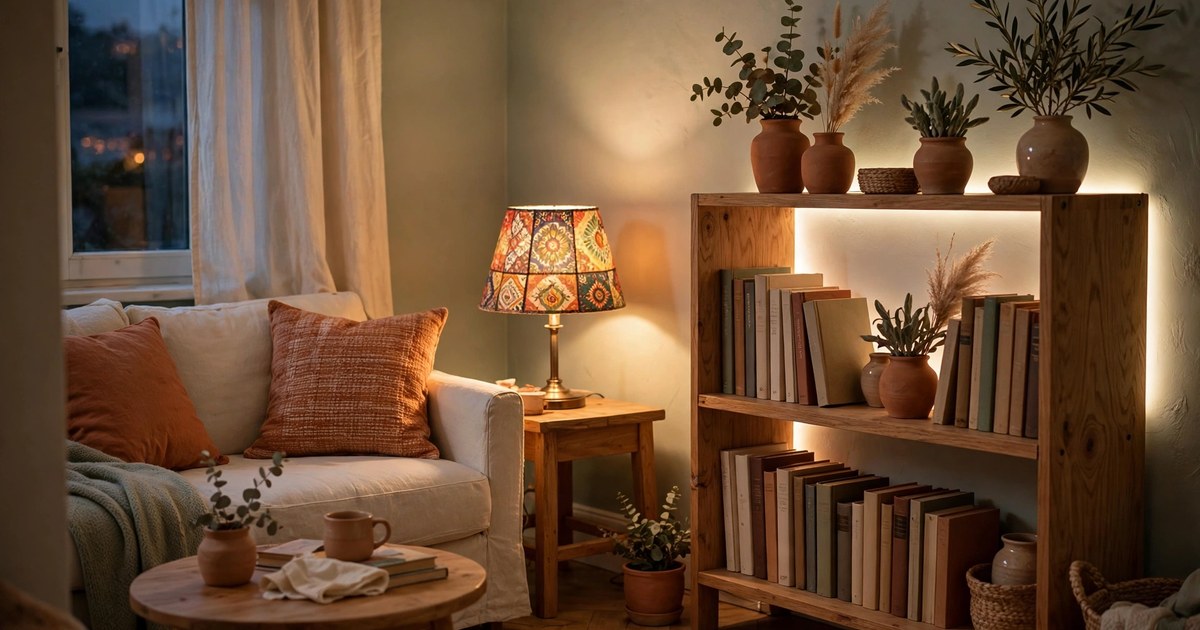
Colour you can only see in daylight is colour half-wasted. Swap the cold rental ceiling bulb for a warm-toned LED, add a table lamp with a patterned or coloured shade, and tuck a warm-white LED strip behind the sofa or a bookshelf for evening glow. Lighting is what turns "colourful room" into "room that makes you happy at 9pm in November".
Keep every bulb warm (2700K) — cool white light makes bold colours look harsh and cheap, while warm light makes the same colours look rich and enveloping. A coloured shade on a plain lamp base is the cheapest transformation here: the shade tints the light itself, washing the corner in amber, rose, or gold.
Renter tip: save every original bulb and shade in a labelled box. Swapping them back takes ten minutes on moving day, and warm bulbs make viewings-free evenings so much better that you'll never go back.
Frequently Asked Questions
What is dopamine decor exactly?
Dopamine decor is a joyful, maximalist decorating style built around colour, pattern, and objects that make you happy — the opposite of restrained beige minimalism. Pinterest's 2026 trend data backs the shift: searches for expressive, colourful interiors like "circus interior" are up 130% as people decorate for joy rather than resale value.
Won't bold colours make my small living room feel smaller?
Done wrong, yes — four dark walls can close a room in. Done right (one bold wall, colour up high on the ceiling, colourful textiles), bold colour gives the eye focal points that make a small room feel intentional and larger. The trick is committing to colour in layers while keeping floors and large furniture relatively calm.
How do I do maximalism in a rental without losing my deposit?
Every idea in this guide is reversible: peel-and-stick wallpaper, adhesive hanging strips, tension-rod curtains, layered rugs, thrifted furniture you own, and warm-bulb swaps. The deposit-safe rule is simple — if you can't undo it in an afternoon with no trace, don't do it. Photograph everything before you start so checkout is just "put it back".
Where do I find colourful decor on a tight budget?
Charity shops and car boot sales for furniture and frames, supermarket and discount-home-store ranges for cushions and throws, free printable art collections online for gallery walls, and fabric shops' remnant bins for cushion covers. Dopamine decor is one of the cheapest styles to do well because thrifted colour costs the same as thrifted beige.
How do I stop maximalism tipping into clutter?
Contain the chaos: keep bold colour inside a disciplined framework — one accent wall, one gallery-wall rectangle, one painted piece of furniture. Repeat two or three colours throughout the room so the variety feels connected, and give every surface a little breathing room. Joyful maximalism is curated abundance; clutter is abundance without decisions.