A rental can feel cold in two ways at once: the draught that sneaks in around old windows, and the flat, pale walls that no amount of central heating seems to warm up. The frustrating part is that the most obvious fix — a coat of warm paint — is usually off the table, written out of the tenancy agreement along with drilling holes and anything else permanent. But warmth is not only a colour on a wall. It is texture under your hands, light at eye level, softness under your feet and a scent in the air, and every one of those can be added without touching a paintbrush.
These ten ideas are all renter-friendly, landlord-approved and removable in minutes, and most cost under $25. None of them needs a drill, a nail or a single drop of paint. Together they build the kind of warmth that makes a rental feel like home rather than a holding pen — and when you move, almost everything on this list packs into a box and comes with you.
1. Layer a Chunky Knit Throw Over Every Seat
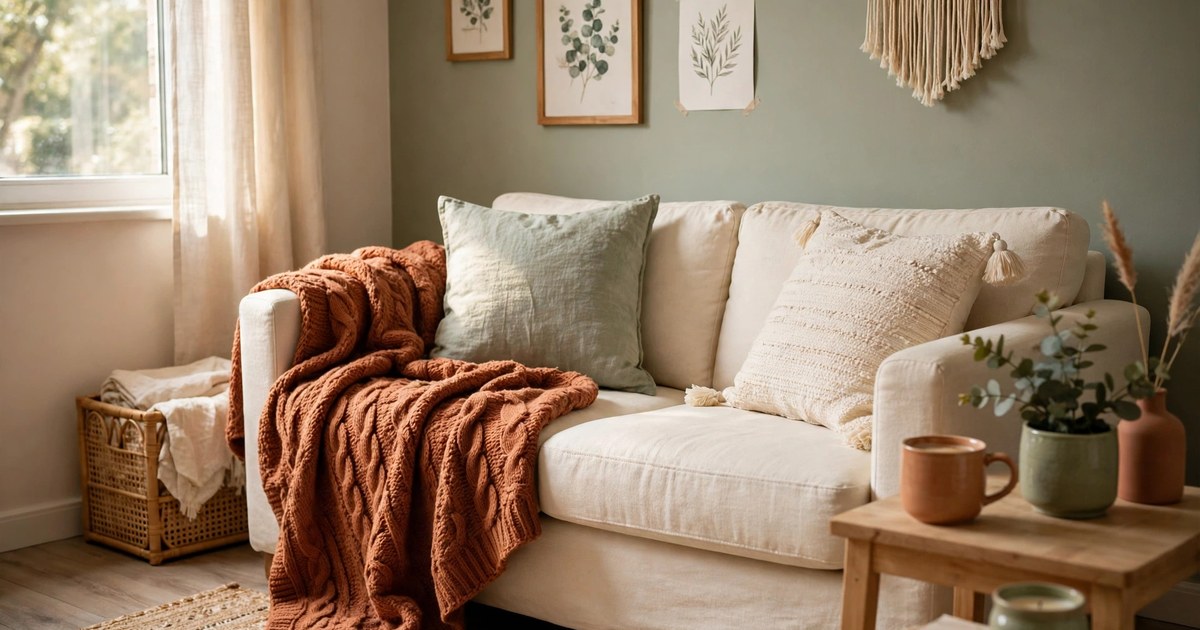
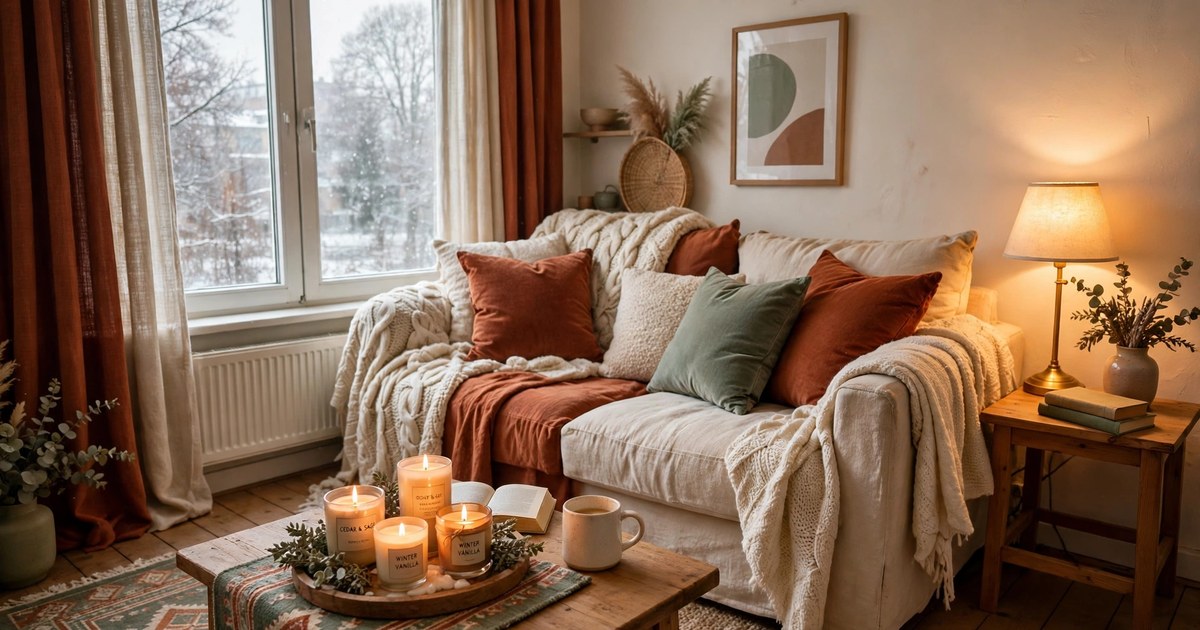
A chunky knit throw is the single fastest way to make a room feel warmer, because it does two jobs at once: it adds visible texture and it gives you something to pull around your shoulders on a cold evening. Drape one over the arm of the sofa, fold one across the foot of the bed, and keep a third in a basket by your favourite chair. The trick is to choose a warm colour — terracotta, mustard, rust or a deep cream — rather than a cool grey or white, because the colour does as much warming work as the knit itself.
Look for a throw with a thick, tactile weave rather than a flat fleece, and buy the biggest size your budget allows so it drapes rather than perches. A throw that is too small looks like an afterthought; one that spills over the arm of the sofa looks deliberate and inviting. Layer a second, thinner throw underneath in a contrasting warm tone — cream over terracotta, or sage over mustard — and you get the layered, collected look that expensive interiors achieve with far more effort. When you move, a throw folds into a suitcase, which makes it one of the best value-per-pound decor buys a renter can make.
2. Hang Warm-Toned Thermal Curtains
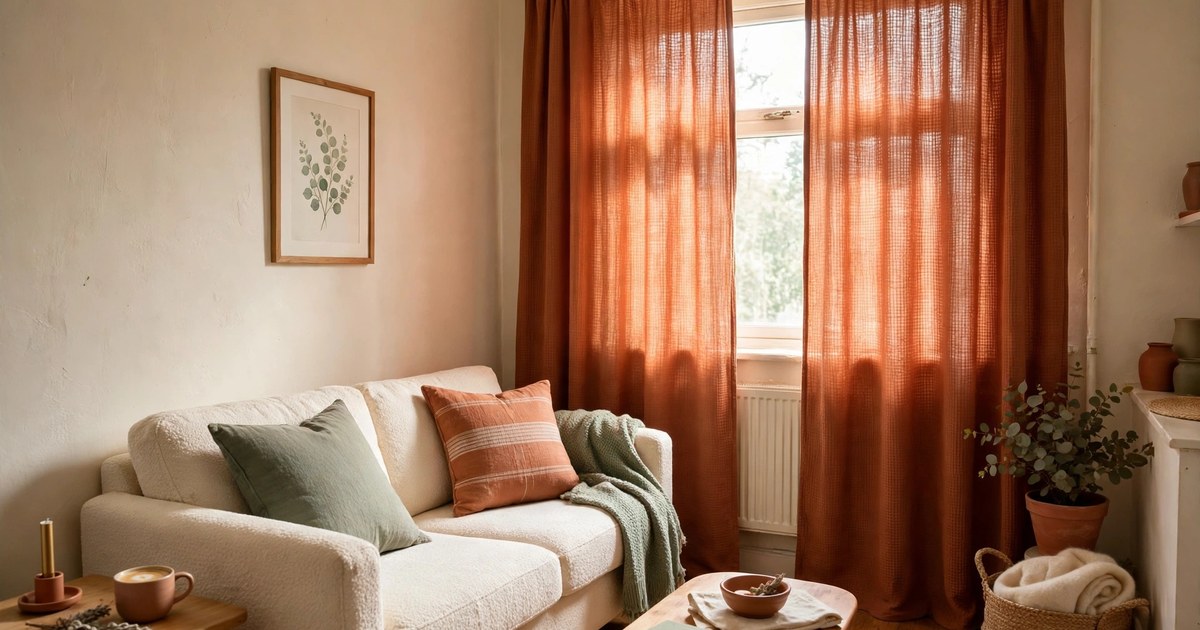
Pale, thin rental curtains are a warmth thief: they let cold air pour in at night and they make a room look washed out by day. Swapping them for warm-toned thermal curtains is the rare decor change that genuinely warms a room in both senses — the lined fabric blocks draughts and insulates the window, while the colour warms the whole wall. Terracotta, warm gold, rust or a deep sage all work; the aim is a colour with some depth to it, because a curtain in a flat magnolia does nothing for a cold room.
Hang them on the existing curtain rod — there is no need to touch the fixings — and choose a length that just kisses the floor or the windowsill. Curtains that are too short make a window look unfinished, while floor-length ones add a sense of softness and height that a small room desperately needs. If your rental has blinds instead of a rod, a tension rod fitted inside the window frame takes minutes to install and leaves no marks at all. Keep the original curtains in a bag in a cupboard so you can put them back when you leave, and take the thermal ones with you — they will fit the next place too.
3. Layer Rugs to Warm Cold Floors
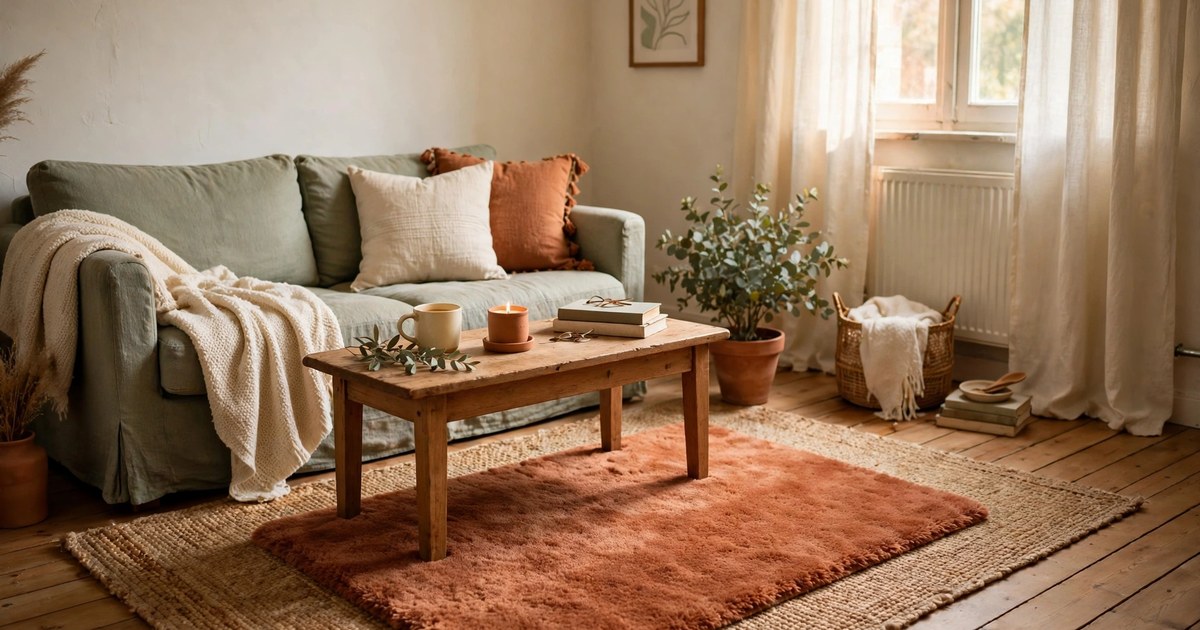
Cold floors are the fastest way to make a rental feel unwelcoming, and a rug is the fastest fix. Layering two rugs — a larger, flat-weave base rug with a smaller, plusher one on top — warms a room far more effectively than a single rug, because the layers trap air and insulate the floor beneath your feet. Choose a base in a warm neutral, then add a smaller rug in a deeper tone: a jute base with a terracotta shaggy rug on top, or a cream flat weave under a sage high-pile rug.
The trick is to let the top rug sit at a slight angle or offset from the base, so the layering looks intentional rather than accidental, and to leave a border of the base rug visible all the way around. A non-slip pad between the layers stops them sliding on wood or tile floors, and a rug that moves under your feet is a rug you will stop using. For more ideas on choosing the right rug for a small space, see our guide to cosy winter rugs for small rentals under $25.
4. Switch to Warm Lighting at Every Level
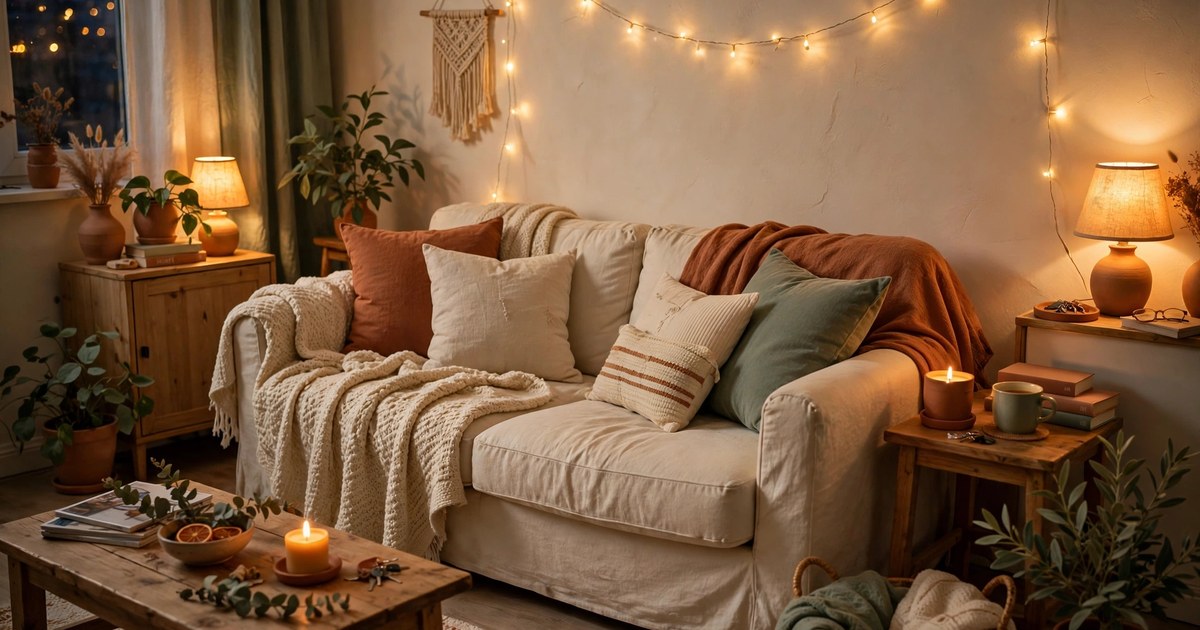
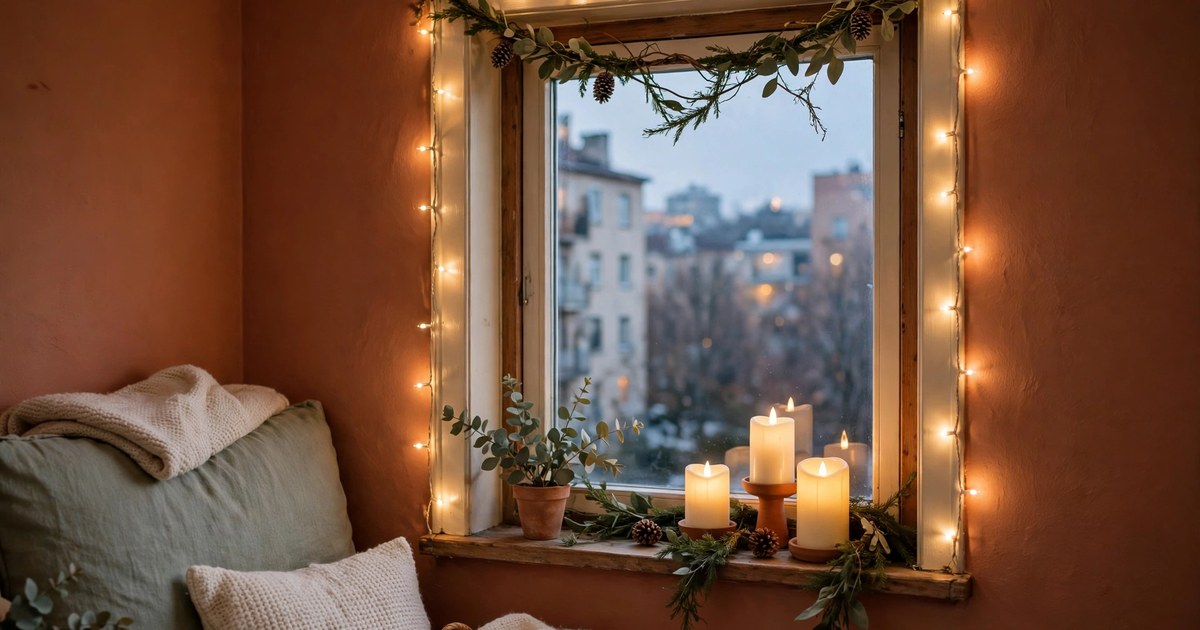
Nothing warms a cold white room faster than warm light. Most rentals come with a single overhead light that casts a harsh, cold glow — and in winter, when it gets dark at four in the afternoon, that one light defines the whole mood of the room. The fix is to layer light at three levels instead: a table lamp or floor lamp at sitting height, a string of warm fairy lights along a shelf or window, and the overhead light kept off or dimmed as much as possible.
Start by swapping any cool-white bulbs for warm-white ones — a 2700K bulb is the sweet spot — because the colour temperature of a bulb changes a room more than any lamp shade can. Then add a lamp with a fabric shade in a warm tone, which softens the light further and throws a golden pool onto the wall beside it. Fairy lights, draped along a bookshelf or around a window frame, add a gentle sparkle that reads as warmth in the darkest months. For a full guide to lighting a rental without touching the wiring, see our renter-friendly winter lighting ideas.
5. Add Colour with a Tapestry or Fabric Wall Hanging
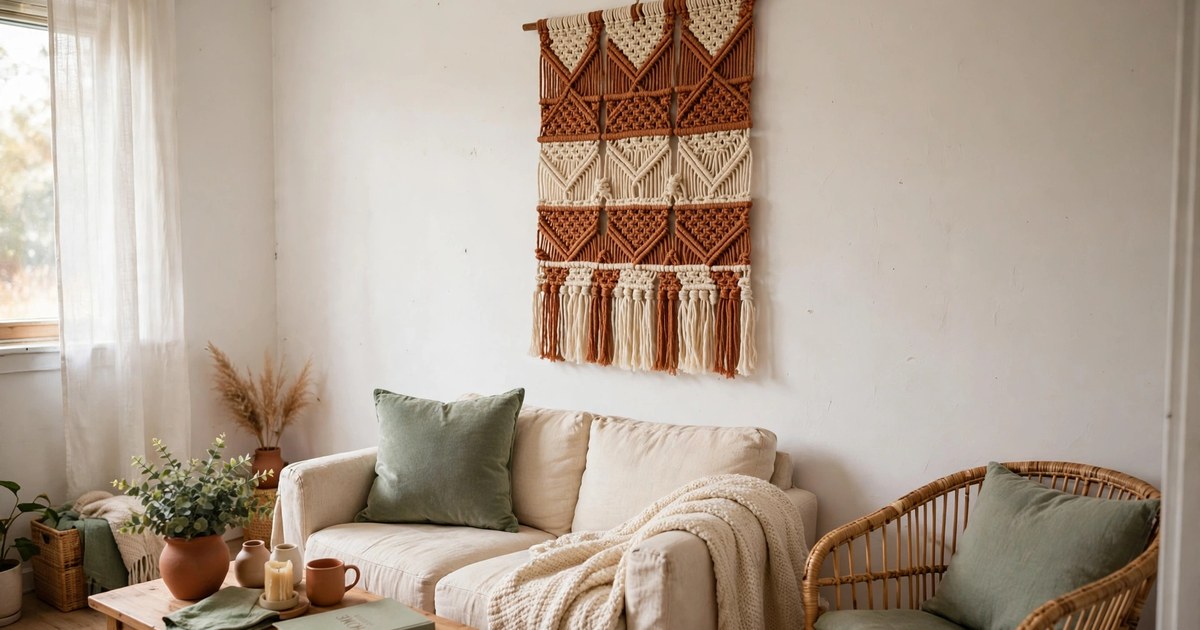
A large expanse of white wall is the coldest thing in a rental, and a tapestry or fabric wall hanging is the closest a renter can get to painting it — without the paint. A woven wall hanging in warm terracotta, mustard and cream does three things at once: it covers the blank wall, it adds texture and colour at eye level, and the fabric itself softens the acoustics of a bare room, so the space feels quieter and more enclosed.
Hang it with adhesive hooks or a tension rod, never nails, and choose a size that fills most of the wall — a small hanging on a big wall looks lost, while one that spans two-thirds of the wall becomes a genuine focal point. Macramé, woven cotton and lightweight tapestries all work, and they fold flat for moving day. If you want more no-drill options for blank walls, our guide to no-drill wall decor for renters covers adhesive hooks, leaning frames and every other way to decorate without a single hole.
6. Pile On Cushions in Warm Textures
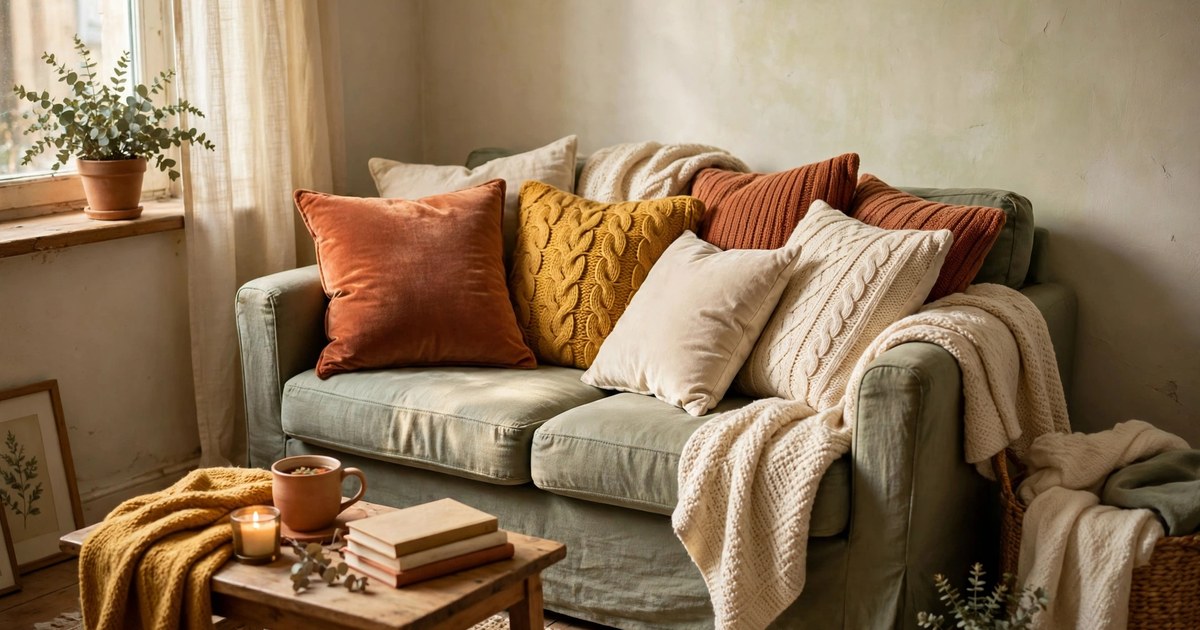
Cushions are the cheapest way to change the colour temperature of a room, and texture matters as much as colour. A sofa covered in smooth, cool fabric feels cold to sit on; the same sofa piled with velvet, chunky knit and faux-fur cushions in terracotta, mustard and rust feels like a different piece of furniture altogether. Mix three textures and two or three warm colours, and keep one cushion in a plain cream to stop the mix from becoming too busy.
The rule that makes a cushion pile look deliberate rather than cluttered is odd numbers — three or five on a two-seater sofa, never two or four — and a mix of sizes, with the largest cushions at the back and the smallest at the front. Cushion covers are the renter's best friend here: buy covers rather than whole cushions, swap them with the seasons, and store the out-of-season set in a vacuum bag under the bed. A set of four warm-toned covers usually costs less than a single takeaway, and it changes a room more than almost anything else at that price.
7. Bring In Warm Wood Tones with Trays and Baskets
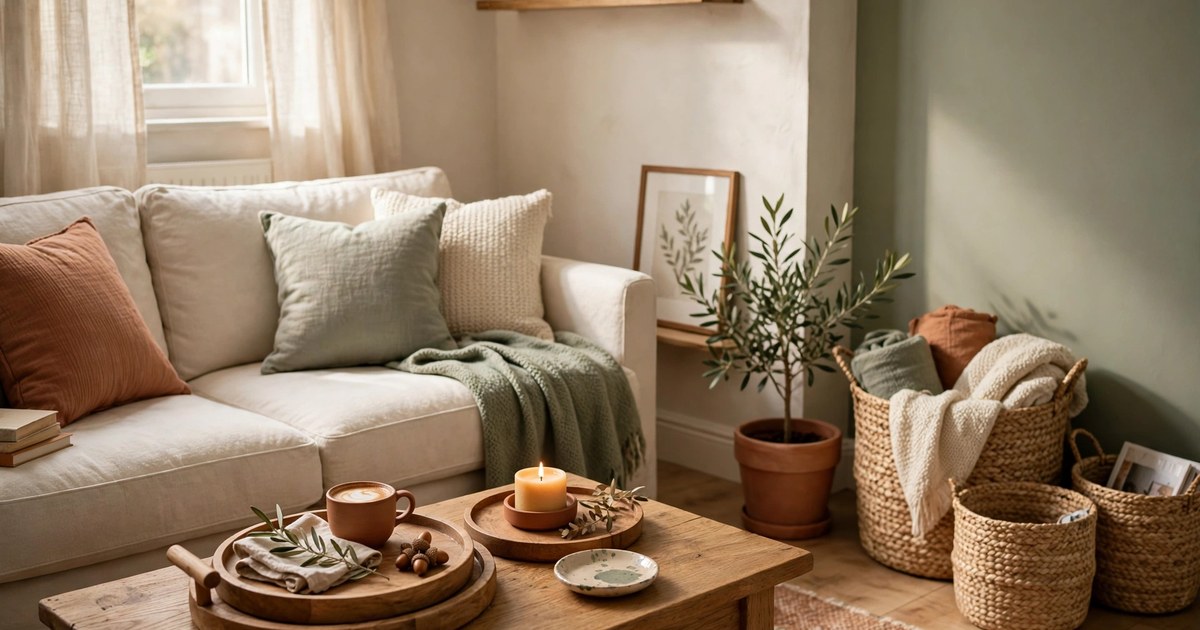
Warmth is not only about colour — it is about materials, and wood is the warmest material you can bring into a rental. A wooden tray on a coffee table, a woven seagrass basket beside the sofa, a bamboo storage box on a shelf: each one adds a note of natural warmth that plastic and metal never will, and together they stop a room feeling like a showroom. Wood tones are especially effective in rentals with grey carpets or white walls, because they break up the cool, flat surfaces that make a room feel cold.
Look for second-hand pieces first — charity shops and marketplace listings are full of solid wooden trays and baskets for a few pounds — and use them for a real job rather than as decoration alone. A basket that holds your throws, a tray that corrals your remotes and candles, a wooden box that hides charging cables: when a warm-toned object also does useful work, it earns its place in a small room twice over. Keep the wood tones consistent — warm oak, walnut and teak sit happily together, while a pale pine piece next to a dark walnut one can look accidental.
8. Warm the Air with Candles and Scent
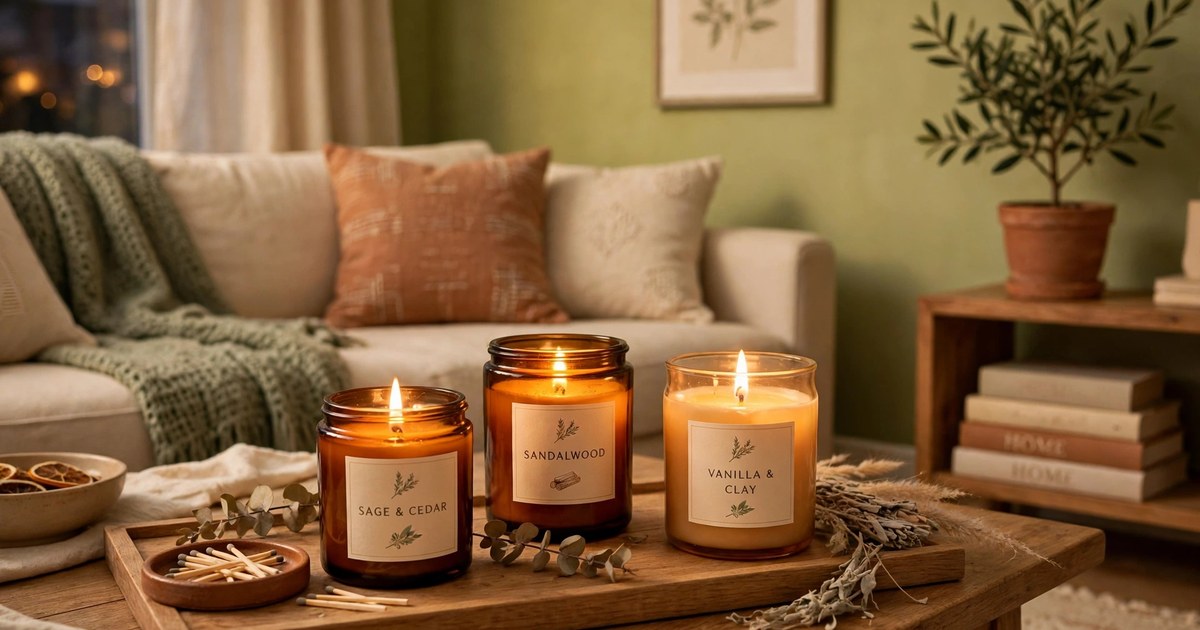
Warmth is a sense as much as a sight, and scent is the quickest way to make a cold room feel cosy. A candle in amber glass, a jar of cinnamon and clove, a reed diffuser with a woody scent — any of these tells your brain the room is warm before your body has caught up. In winter, choose scents with depth: cinnamon, cedarwood, sandalwood, vanilla and spiced orange all read as warm, while citrus and linen read as cool and belong to summer.
If your tenancy agreement bans real flames — many do — flameless LED candles in amber glass give you the same flickering glow with none of the risk, and a plug-in wax warmer or a reed diffuser handles the scent. Group three candles of different heights on a wooden tray with a sprig of dried greenery, and you have a centrepiece that costs under $15 and makes the whole room feel like a winter evening. Never leave a real candle burning in an empty room, and keep all candles well away from curtains and throws.
9. Layer Your Bedding Like You Layer Your Clothes
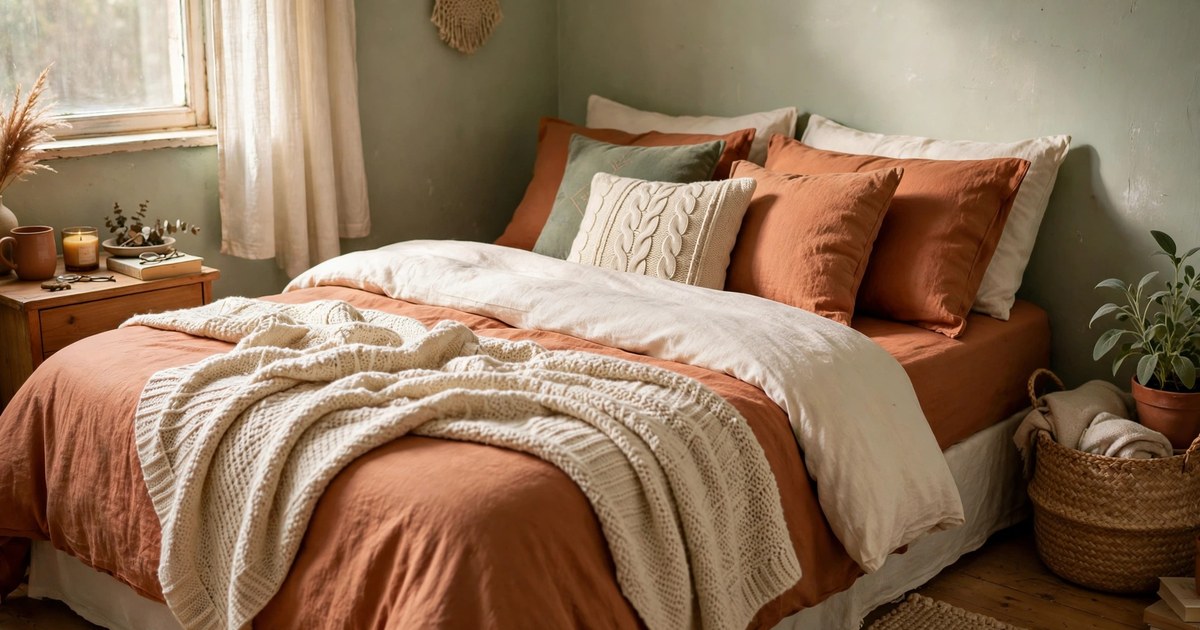
The bedroom is where a cold rental hits hardest, because you feel it with your whole body the moment you get into bed. Layering your bedding is the same principle as layering your clothes: a fitted sheet, a flat sheet, a lightweight duvet, then a heavier throw folded across the foot of the bed, plus a warm-toned bedspread or coverlet that you can pull up on the coldest nights. Each layer traps a little more air, and each one adds another note of warm colour to a room that is usually the plainest in the flat.
Choose bedding in warm tones — terracotta, warm cream, mustard, dusty rose — rather than the cool white that most rentals come with, and mix textures the same way you would on the sofa: smooth cotton sheets, a brushed cotton duvet cover, and a chunky knit or waffle-weave throw on top. A bed that looks warm invites you into it, which matters more than it sounds on a dark winter evening. If your bedroom doubles as your place to unwind, a corner with a chair, a lamp and a throw becomes a self-care spot of its own — see our ideas for a winter self-care corner in a small rental.
Shop waffle weave throw blankets
10. Fill the Gaps with Plants and Warm-Toned Prints
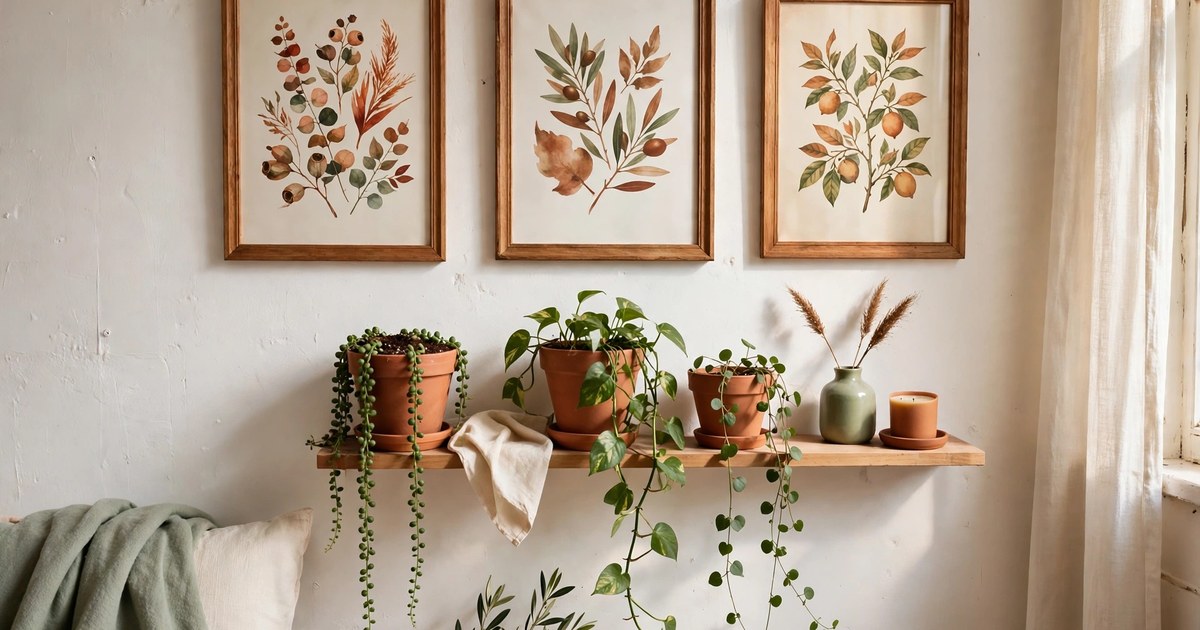
The last step is to fill the gaps that are left once the textiles, lighting and colour are in place — and plants and prints are the two things that do it best. A trailing plant on a shelf softens a hard edge, a cluster of small pots on a windowsill brings life to a cold window, and warm-toned prints in simple frames give a white wall a focal point without a single nail, if you lean the frames or hang them with adhesive strips.
Choose prints in the same warm palette as the rest of the room — terracotta landscapes, botanical illustrations in sage and cream, abstract art in mustard and rust — so the wall art feels like part of the room rather than an afterthought. For plants, pick varieties that forgive a cold, dim rental in winter: pothos, snake plants and ZZ plants all tolerate low light and irregular watering, and they grow happily in the same warm-toned pots that tie the whole scheme together. A room with living things in it never feels as cold as an empty one, and that is as true in December as it is in July.
Shop botanical wall art prints
Warmth Is a Feeling, Not a Paint Colour
You do not need to repaint a rental to make it feel warm. A chunky throw, a warm bulb, a terracotta curtain and a candle on a wooden tray add up to a room that feels like home — and every one of them comes with you when you move. Start with the idea that costs least and helps most, which for most renters is the lighting: swap the bulbs, add a lamp, and see how different the room feels at six in the evening. Then add one layer of texture at a time, and let the warmth build the way it should — gradually, cheaply, and entirely on your terms.
Frequently Asked Questions
How can I make a rental feel warm without painting the walls?
Add warmth through textiles, lighting and colour instead of paint. Layer throws and cushions in terracotta, mustard and cream, hang warm-toned thermal curtains, switch to warm-white bulbs, and use a tapestry or fabric wall hanging to cover large blank walls. Each of these is removable, landlord-friendly and costs far less than repainting.
What is the cheapest way to add warmth to a rental?
Start with lighting, because it costs the least and changes the most. A pack of warm-white bulbs and a single table lamp with a fabric shade can transform a cold white room for under $20. After that, a chunky knit throw and a set of warm-toned cushion covers are the best value — both under $25 and both move with you.
Are thermal curtains worth it in a rental?
Yes, especially in winter. Thermal curtains block draughts and insulate the window, which genuinely warms the room, and their warm colour warms the wall visually at the same time. They hang on the existing rod, leave no marks, and move with you to the next place, so they are one of the best investments a renter can make.
Can I hang things on rental walls without nails?
Yes — adhesive hooks and strips, tension rods and leaning frames all work without drilling or nails. A tapestry or fabric wall hanging on adhesive hooks, prints leaned on a shelf or mantelpiece, and a tension rod inside a window frame are all fully removable. Always check the weight limit on adhesive products and test one hook before hanging anything valuable.
How do I make a rental feel cosy in winter on a small budget?
Work in layers and buy the cheapest layer first. Warm lighting, one chunky throw, a set of cushion covers and a scented candle together cost under $60 and change a room more than any single expensive purchase. Add one layer each payday rather than buying everything at once, and choose warm colours in every layer so the effect builds instead of clashing.