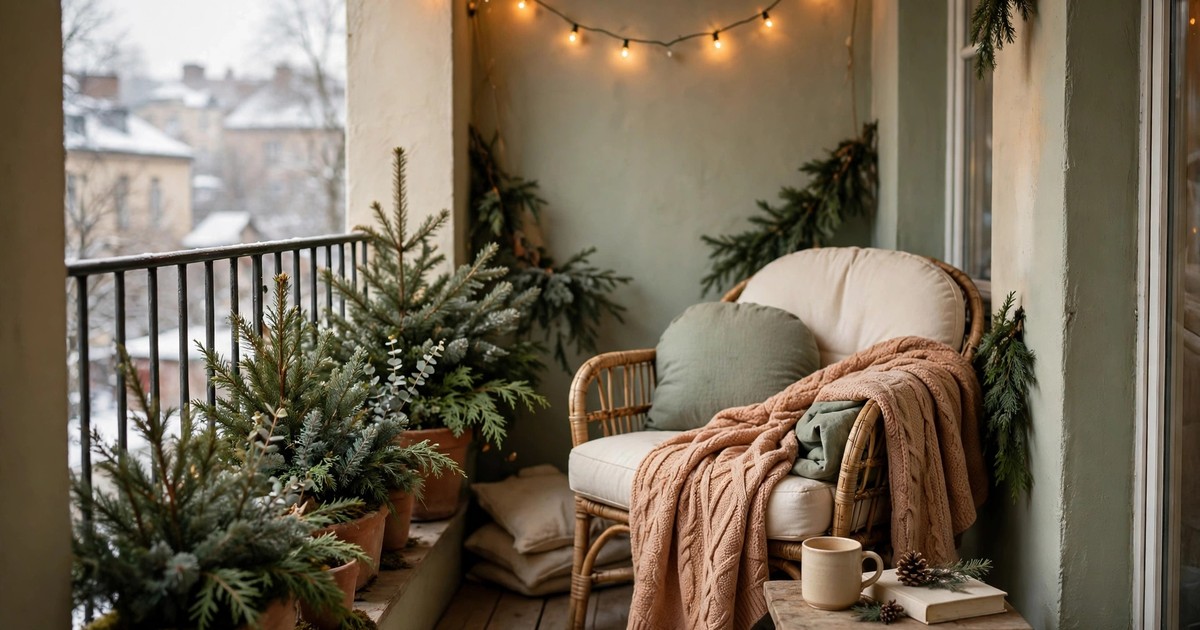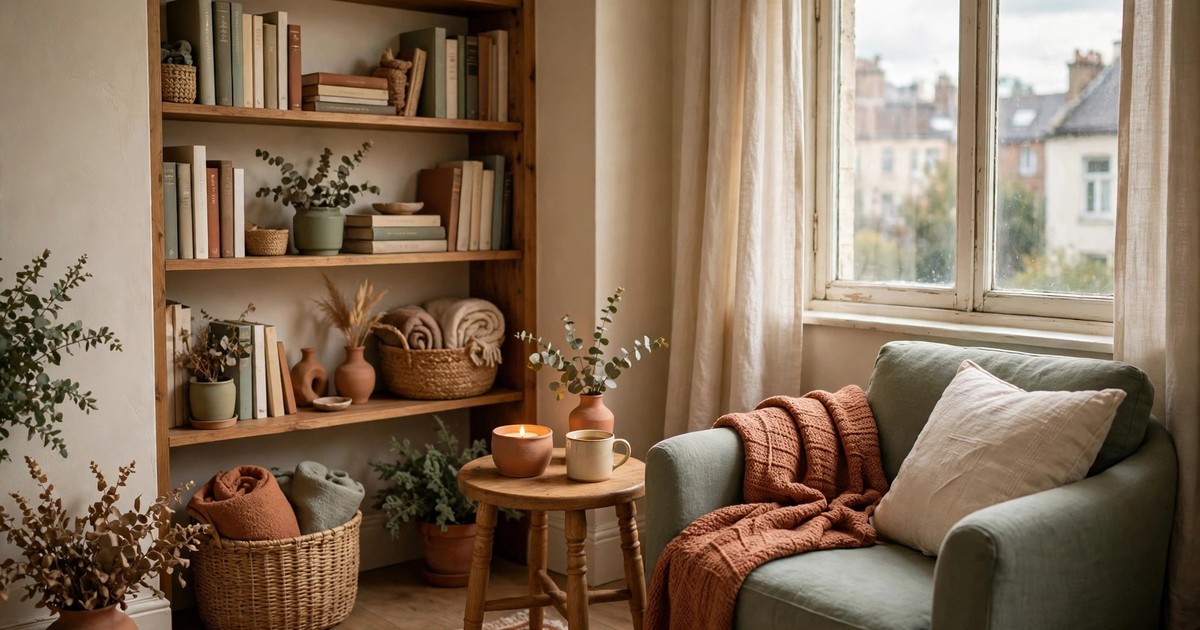
A reading nook sounds like a luxury that needs a spare room. It doesn't. It needs about one square metre, a chair you love, and light that flatters a book instead of fighting it. In a small apartment, the nook is less about building something new and more about claiming a corner that is currently wasted — the dead space beside a bookshelf, the awkward angle by the window, the end of the sofa nobody sits on.
This guide builds a nook in six steps, all renter-friendly and all reversible. No drilling, no built-ins, no landlord conversations. By the end you will have a spot that pulls you in every evening, which is the real test: a reading nook that doesn't get read in is just a chair.
Step 1: Claim the right corner
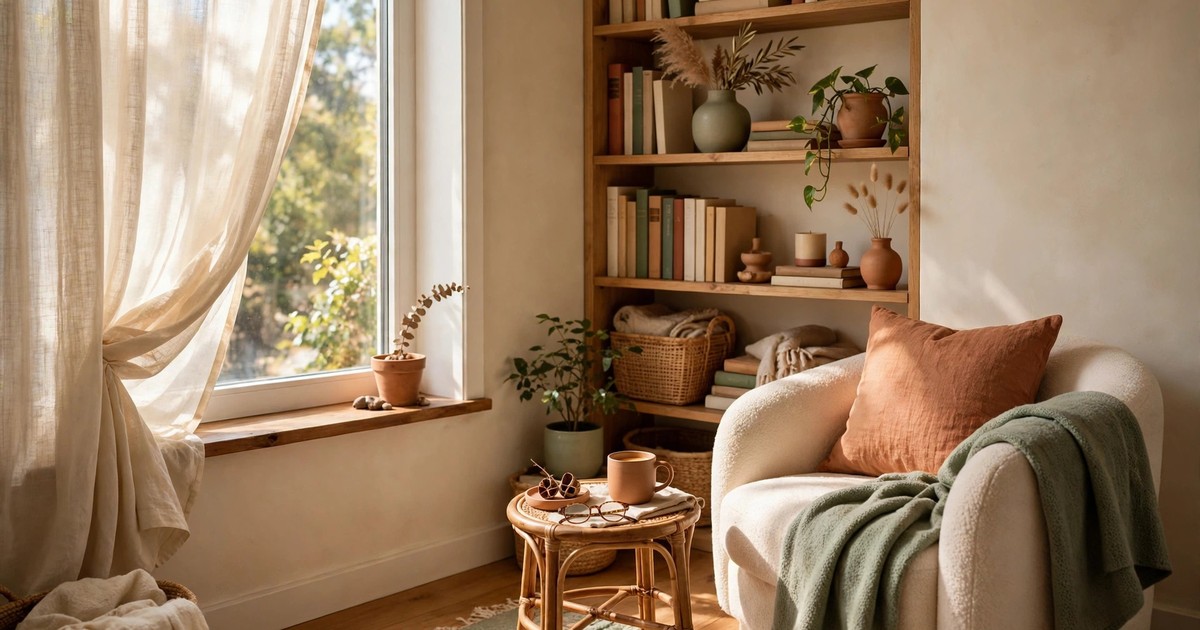
Walk your flat with fresh eyes and look for three things: natural light, a wall to lean against, and distance from the front door's traffic. The best nooks sit near a window but not in a draught — daylight makes reading effortless, but a cold draught makes you leave. A corner that already has a bookshelf nearby is gold: your books are the decor, and you never have to carry a stack across the flat.
Corners beat flat walls because they feel enclosed, and enclosure is what makes a nook feel like a nook instead of a chair in a room. If your only option is a flat wall, you can fake the corner feeling with a tall plant on one side and a floor lamp on the other — two verticals that frame the chair and tell your brain "this spot is a place."
Measure first: you need roughly 90 cm wide and 90 cm deep for a chair plus a small side surface. Tape it out on the floor before you buy anything — a chair that blocks a walkway will be resented, not read in.
Step 2: Choose a chair you will actually sit in for an hour
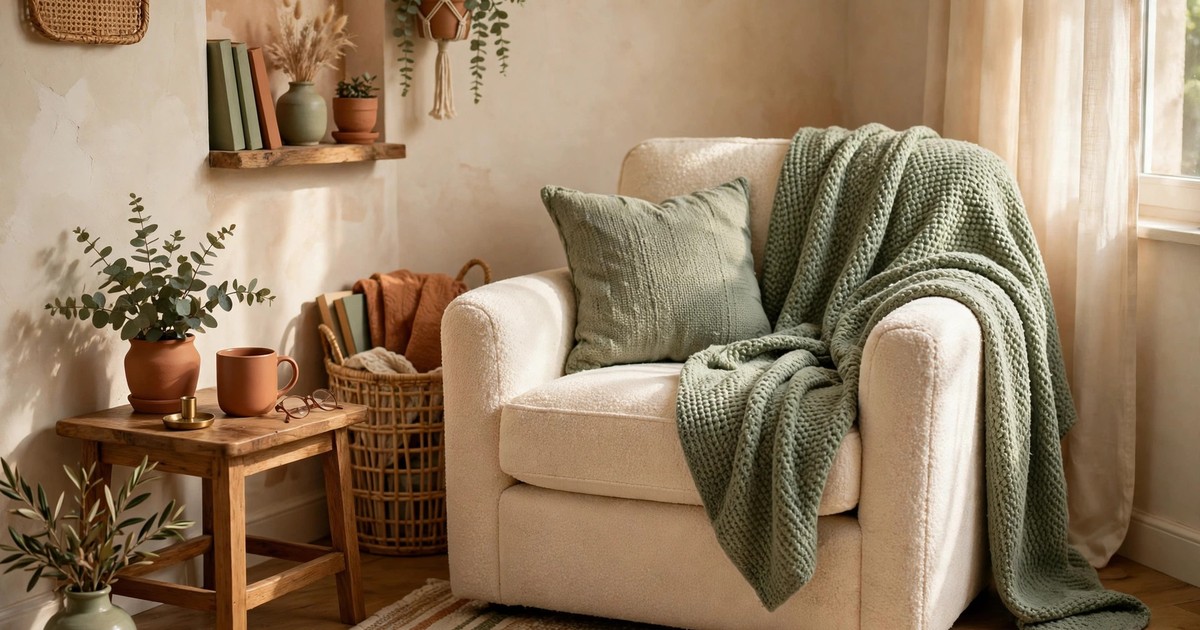
This is the step people get wrong. They buy the chair that photographs well — the sculptural accent chair with the straight back — and then wonder why they always end up reading on the sofa. A reading chair needs a seat deep enough to tuck a leg under, arms low enough to rest a book on, and a back that supports you at a slight recline. Sit in it for ten minutes in the shop, with a book, before you commit.
For small spaces, a compact armchair or a generously sized lounge chair beats a chaise, which eats floor space for a feature you rarely use. If your budget is tight, a second-hand armchair plus a new cushion and a washable slipcover outperforms a cheap new chair every time — comfort lives in the cushion, not the frame. And if you genuinely have no room for a chair, a thick floor cushion against the wall with a backrest pillow is a legitimate nook, not a compromise.
The test: if you can imagine falling asleep in it with a book on your chest, it is the right chair. If you can only imagine photographing it, it is not.
Step 3: Layer the light in three levels
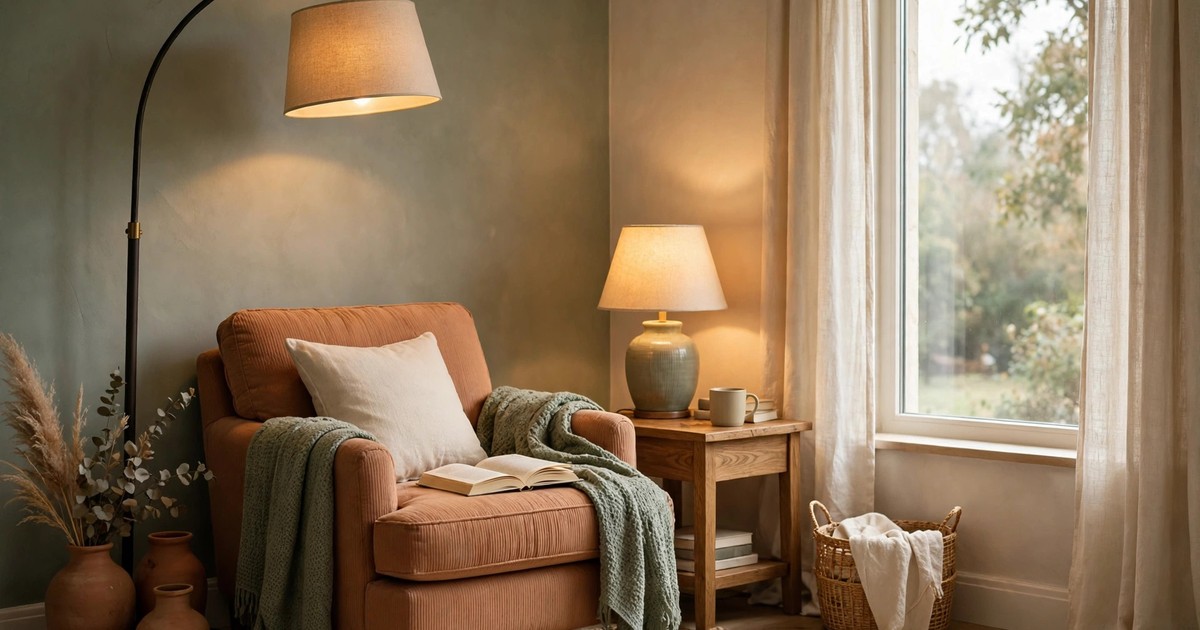
Reading light is not one lamp — it is three layers working together. The base layer is ambient: the room's general light, kept soft and warm so the nook doesn't feel like an interrogation room. The task layer is the important one: a floor lamp or wall-mounted reading light positioned over your shoulder, slightly behind and above the book, so light falls on the page without glare or shadow from your own head. The third layer is accent: a candle, a small string of fairy lights, or a salt lamp that makes the corner glow and feel special.
Position matters more than brightness. Light coming from over your shoulder beats light from in front of you, which glares off the page, and light from directly above creates a shadow of your head on the book. A swing-arm floor lamp is the renter's best friend here — it adjusts to you, moves when you rearrange, and needs no installation. For more on renter-safe lighting swaps, see our brass light fixtures guide.
Bulb rule: warm white (2700K) for the ambient and accent layers, and a slightly brighter warm bulb for the task lamp. Cool white light makes a cozy corner feel like an office.
Step 4: Add a side surface and book storage that fits
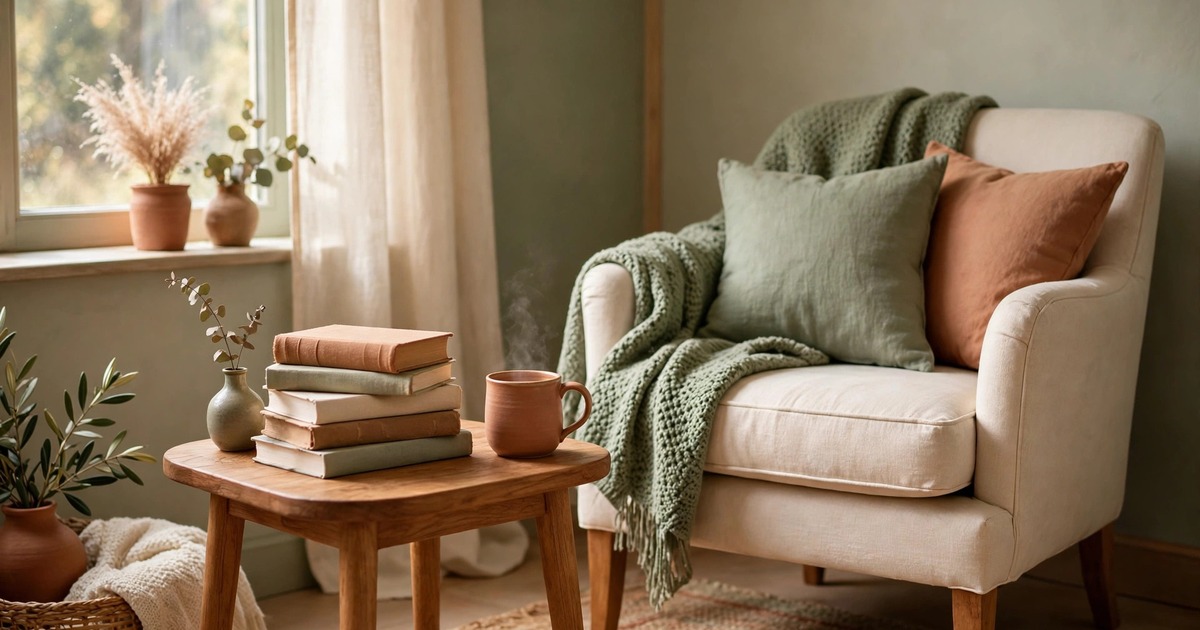
Every reader needs a landing spot within arm's reach: for a mug, reading glasses, and the book you are currently ignoring in favour of another book. A tiny side table, a stool, or even a sturdy plant stand does this job — the surface only needs to hold a mug and a paperback, so don't sacrifice floor space to a full end table when a 30 cm stool will do.
Storage is the second half of this step. A nook without books nearby is a nook you abandon after one chapter. If wall shelves are off-limits, use what you have: a small stack on the side table (the "currently reading" pile is honest decor), a basket beside the chair for the next three books, or the bottom shelf of the nearest bookshelf cleared for nook duty. A basket is especially good in rentals — it moves when you move, holds a surprising number of paperbacks, and hides the mess of half-finished reads.
Small-space trick: a wall-mounted folding shelf needs only two small screws, but if even that is too much, a leaning ladder shelf holds books, a plant and a lamp in one slim footprint and leans rather than mounts.
Step 5: Dress it in textiles for all four seasons
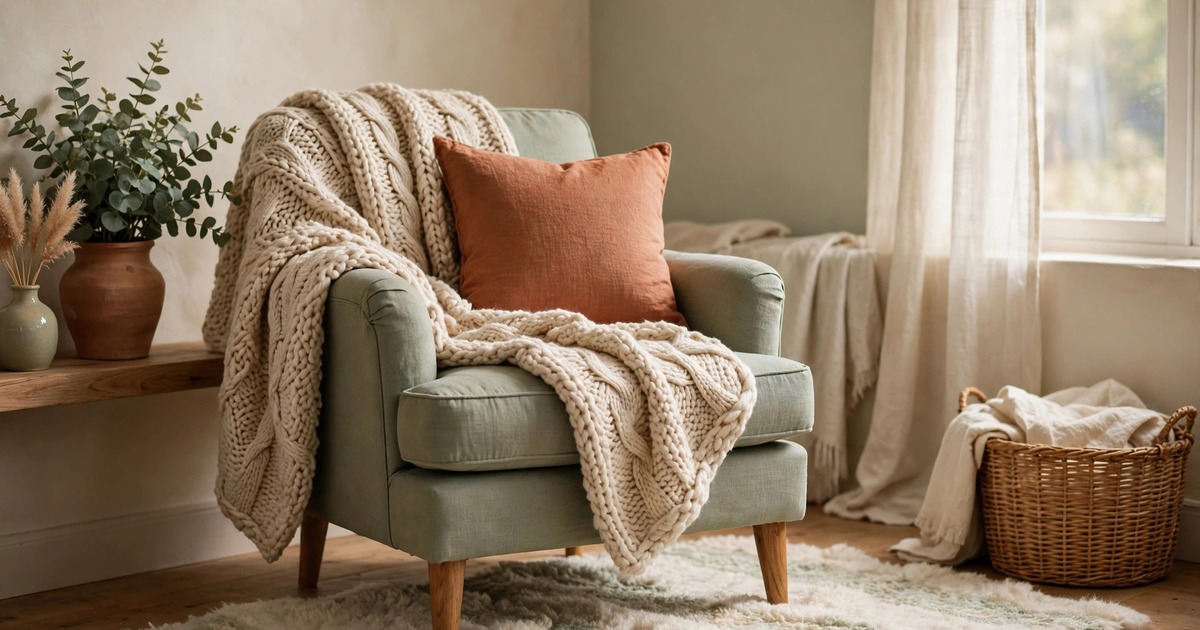
Textiles are what turn a chair into a nook. A throw blanket draped over one arm, a cushion that supports your lower back, and a small rug underfoot that warms the floor — these three things signal "stay a while" in a way furniture alone never does. Choose a throw you can wash easily, because a reading throw gets coffee, crumbs and cat hair in equal measure, and a washable one actually gets used instead of admired from afar.
Think in seasons. A chunky knit throw and a wool cushion carry you through winter; swap them for a light cotton throw and a linen cushion in summer and the nook feels fresh without buying anything new. This is also where your flat's colour story gets to be personal: the nook is the one spot that can be unapologetically yours — a bold cushion, a pattern you love — even if the rest of the flat plays it safe. Our small living room storage guide has more ideas for keeping these layers tidy when they are not in use.
Budget move: one good throw ($20–30) and one lumbar cushion transform a chair you already own. You do not need a new chair to have a new nook.
Step 6: Make it a ritual, not just a corner
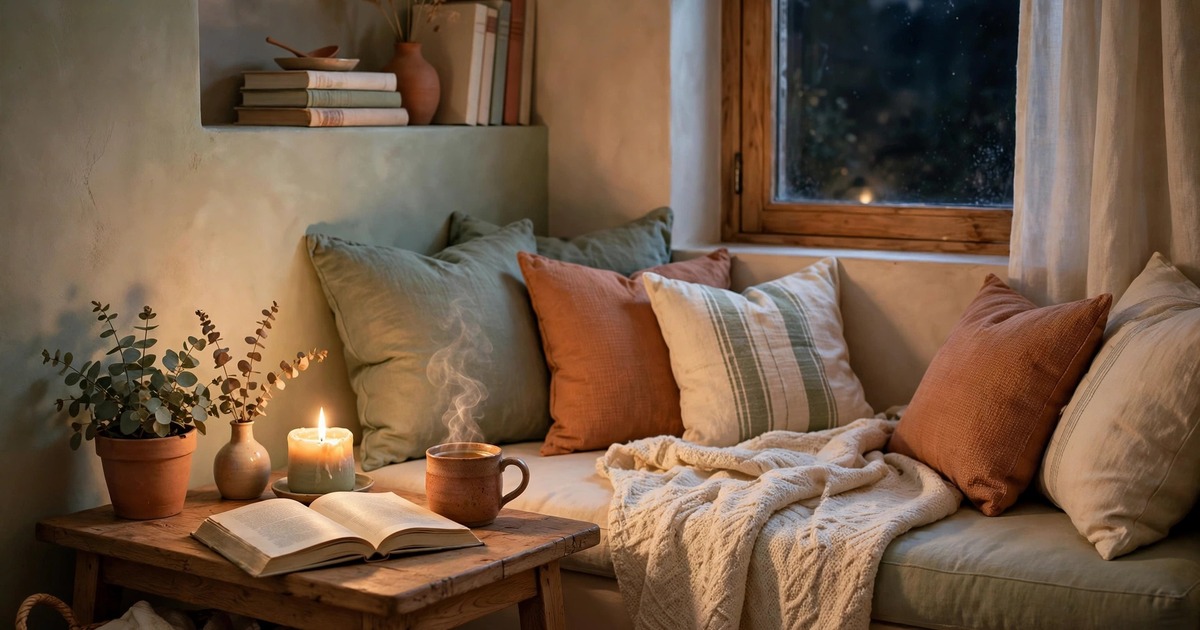
The final step costs nothing and matters most: give the nook a ritual. A specific mug that lives on the side table. A candle you light when you sit down. A rule that the phone charges in another room while you read. Rituals are what turn a decorated corner into a habit, and a habit is what makes the nook worth the floor space it occupies.
Protect the ritual from the flat's other jobs. If the nook chair becomes the place where laundry gets folded or bags get dumped, it stops being a nook within a week. Keep one small boundary: nothing lives on the reading chair except the throw and the current book. Everything else has a home elsewhere — and if it doesn't, that is a storage problem to solve, not a nook problem to tolerate.
Start tonight: pick the corner, drag the chair over, put a lamp behind it and read one chapter. The nook doesn't need to be finished to be used — in fact, reading in it half-finished is how you learn what it still needs.